Cool, temperate and often maritime, with milder coastal districts and colder, shorter seasons inland and in uplands.
Northwestern Europe
Raspberries suit much of Britain, Ireland and nearby districts. Summer and autumn types can share a garden, but wet ripening weather and exposed sites require local adjustment.
- Indicative planting
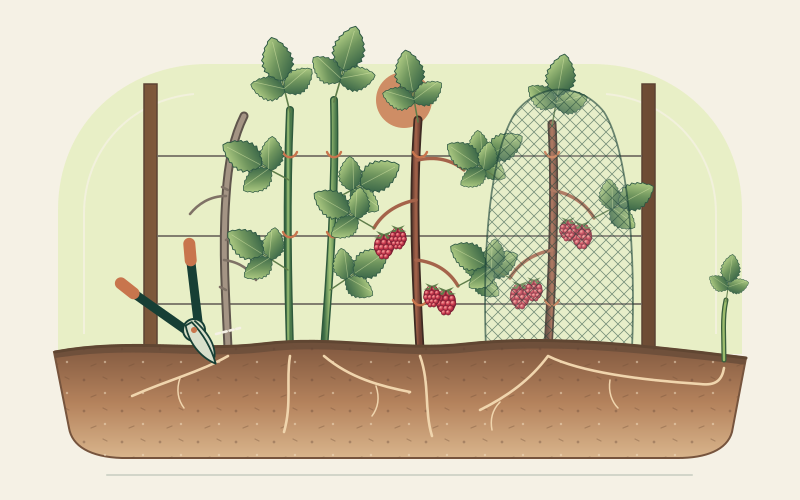
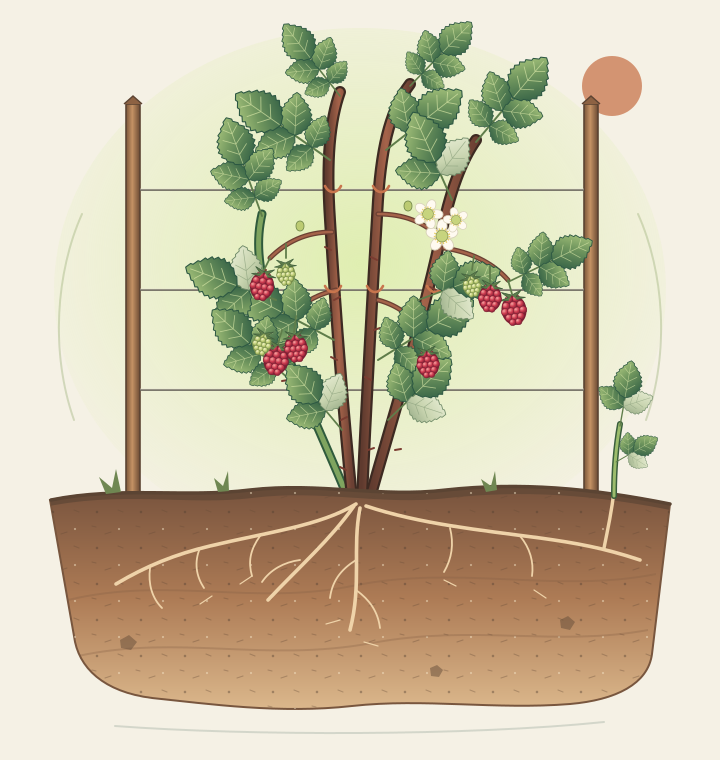
- Plant certified dormant canes from late autumn to early spring while soil is workable and not frozen or saturated; spring is safer on cold, wet ground. Install support and allow 40–60 cm between plants, adjusted to the cultivar.
- Indicative harvest
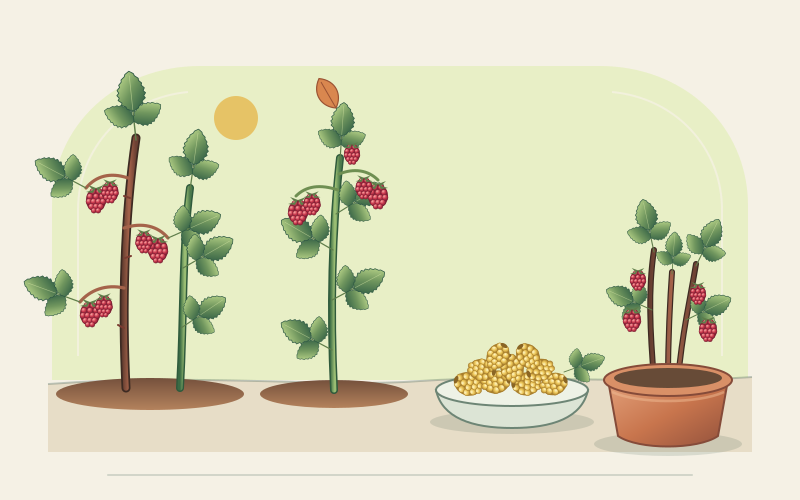
- Summer types usually crop from early to late summer once second-year canes are established, often from the second summer after planting. Autumn types can fruit from late summer into autumn, including a modest first-year crop.
- Soil and moisture
- Fertile, moisture-retentive but free-draining soil, ideally slightly acidic; use raised beds where winter water sits and mulch without burying cane bases.
Field note: Cut summer fruited canes out after harvest and tie in new ones; cut autumn types to the ground in late winter. Remove suckers beyond the row and pick dry berries into shallow trays.