
Cool, temperate and often maritime, with mild winters in many areas, variable spring frost and substantial local differences in shelter and summer warmth.
Northwestern Europe
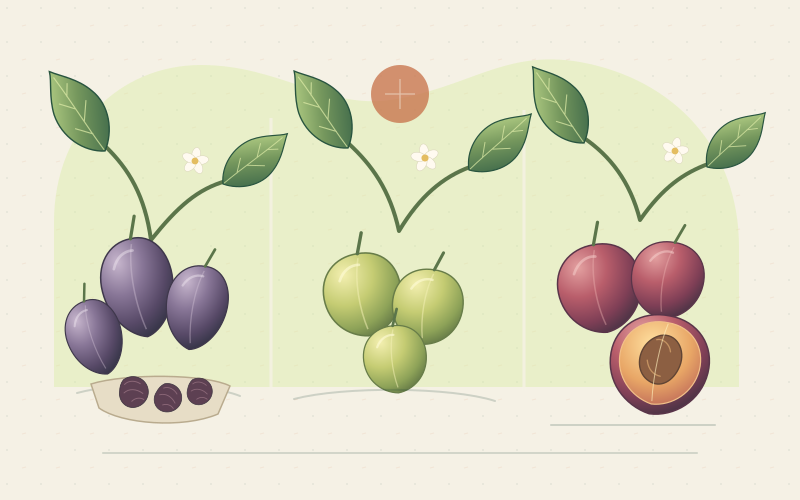
Prunus domestica is well established in suitable sites, while locally grown P. salicina needs a cultivar and warm, sheltered position proven for the district. Early blossom is vulnerable to frost and cold, wet weather can limit pollinator flight.
- Indicative planting
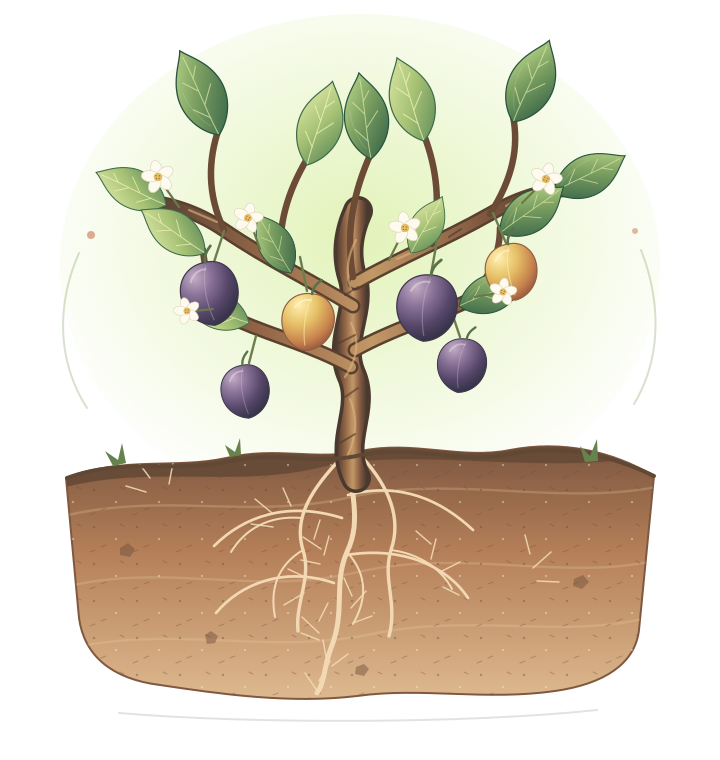
- Plant a healthy bare-root tree during dormancy from late autumn to early spring when soil is workable, or establish a container tree in the locally recommended cool-season window. Choose a rootstock sized for the space and confirm whether the cultivar needs a compatible plum flowering nearby.
- Indicative harvest
- After the usual two to four years of establishment, pick ripe fruit roughly July–September according to species, cultivar and season. Make several passes as fruit colours and softens; dry only suitable sound prune-type plums by a controlled method.
- Soil and moisture
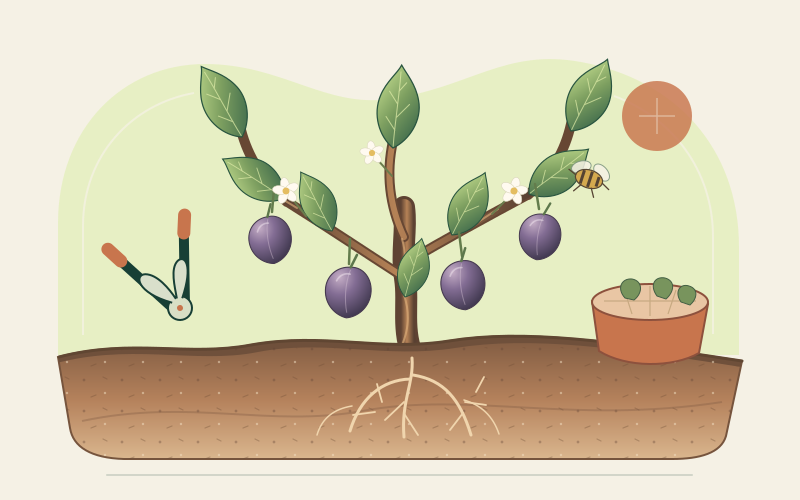
- Fertile, moisture-retentive but free-draining soil in full sun; avoid frost hollows and waterlogging. Mulch without touching the trunk and water young or trained trees during dry spells, especially while fruit forms.
Field note: A self-fertile cultivar such as locally recommended Victoria or Czar can simplify a one-tree garden, but still check its label. In Britain and similar areas, follow local advice to prune young trees in spring and established trees in summer rather than during winter dormancy, reducing silver-leaf and canker risk.