
Crop 017 / Capsicum annuum (bell and other sweet types)

Give peppers warmth, then wait for colour.

Grow sweet peppers for full-sized green fruit or leave them to reach their cultivar’s ripe colour. Transplant after frost into warm soil or a drained container, keep moisture steady through flowering, and support branches as fruit gains weight.

One crop, two harvest stages
Green or fully coloured Pick full-sized green fruit earlier, or allow more time for the cultivar’s ripe colour.
Typical first harvest
60–100 days From transplanting for many sweet cultivars; indoor seed-raising adds several weeks.
Season
Warm and frost-free Cold nights delay growth, while extreme heat can also limit fruit set.
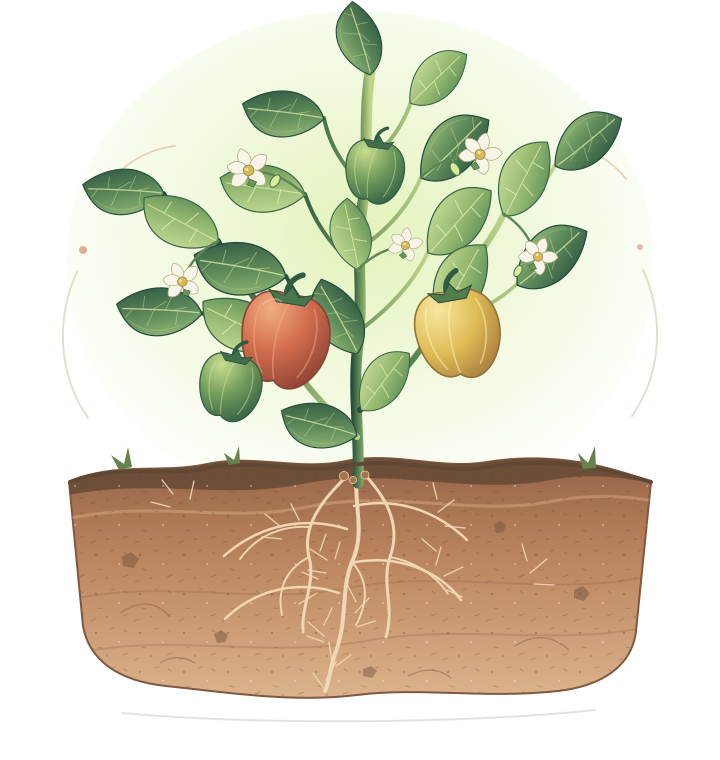
Sweet pepper plant with green leaves, white flowers, hanging green and ripe red fruit, and branching roots in a soil cutaway.
Full-sized green fruit can be picked before its final ripe colour; leaving it on the plant longer requires enough remaining warm weather.

Know the crop

Crop profile

A warm-season fruit crop covering bell and other non-pungent sweet types of Capsicum annuum, not hot chilli types. Fruit can be picked green or left to ripen to its cultivar colour; frost, cold nights and extreme heat can limit fruit set.

Crop essentials

Botanical name
Capsicum annuum (bell and other sweet types)
Growth
60–100 days From transplanting to first harvest for many sweet cultivars. Indoor seed-raising adds several weeks. Green fruit is generally earlier; fully coloured ripe fruit and some large cultivars need longer. Cool temperatures delay growth.
Family
Solanaceae, the nightshade family
Origin
Tropical Americas
Habit
Warm-season fruit crop, usually grown as an annual in temperate gardens

Nutrition / boiled and drained

Nutrition, in context

High Editorial nutrient-density rank 3. This is Rooted’s qualitative category for protein, fibre, folate, iron and potassium in the site’s cooked-food comparison, with highlights adding context. It is not an official nutritional score or a universal ranking of vegetables.

Reference nutrients per 100 g sweet green peppers, cooked, boiled, drained, without salt
Nutrient Amount
Protein 0.92 g
Fibre 1.2 g
Folate 16 µg
Iron 0.46 mg
Potassium 166 mg
  • Contains vitamin C (74.4 mg) in the same cooked green sweet-pepper reference.
  • Provides smaller amounts of fibre, folate, non-heme iron and potassium than the cooked pulses in this comparison.
  • The values concern sweet green peppers, not hot chillies, raw peppers or red ripe sweet peppers.

Basis: Approximate values per 100 g sweet green peppers, cooked, boiled, drained, without salt (USDA FoodData Central SR Legacy 170428). Colour, cultivar, ripeness, boiling, draining and serving size change nutrient content. Hot types are outside this basis; listed content does not measure absorption or individual dietary needs.

At the table

Build a varied meal around sweet peppers

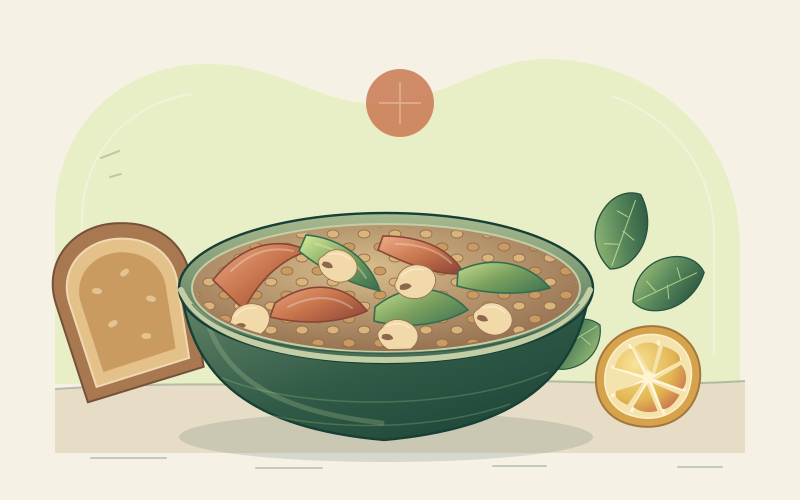
  • Beans, chickpeas or lentils — Vitamin C and non-heme iron. Pulses add protein, fibre, folate and non-heme iron, while sweet pepper contributes vitamin C that can support iron absorption. The response depends on the whole diet and iron status. Cook sweet peppers with chickpeas and tomatoes, or add them to a bean and vegetable stew.
  • Tomatoes, leafy greens or carrots — Vegetable variety. Other vegetables broaden the flavours, textures and nutrients alongside sweet peppers. No particular vegetable pairing is required. Sauté sweet peppers with tomatoes and greens, then serve with lentils.
  • Rice, eggs, fish or tofu — A varied meal. Grains and protein-containing foods make a pepper dish more substantial and add different nutrients. Choose according to dietary preferences and needs. Make a pepper and tofu stir-fry with rice, or serve peppers with eggs and whole-grain toast.

The essentials

From warm transplants to ripe fruit

Six practical stages for sweet and hot Capsicum. Adapt timing, cultivar and protection to your frost-free season, rainfall, summer heat and intended harvest.

  1. Choose sweet or hot, then raise transplants

    Sweet bells and frying peppers are non-pungent; hot chillies contain capsaicinoids, and shape or colour alone does not predict heat. Check the species and cultivar description, since Capsicum annuum includes both sweet and hot types. In a short season, raise seed indoors in suitable warmth and bright light or buy stocky, healthy transplants. Harden protected plants off gradually before planting out.

  2. Plant after frost into warm, drained soil

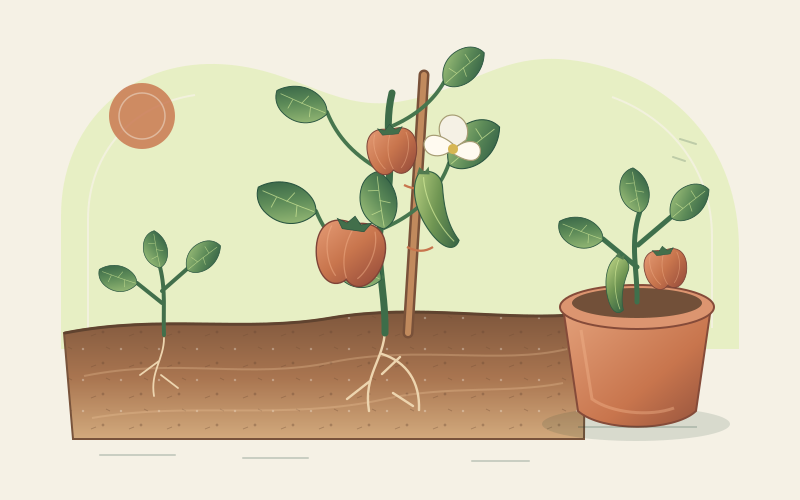
    Wait until local frost danger has passed and soil and nights have warmed; cold soil can leave plants stalled. Choose a sunny, sheltered site with fertile, free-draining soil and organic matter where needed. Keep the root ball intact, set the plant at its original depth and follow the supplier’s spacing, commonly around 35–45 cm between plants. Water at the base and avoid excessive nitrogen.

  3. Use containers with room and drainage

    For one full-sized pepper, start with a container around 20 litres, adjusting for compact cultivars and local advice. Use fresh, free-draining potting mix rather than dense garden soil, and keep drainage holes open. Containers warm quickly but dry quickly, so check them often in hot or windy weather and never leave roots standing in a saucer of water.

  4. Keep moisture steady and read heat at flowering

    Check below the surface and water deeply when needed, especially through flowering and fruit development, without saturating the roots. Mulch warm beds to buffer drying, keeping mulch clear of stems. Cold nights, extreme heat, dry soil and waterlogging can each interrupt flowering or fruit set. Ventilate covered plants before they become excessively hot; more heat is not always better.

  5. Support fruit-laden branches

    Install a short stake, small cage or several canes early, before heavy fruit pulls branches down. Use soft, loose ties that leave room for stems to thicken, and avoid piercing roots with late supports. Compact cultivars may need little assistance, while tall plants and exposed containers benefit most. Keep a healthy leaf canopy to shade fruit rather than stripping foliage.

  6. Harvest green or wait for ripe colour

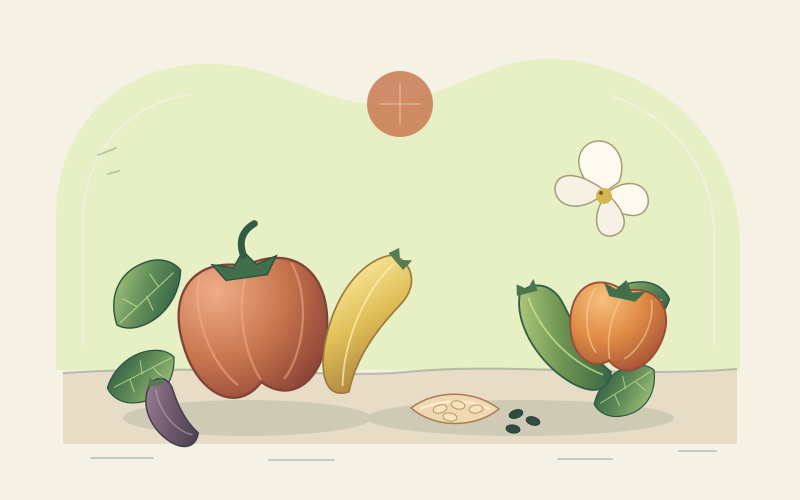
    Most peppers can be picked at full-sized green stage, but green hot peppers are not heatless. Leaving fruit to become red, yellow, orange or another named ripe colour takes longer and can change flavour. Cut through the stem with clean secateurs or a knife rather than pulling hard enough to break a branch. Harvest regularly and before frost; wear gloves for hot peppers and keep hands away from your face.

Growing notes by place

Read your region, then read your weather

Compare broad growing conditions, then adjust for your own frost dates, altitude, rainfall and soil.

Cool, temperate and often maritime, with limited outdoor warmth and local variation in frost-free season.

Northwestern Europe

Sweet peppers crop most reliably in a greenhouse or polytunnel in Britain and nearby districts. Outdoor plants need a warm, sheltered site.

Indicative planting
Sow February–March indoors in warmth and transplant after frost, usually May–June, once hardened off and nights are mild.
Indicative harvest
Pick green fruit from July and coloured ripe fruit into September–October under cover. Outdoor harvests end before frost.
Soil and moisture
Fertile, moisture-retentive and free-draining soil or containers; maintain even water and avoid cold, saturated compost.

Field note: Use an early sweet cultivar, provide support where fruit is heavy and ventilate covered plants during hot days.
Dates are indicative. Local frost forecasts, heat, seasonal rainfall and recent weather—not the calendar alone—should guide sowing and harvest.

Cool-temperate Northern Hemisphere · example

A warm-season rhythm

A compact planning guide, not a fixed schedule. Shift it with latitude, altitude, cultivar, protection and local conditions.

  1. February–March

    Sow sweet peppers indoors in suitable warmth, following the packet, and give seedlings bright light. Choose an early cultivar where the outdoor season is short.

  2. April–June

    Prepare fertile, free-draining beds or containers. Harden plants off gradually, then transplant after local frost once soil and nights are warm; install support early.

  3. June–August

    Maintain even moisture through flowering and fruit development, ventilate covered plants in hot weather and inspect growing tips and leaf undersides. Begin picking full-sized green fruit when ready.

  4. August–October

    Continue regular harvests and leave selected fruit to reach its named ripe colour while warmth remains. Gather all usable fruit before frost rather than relying on a fixed final date.

The 60–100 day window starts at transplanting for many sweet cultivars, not at indoor sowing. Green fruit is generally earlier; fully coloured ripe fruit and some large cultivars need longer, while cool temperatures delay growth.

From the field journal

Grow, choose and cook your peppers

Practical reading for warm-season care, informed sweet and hot variety choices, and balanced meals without superfood claims.

Your next harvest begins here

Start with warmth and one healthy plant.

A single well-supported pepper in a bed or drained container can teach you the rhythm of flowering, fruiting and ripening. Match the cultivar to your season and keep notes from transplanting to the final harvest.

Open the growing guide