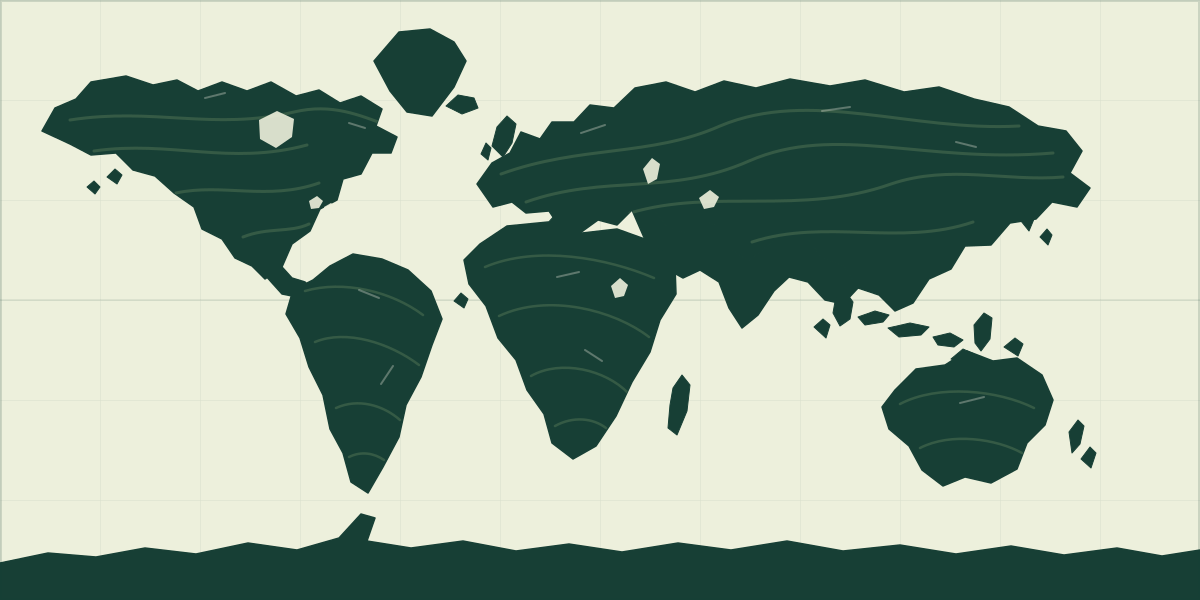
Cool, temperate and often maritime, with milder western sites, late frosts, variable summer warmth and humid disease-friendly periods.
Northwestern Europe
European pear is well established in suitable districts, but early blossom, cool pollinating weather, fireblight where present and late cultivars needing a long season all require local choices.
- Indicative planting
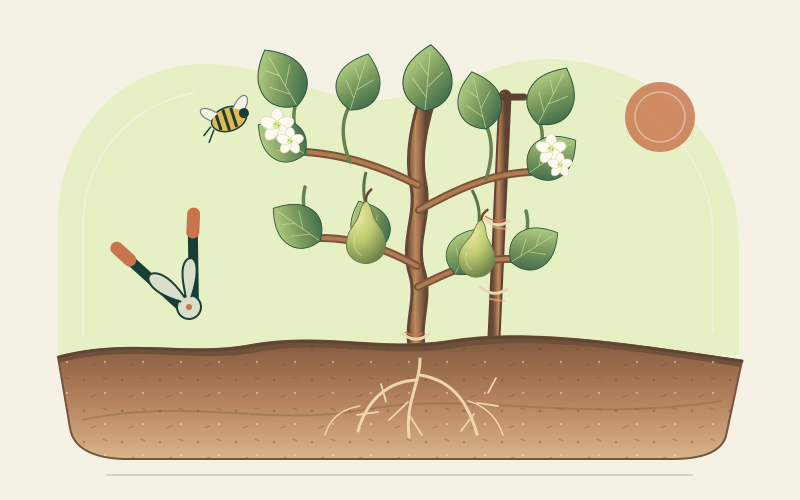
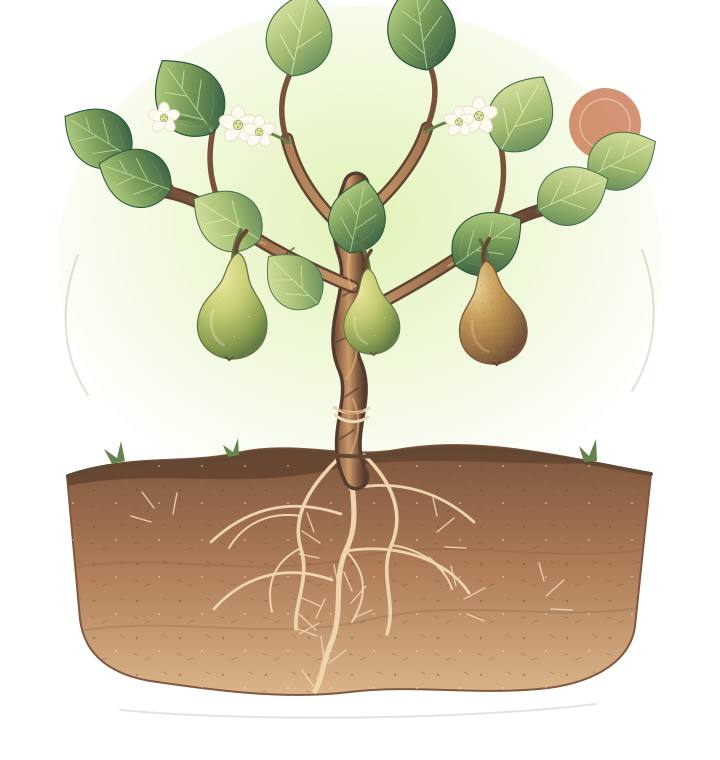
- Plant a healthy grafted tree during dormancy from late autumn to early spring when soil is neither frozen nor waterlogged. Choose a locally suitable quince or Pyrus rootstock, stake or support as required, and plan a compatible pollination partner.
- Indicative harvest
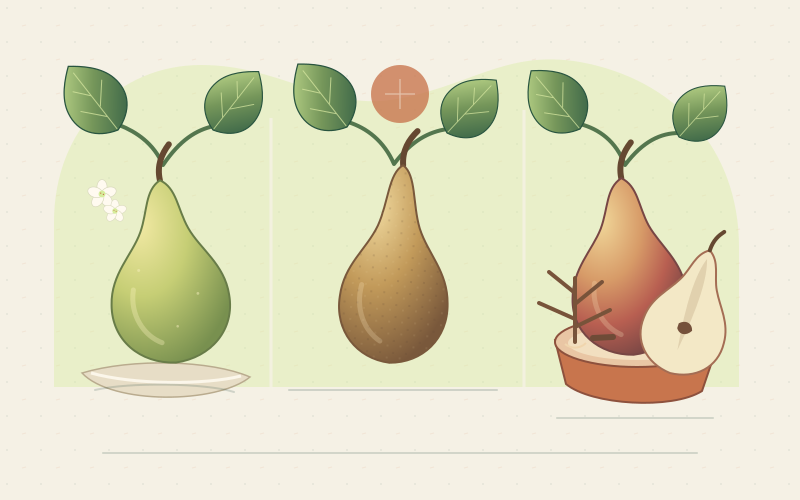
- After establishment, pick mature but still firm fruit roughly late summer–autumn according to cultivar and season. Early types need prompt ripening and use; later types may need cool storage before room-temperature ripening.
- Soil and moisture
- Deep, fertile but free-draining soil in full sun and shelter; avoid frost pockets and waterlogging. Use soil testing and moderate feeding rather than nitrogen-heavy growth that is vulnerable to fireblight.
Field note: Select an early, locally proven cultivar where summers are short, check the pollination group and fireblight response, and learn regional rules for inspecting and reporting this regulated disease.