
Crop 042 / Pastinaca sativa

Fresh seed, deep soil, and a season worth the wait.

Grow parsnips for sweet, cream-coloured roots in autumn and winter. Direct-sow fresh seed into loose soil, keep the shallow row moist through slow emergence, and allow a long season before lifting without bruising.

Establish the crop
Fresh seed, direct sown Keep the shallow seed zone moist during emergence that can take 14–30 days.
Typical crop window
100–150 days From direct sowing to first usable roots under favourable cool conditions.
Root-growing conditions
Deep, loose and stone-free Give the long taproot unobstructed, drained soil without fresh manure.
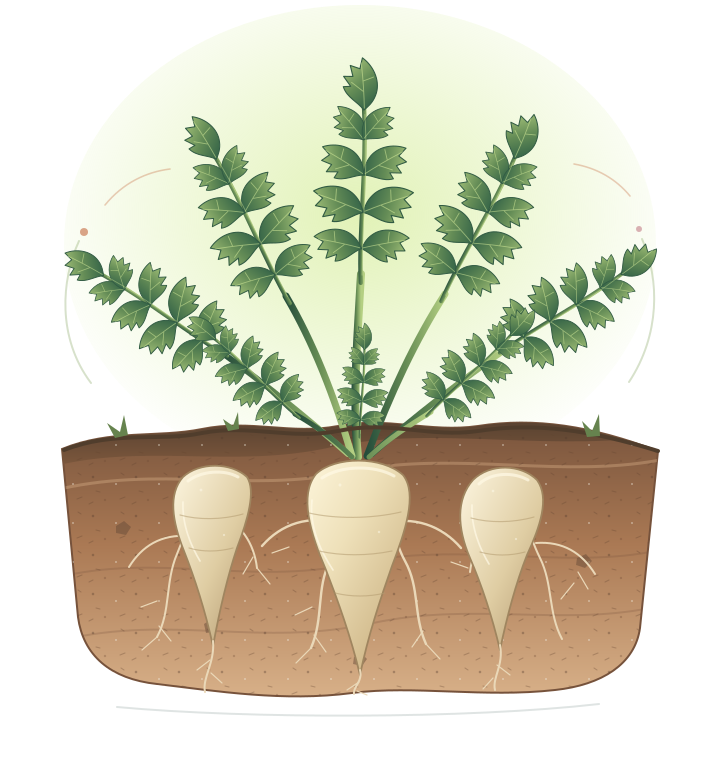
Parsnip plant with compound green leaves above three long cream-coloured taproots and fine side roots in a deep soil cutaway.
Compound leaves feed the tapering taproots below; deep, unobstructed soil and an unhurried season allow the roots to fill.

Know the crop

Crop profile

A cool-season biennial grown as an annual for its edible taproot. Fresh viable seed, patient establishment and a full growing season matter more than forcing an early start in cold soil.

Crop essentials

Botanical name
Pastinaca sativa
Growth
100–150 days From direct sowing to first usable roots under favourable cool conditions. Small early roots may be pulled sooner, while large storage roots, slow emergence and cold soil can extend the season. Cultivar and local temperature govern the actual date.
Family
Apiaceae
Origin
Europe and western Asia, domesticated from wild parsnip
Habit
Biennial usually grown as an annual for its swollen taproot

Nutrition / raw

Nutrition, in context

High Editorial nutrient-density rank 3. This is Rooted’s qualitative category for protein, fibre, folate, iron and potassium, with highlights adding context. It is not an official nutritional score or a universal ranking of vegetables.

Reference nutrients per 100 g parsnips, raw
Nutrient Amount
Protein1.2 g
Fibre4.9 g
Folate67 µg
Iron0.59 mg
Potassium375 mg
  • Contains vitamin C (17 mg) and vitamin K (22.5 µg) in the same raw reference.
  • Provides fibre, folate and potassium, with modest protein and iron.
  • These raw-root values are not interchangeable with boiled, roasted or otherwise prepared parsnips.

Basis: Approximate values per 100 g parsnips, raw (USDA FoodData Central SR Legacy 170417). Values do not describe foliage, wild roots or a cooked serving. Cultivar, peeling, storage, cooking water and added ingredients change nutrient intake; listed content does not measure absorption or individual dietary needs.

At the table

Build a varied meal around parsnips

  • Beans, chickpeas or lentils. Protein and fibre. Pulses add protein, folate and iron to a parsnip-based meal. Their different amino-acid patterns can complement grains across the day without a required combination at one meal. Make parsnip and lentil soup, or serve roasted parsnips with chickpeas and greens.
  • Barley, rice or whole-grain bread. A varied meal. Grains make a root-vegetable dish more substantial and contribute their own nutrients. Add a protein-containing food according to dietary preference and overall needs. Serve parsnips with barley, white beans and cabbage.
  • Eggs, fish, yogurt or tofu. Protein variety. These accompaniments add protein and different nutrients alongside parsnips. No single accompaniment is essential. Try a parsnip and tofu traybake, or serve parsnip mash beside fish and peas.

The essentials

From fresh seed to sound winter roots

Six practical stages. Adapt timing, root form and protection to your soil, rainfall, temperature and local pests.

  1. Prepare deep soil before sowing

    Remove stones and loosen compacted soil to the depth required by the cultivar without working wet ground into clods. Long types need deep, unobstructed soil; shorter types suit shallower beds. Use ground improved with mature organic matter in a previous season rather than fresh manure immediately before sowing, and avoid waterlogging.

  2. Buy fresh seed and direct-sow

    Parsnip seed loses viability quickly, so buy a fresh packet for the current season and keep it cool and dry. Sow where the crop will grow because disturbing the taproot can deform it. Follow the packet first; roughly 1 cm deep, with rows about 30 cm apart, is a common starting point. Water a dry drill before covering lightly.

  3. Wait patiently for slow emergence

    Seedlings can take 14–30 days, sometimes longer in cold soil. Keep the shallow zone moist but not saturated and water gently enough not to wash seeds together. A few radish seeds can mark the row if removed before they compete. Weed carefully so the slow seedlings are not overwhelmed.

  4. Thin, weed and water evenly

    When seedlings are large enough to handle, thin gradually to the packet spacing; about 15 cm between plants is common for full-size roots. Hand-weed close to the row rather than hoeing into crowns. Water young plants in dry spells and avoid repeated severe drying followed by heavy watering, which can contribute to splitting.

  5. Protect roots and handle sap carefully

    Where carrot fly occurs, use insect-proof mesh with every edge secured and rotate away from recently grown susceptible Apiaceae crops. Choose canker-resistant cultivars where available. Wild parsnip sap can cause sunlight-activated burns; do not forage unidentified plants, and use gloves, sleeves and local safety advice when handling wild or broken parsnip foliage.

  6. Harvest by size and store sound roots

    Check a sample after about 100–150 days and lift with a fork without stabbing or bruising. Cold and frost can increase sweetness, but frost is not necessary for edibility. Remove tops without cutting into the crown. Refrigerate fresh roots with humidity but not trapped wetness; store only mature, undamaged roots in a cool, humid, frost-free place and inspect often.

Growing notes by place

Read your region, then read your weather

Compare broad growing conditions, then adjust for your own frost dates, altitude, rainfall and soil.

Cool, temperate and often maritime, with colder springs and shorter seasons in northern and upland districts.

Northwestern Europe

Parsnips suit spring sowing and autumn-to-winter harvest in Britain, Ireland and nearby areas. Cold, wet soil makes a very early sowing less reliable.

Indicative planting
Direct-sow fresh seed from March–April, and into early May in cold districts, once soil is workable and approaching 12°C; pre-warm with cloches where useful.
Indicative harvest
Lift first usable roots from late summer or autumn after about 100–150 days; leave sound roots in unfrozen, drained ground for winter harvest where practical.
Soil and moisture
Deep, loose, stone-free and free-draining soil without fresh manure or compaction; keep the seed zone moist through emergence.

Field note: Frost can increase sweetness but is not required for a safe or useful harvest. Mark rows before foliage dies back and lift ahead of ground freezing solid.
Dates are indicative. Local frost forecasts, heat, seasonal rainfall and recent weather—not the calendar alone—should guide sowing and harvest.

Cool-temperate Northern Hemisphere · example

A long-season root-crop rhythm

A compact planning guide, not a fixed schedule. Shift it with latitude, altitude, cultivar and local conditions.

  1. March–April

    Buy fresh seed and prepare a deep, loose, drained bed. Direct-sow once soil is workable and warming, using cloches to pre-warm where appropriate rather than sowing into cold, wet ground.

  2. April–June

    Keep the shallow seed zone moist through slow emergence. Mark the row, hand-weed carefully and thin before roots crowd. Secure complete insect-proof mesh where carrot fly occurs.

  3. June–August

    Maintain even moisture in dry spells and avoid damaging crowns while weeding. Check an early root for size near the start of the cultivar’s expected harvest window rather than pulling the whole row.

  4. September–February

    Lift roots with a fork as needed. Frost can heighten sweetness but is not required. Mark rows before foliage disappears, lift before soil freezes unusably hard, and keep sound roots cool and humid.

The general 100–150-day window runs from direct sowing to first usable roots under favourable cool conditions. Small early roots may be pulled sooner; large storage roots, slow emergence and cold soil take longer.

From the field journal

Grow, choose and cook your parsnips

Practical reading for patient root harvests, informed variety choices and balanced meals without superfood claims.

Your next harvest begins here

Start with fresh seed and leave time for the root.

A short, well-marked row is enough to learn the rhythm of slow emergence, thinning and a long season. Match root length to your soil and keep notes from the first sowing through winter storage.

Open the growing guide