
Crop 044 / Brassica rapa var. chinensis

Grow crisp stems in a quick, cool-season rhythm.

Pak choi, also called bok choy, moves rapidly from seed to baby leaves or a full upright rosette. Sow a little at a time, keep moisture steady, exclude flea beetles before they arrive and harvest before heat or cold sends up a flower stalk.

Harvest at two useful sizes
Baby or full rosettes Snip a few young leaves or cut the whole plant at its compact mature size.
Indicative sowing-to-harvest window
30–60 days Baby leaves can be ready in about 30 days; many full plants take 45–60 days.
Season
Cool and steadily moist Spring and autumn usually suit it better than hot, dry midsummer.
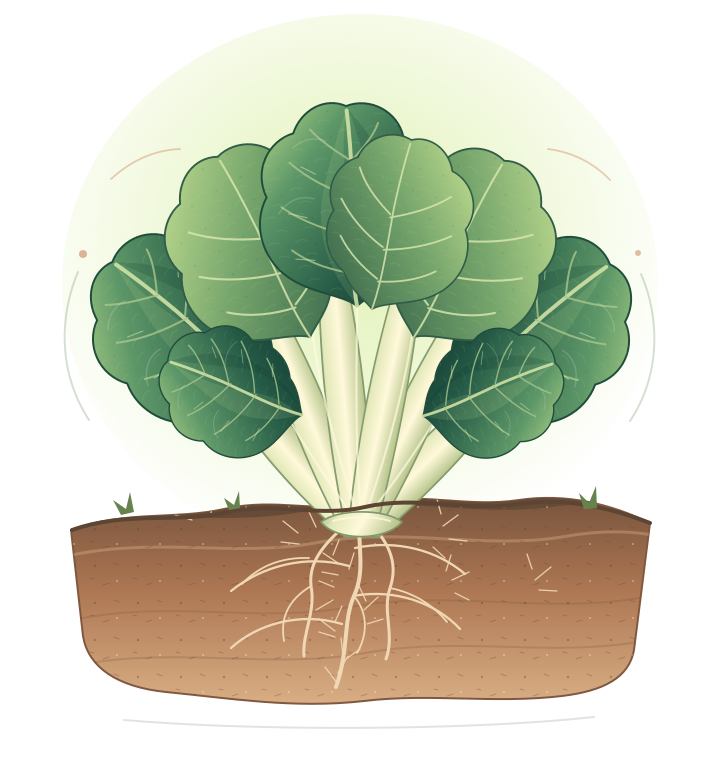
Pak choi plant with glossy dark green leaves, broad ivory stems and branching roots in a soil cutaway.
Upright green blades rise from smooth, crisp petioles. Fast, steady growth and a timely cut preserve the plant’s tender texture.

Know the crop

Crop profile

A fast, non-heading leafy brassica with crisp pale petioles and tender green blades. Grow it as a cool-season annual for baby leaves or compact full rosettes, using small successional sowings around local heat, cold and rainfall.

Crop essentials

Botanical name
Brassica rapa var. chinensis
Growth
30–60 days From sowing to first harvest. Baby leaves can be ready in about 30 days and many full-sized plants in 45–60 days; cold, heat, cultivar and spacing can extend the window.
Family
Brassicaceae, the brassica family
Origin
China, with a long history of cultivation in East Asia
Habit
Biennial leafy brassica normally grown as an annual and harvested before its flowering stem elongates

Nutrition / boiled and drained

Nutrition, in context

Very high Editorial nutrient-density rank 4. This is Rooted’s qualitative category for protein, fibre, folate, iron and potassium in the site’s cooked-food comparison, with highlights adding context. It is not an official nutritional score or a universal ranking of vegetables.

Reference nutrients per 100 g pak choi, cooked, boiled, drained, without salt
Nutrient Amount
Protein1.56 g
Fibre1 g
Folate43 µg
Iron0.8 mg
Potassium371 mg
  • Contains vitamin A (223 µg RAE), vitamin C (26 mg) and vitamin K (36.4 µg) in the same cooked reference.
  • Provides potassium and some folate, with modest protein, fibre and non-heme iron concentrations.
  • This record concerns cooked pak choi, not raw leaves or a stir-fry with oil, salt or sauce.

Basis: Approximate values per 100 g pak choi (Chinese cabbage), cooked, boiled, drained, without salt (USDA FoodData Central SR Legacy 170386). Boiling and draining can move water-soluble nutrients into cooking water. Cultivar, leaf-to-stem ratio, preparation and serving size change intake; these values do not measure absorption or individual needs.

At the table

Build a varied meal around pak choi

  • Tofu, beans, eggs, fish or meat — Protein variety. Pak choi contributes vitamins and potassium but relatively little protein. A protein-containing main ingredient makes the meal more varied; no single accompaniment is essential. Stir-fry pak choi with tofu and mushrooms, or add it to a bean and vegetable soup.
  • Rice, noodles or other grains — A varied meal. Grains add energy and their own protein, fibre and micronutrients to a pak choi dish. The overall meal and diet matter more than a particular food combination. Serve quickly cooked pak choi and tofu with rice or noodles.
  • Carrots, peppers or mushrooms — Vegetable variety. Other vegetables add contrasting colour, texture and nutrients. This is a flexible meal suggestion, not a required nutrient-combining rule. Cook pak choi stems briefly before adding the leaves, carrots and peppers.

The essentials

From quick sowing to crisp, compact rosettes

Six practical stages. Adapt timing, harvest size, spacing and protection to your rainfall, summer heat, winter cold and local pests.

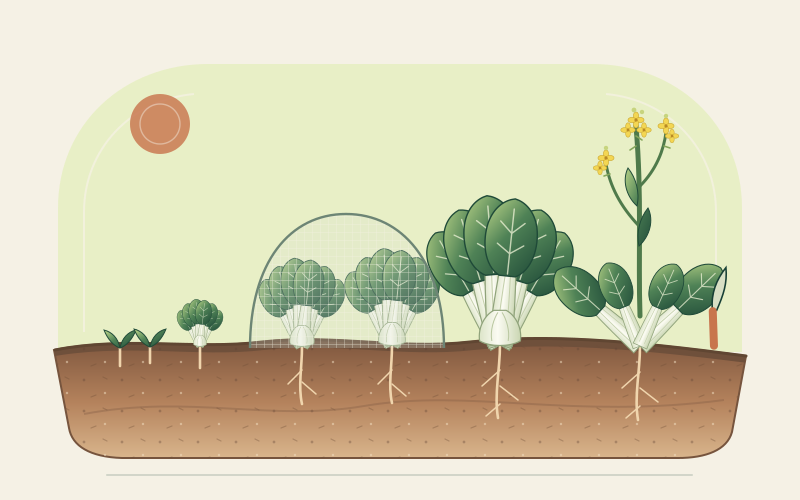
  1. Sow a little and often in cool weather

    Choose seed for baby leaves or full plants, favouring bolt-resistant cultivars where bolting is recurrent. Direct-sow into a fine, moist seedbed, or use clean modules to avoid root disturbance. Make small sowings every one to two weeks during suitable spring and late-summer windows rather than planting one large batch.

  2. Thin or transplant to the intended harvest size

    Use thinnings as salad leaves and keep the strongest seedlings. As a starting guide, allow 8–10 cm for baby plants, about 20 cm for semi-mature plants and 25–30 cm for full rosettes. Harden off module-raised plants, keep root balls intact and water them in without burying the growing point.

  3. Keep the short growth cycle steady

    Use fertile, moisture-retentive but well-drained soil. Check moisture below the surface and water thoroughly in dry spells, especially containers and young plants. Mulch around established larger plants, weed shallowly and use soil-test results to guide feeding; stress from dry soil can encourage bolting.

  4. Prevent flea beetles and protect seedlings from slugs

    Fit fine insect-proof mesh immediately after sowing or planting, supporting it above the leaves and securing every edge. Inspect for tiny shot-holes when you lift the cover and ensure no beetles are trapped beneath. Reduce slug hiding places, check after dusk or rain and protect tender seedlings with locally appropriate controls.

  5. Read the plant for early flowering

    Heat, drought, cold snaps and changing day length can trigger bolting. Choose a cool or lightly shaded position in warm weather and avoid growth checks. When a central flower stalk starts to rise, harvest the plant promptly; removing the stalk will not restore the original harvest window.

  6. Cut fresh and refrigerate promptly

    Snip a few outer baby leaves while leaving the centre to regrow, or cut a compact full plant through the base with a clean knife. Use bolted, damaged or old plants promptly only if still sound. Chill harvested pak choi unwashed in a vented bag, wash under clean running water before preparation and refrigerate cut or cooked food promptly.

Growing notes by place

Read your region, then read your weather

Compare broad growing conditions, then adjust for your own frost dates, altitude, rainfall and soil.

Cool, temperate and often maritime; exposed, northern and upland sites have shorter growing seasons.

Northwestern Europe

Pak choi suits much of Britain, Ireland and the Low Countries in spring and late summer. Midsummer heat or an early cold check can trigger bolting, so baby crops are a useful low-risk option.

Indicative planting
Sow small batches under cover from March–April and outdoors from late April–May; repeat from late July–September for autumn harvests, adjusting for local frost and exposure.
Indicative harvest
Pick baby leaves about 30 days after sowing and cut compact full plants around 45–60 days, often May–June and August–October. Harvest promptly when flower stalks appear.
Soil and moisture
Fertile, moisture-retentive but drained soil in sun during cool weather or light shade in warmer periods; containers need reliable watering.

Field note: Use mesh from sowing or planting against flea beetles, protect seedlings from slugs, and choose bolt-resistant seed for larger late crops.
Dates are indicative. Local frost forecasts, heat, seasonal rainfall and recent weather—not the calendar alone—should guide sowing and harvest.

Cool-temperate Northern Hemisphere · example

Two short, cool-season flushes

A compact planning guide, not a fixed schedule. Shift it with latitude, altitude, cultivar and local conditions.

  1. March–May

    Start small batches under cover or outdoors as severe cold eases. Prepare fertile, drained soil, protect seedlings from cold, slugs and flea beetles, and thin to the spacing suited to baby or full harvests.

  2. May–June

    Pick spring baby leaves and cut full rosettes before heat or lengthening days trigger flowering. Keep later sowings moist and lightly shaded where conditions are warming.

  3. July–August

    Use midsummer for baby leaves only where conditions stay mild; otherwise wait for heat to ease. Resume small successional sowings in late summer and fit pest barriers immediately.

  4. September–November

    Harvest autumn baby and full plants promptly as they reach size. Use fleece or a protected structure where light frost threatens, and clear remaining plants before prolonged cold or wet damages quality.

The 30–60-day window runs from sowing to first harvest, not from transplanting. Baby leaves can be ready in about 30 days and many full-sized plants in 45–60 days; weather, cultivar and spacing shift both windows.

From the field journal

Grow, choose and cook your pak choi

Practical reading for fast harvests, informed variety choices and balanced meals without superfood claims.

Your next harvest begins here

Start with one short, well-watered row.

A small sowing is enough to learn the pace from seedling to crisp rosette. Protect it early, harvest at the size you need and repeat only when the next cool window suits your plot.

Open the growing guide