
Crop 023 / Allium sativum

Plant a clove. Keep a season.

Grow garlic for fresh green shoots, tender hardneck scapes, or a mature keeping crop. Choose a locally suited type, plant sound cloves into drainage and light, then dry every storage bulb with patience.

Two broad types
Hardneck and softneck Scapes, clove arrangement and climate response differ.
Mature-bulb window
120–300 days Spring and autumn planting occupy different lengths of time.
Earlier fresh harvest
Green garlic Pull selected young plants before the bulbs fully divide and swell.
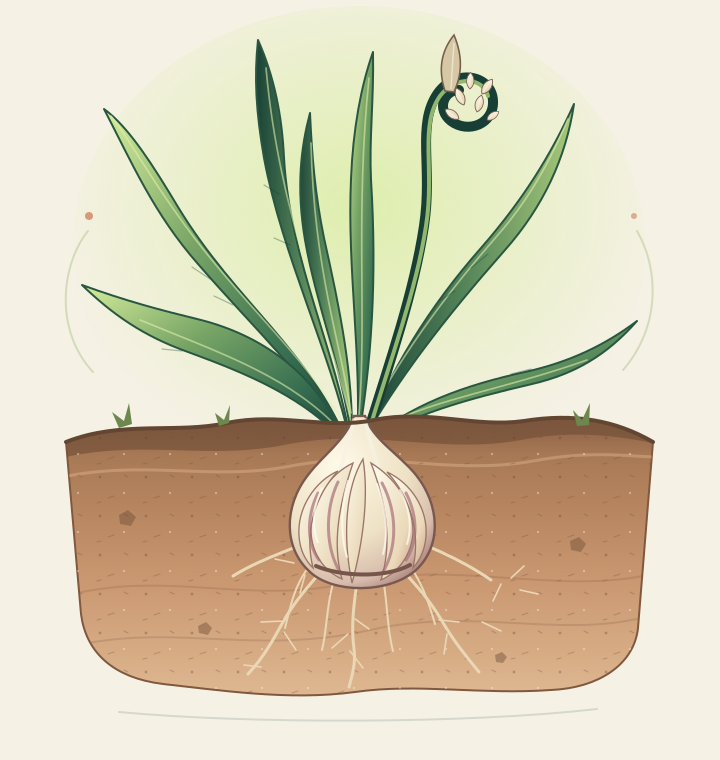
Garlic plant with long green leaves, a curling scape and bulbils above a soil cutaway showing roots and a cloved bulb.
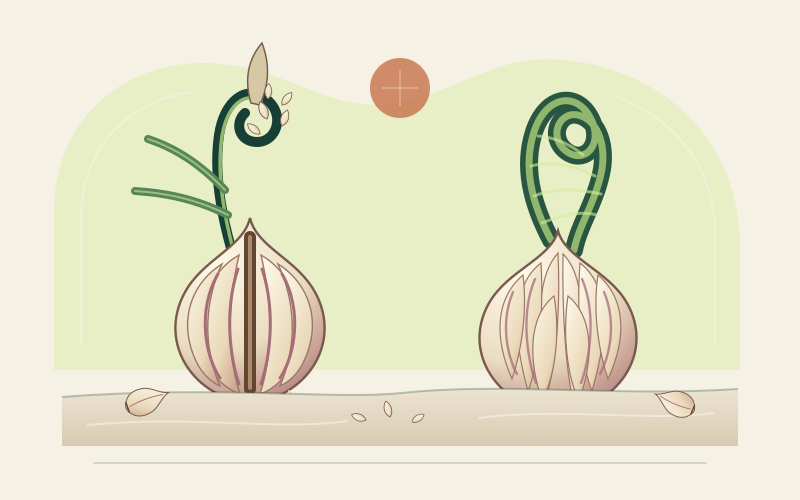
A garlic bulb is a cluster of cloves. Hardneck plants also produce a firm flowering stalk, often bearing small bulbils rather than useful true seed.

Know the crop

Crop profile

A bulbous perennial usually grown as an annual from cloves. Autumn planting suits many cold-winter gardens, while spring planting and locally adapted cultivars matter where winters or soils differ. Harvest young plants as green garlic or wait for mature bulbs, then cure them thoroughly before storage.

Crop essentials

Growth
120–300 days From clove planting to mature-bulb harvest. Spring-planted crops commonly need about 120–180 days; autumn-planted crops can occupy the ground for roughly 240–300 days, including winter. Green garlic can be pulled earlier, once the young plant and undeveloped bulb are large enough. Cultivar, cold exposure, planting date, temperature and moisture all affect maturity.
Botanical name
Allium sativum
Family
Amaryllidaceae
Origin
Central Asia
Habit
A bulbous perennial usually grown as an annual; cloves and hardneck bulbils are vegetative planting material

Nutrition / raw

Nutrition, in a clove-sized context

Moderate Editorial rank 2 of 4. This is Rooted’s qualitative category for protein, fibre, folate, iron and potassium density, with highlights adding context. It is not an official nutrient score, a health rating or a measure of absorption.

Approximate nutrients per 100 g raw garlic, edible cloves
Nutrient Amount
Protein6.36 g
Fibre2.1 g
Folate3 µg
Iron1.7 mg
Potassium401 mg

Basis: Approximate values per 100 g raw garlic, edible cloves (USDA FoodData Central SR Legacy 169230).

The same reference contains vitamin C (31.2 mg) per 100 g, but a typical clove weighs only a few grams and supplies much less. A 100 g quantity is much larger than a usual seasoning portion; raw values are not interchangeable with cooked garlic, garlic powder or oil.

Values describe raw edible cloves, not a typical serving or absorbed nutrients. Clove size, storage and cooking change intake. Garlic is a flavouring within a varied diet, not a medicine or a substitute for one. Never store homemade garlic in oil at room temperature.

At the table

Use garlic to season a varied meal

  • Beans, lentils or chickpeas. Garlic adds flavour while legumes contribute protein, fibre and folate. Cook it gently with onions, then add white beans, tomatoes and leafy greens.
  • Tomatoes, peppers or citrus. Vitamin-C-rich foods can support absorption of non-heme iron from plant foods in a meal. Finish a garlic and lentil dish with lemon, or serve it with sweet peppers.
  • Grains, vegetables and a protein food. Add garlic to a vegetable and tofu stir-fry with rice, serving it fresh rather than storing the mixture in oil. No particular accompaniment or same-meal formula is essential.

Green garlic and mature cloves can play similar culinary roles, but their texture and strength differ. Refrigerate cut or peeled garlic promptly and follow tested preservation guidance.

The essentials

From sound cloves to dry keeping bulbs

Six practical stages. Match type and timing to local cold, drainage and day length.

  1. Choose type and planting stock

    Use healthy, named planting garlic suited to your district. Hardneck types generally make a firm scape and fewer cloves arranged around it; softnecks usually lack that stiff central stalk, have more layered cloves and often store longer. Neither category guarantees performance everywhere.

  2. Prepare a sunny, draining bed

    Remove perennial weeds and work in mature compost where needed. Avoid soil that stays wet, especially through winter. On heavy ground use a raised bed, or start cloves in deep modules under cool, ventilated cover for spring transplanting.

  3. Plant cloves at the right season

    Separate the bulb shortly before planting, keeping skins intact and rejecting damaged cloves. Set the flat basal end down and point up, commonly with the tip about 2.5 cm below the surface and 15 cm between plants. Autumn gives many cultivars winter cold; spring needs an approved cultivar and an early start.

  4. Weed, water and manage scapes

    Keep shallow-rooted garlic free of shading weeds and maintain even moisture during active growth without saturating the bed. Cut young hardneck scapes for cooking if bulb size is the goal. Ease off watering as mature leaves begin to yellow.

  5. Take green garlic or mature bulbs

    Pull selected young plants for green garlic before full bulb division, leaving others room to mature. For the keeping crop, loosen the soil and lift when several lower leaves have browned but some upper leaves remain green. Avoid bruising or leaving over mature bulbs to split.

  6. Cure, store and handle oil safely

    Cure unwashed bulbs with foliage attached in dry shade with strong airflow for two to four weeks, until necks and roots are dry. Trim and store sound bulbs cool, dry, dark and ventilated. Homemade garlic in oil is different: refrigerate at 4°C or below for no more than four days, or freeze; never keep it at room temperature.

Growing notes by place

Read your region, then read your winter

Compare broad conditions, then adjust for your own altitude, rainfall, soil drainage and locally proven cultivar.

Cool, temperate and often maritime, with milder western coasts and colder inland or upland sites.

Northwestern Europe

Autumn planting suits much of Britain, Ireland, the Low Countries and nearby districts because winter cold helps many cultivars divide into cloves. Heavy winter soil and exposed uplands need local adjustment.

Indicative planting
Plant named cloves from October–December where soil drains well, or use a cultivar approved for late-winter to spring planting, often February–March. On wet ground, start in modules under cool, ventilated cover and plant out in spring.
Indicative harvest
Pull a few young plants as green garlic in spring without stripping the keeping crop. Lift mature autumn-planted bulbs around June–July, and spring-planted bulbs from July–September, when lower leaves yellow but before all foliage collapses.
Soil and moisture
Fertile, sunny and free-draining, with mature compost and no standing winter water. Space cloves about 15 cm apart with the tip roughly 2.5 cm below the surface, adjusting depth for soil and supplier guidance.

Field note: Choose locally sold planting stock rather than supermarket bulbs. Remove hardneck scapes when young, keep weeds down and cure bulbs in a dry, ventilated place out of harsh sun for two to four weeks.
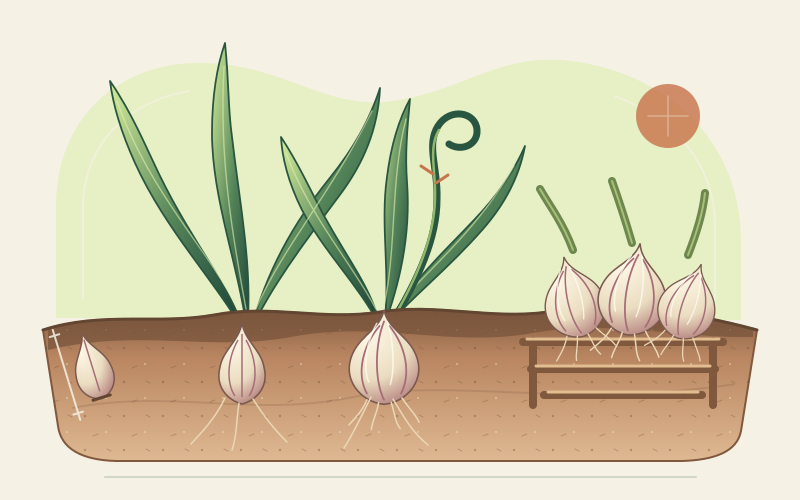
Dates are indicative. Local frost, soil conditions, seasonal rain and cultivar cold requirements—not the calendar alone—should guide planting and harvest.

Cool-temperate Northern Hemisphere · autumn-planted example

A bulb through the seasons

A compact planning rhythm, not a fixed schedule. Spring-planted cultivars and other climate regions need a different calendar.

  1. October–December

    Prepare a draining bed, separate sound bulbs and plant cloves pointed end up. Add locally appropriate winter mulch after the soil cools.

  2. March–May

    Weed carefully and water in prolonged dry spells. Pull selected young plants as green garlic while leaving the main crop enough space.

  3. May–June

    Cut tender hardneck scapes for the kitchen. Maintain growth until bulbs swell, then reduce watering as lower leaves begin to yellow.

  4. June–August

    Lift when lower leaves brown but some upper leaves remain green. Cure with airflow for two to four weeks, then trim, sort and store sound dry bulbs.

Green garlic is an earlier fresh harvest, not the end of the 120–300-day mature-bulb window. Bulbils usually need more than one growing season to produce full-size divided bulbs.

From the field journal

Grow, choose and cook your garlic

Practical reading for the whole season, the right planting material and a safe journey from cured bulb to kitchen.

Your next harvest begins here

Start with one bulb’s best cloves.

A short row is enough to learn your soil and seasons. Plant stock adapted to your district, keep notes through winter, and let dry skins and firm necks tell you when the crop is ready to store.

Open the growing guide