A perennial bulb crop, usually grown for one season
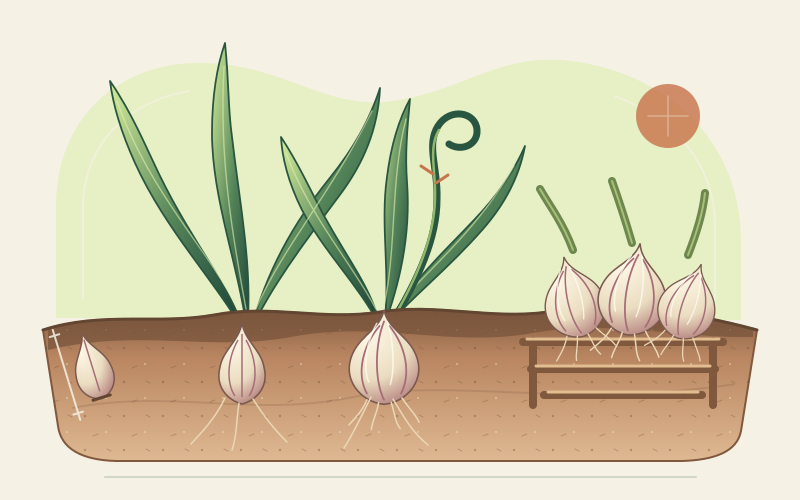
Garlic, Allium sativum, is a bulbous perennial in botanical terms, but gardeners normally plant and lift it as an annual. Each clove is a vegetative piece of the parent bulb. Planted intact and the right way up, it grows roots from its flat basal plate and sends a shoot from its pointed end. Over the following months, leaves manufacture the resources that become a new cluster of cloves.
Rooted’s 120–300-day window describes planting a clove to harvesting mature bulbs, not one universal waiting period. Spring-planted crops commonly need about 120–180 days of growth. An autumn planting can occupy the ground for roughly 240–300 days, including winter dormancy. Cold requirement, cultivar, temperature and moisture determine actual maturity. Green garlic is deliberately earlier: pull a young plant when its leaves and still-developing bulb are large enough for the kitchen.
Many cultivars need a cold period for reliable clove division. A bulb that misses suitable cold may remain a single round rather than separate into cloves. This is why locally adapted planting stock matters more than a supermarket bulb’s appearance, and why a northern autumn calendar does not transfer unchanged to tropical highlands.
Planting and seasonal care
-
Choose clean, locally adapted stock
Buy named planting garlic from a reputable supplier where possible. It is more likely to be identified, suited to the growing district and inspected for important pests and diseases than an anonymous eating bulb. Select firm bulbs with no mould, soft areas or visible damage. Hardneck and softneck are useful broad groups, not guarantees of hardiness or storage; supplier and local extension guidance should settle the choice.
-
Make drainage the first bed improvement
Choose full sun and fertile, loose soil. Remove perennial weeds and add mature compost where soil structure or a soil test supports it. Garlic does not tolerate prolonged waterlogging: saturated soil excludes air and encourages rot. Use a raised bed where winter water collects, without building a bed so dry that roots cannot establish. Avoid working soil while it is sticky or saturated.
-
Plant in autumn or an approved spring window
In many cool and cold climates, plant in autumn early enough for roots to establish before severe cold, but not so early that warm weather produces excessive tender top growth. Winter mulch can buffer temperature swings and suppress weeds; apply it at a locally appropriate stage rather than keeping frozen soil warm. In mild climates, choose a cultivar that bulbs with the available cold. For spring planting, use a cultivar sold for that purpose and plant as early as local soil conditions allow.
-
Set cloves pointed end up
Split bulbs shortly before planting and handle cloves gently. Keep the papery skin intact and discard damaged or suspect pieces. As a general starting point, set cloves 15 cm apart in rows about 30 cm apart, with the tip roughly 2.5 cm below the surface. Light soil and local guidance may justify deeper planting, while heavy wet soil calls for care. Plant large, sound outer cloves for a full-size bulb crop; small cloves can be used for a closer-spaced green-garlic row.
-
Keep weeds down and moisture even
Garlic’s narrow leaves cast little shade, so weeds compete strongly for light, water and nutrients. Hand-weed or hoe very shallowly without cutting roots or bulbs. Water during prolonged dry establishment and active spring growth, checking below the surface rather than following a rigid schedule. Direct water to the soil. Reduce watering as bulbs approach maturity and lower leaves yellow; continued heavy watering then can delay drying and encourage rots.
-
Use the scape without losing sight of the bulb
Hardneck garlic normally sends up a firm, curling flower stalk called a scape. Snap or cut it while tender if bulb production is the priority, leaving the leaves intact. Young scapes are edible. Softneck garlic usually remains flexible and non-bolting, although stress can alter growth. If bulbils are wanted for propagation, leave selected healthy scapes to develop and accept that this can reduce the size of the underground bulb.
Cloves and bulbils are different planting choices
A clove is already a substantial underground storage organ and normally produces a harvestable bulb in one growing cycle. A bulbil is a tiny vegetative propagule formed in the flower head of a hardneck plant. It is not botanical seed and will usually carry the parent’s genetic identity. Bulbils are cheap to multiply and can be useful for building a clean, locally selected stock, but they demand patience.
Plant fully developed bulbils after the flower head dries, using a fine, weed-free nursery bed and spacing suited to their size. Many produce only small undivided “rounds” in the first year. Replant those rounds for a later, larger crop; cultivar and bulbil size affect how many seasons full division takes. Label each type carefully, and never use propagation to rescue a diseased plant. For an ordinary kitchen harvest, cloves remain the simpler route. Our type and variety guide compares the choices in more detail.
Harvest by the leaves, then cure by dryness
For green garlic, pull whole young plants before the bulb has fully divided and hardened. Wash the soil from the edible portions, refrigerate promptly and use soon as a fresh vegetable. Harvest only the plants intended for this use; removing too many leaves from a bulb crop reduces its ability to mature. Green garlic should not be confused with a cured, dry storage bulb.
For mature bulbs, watch the foliage rather than waiting for every leaf to collapse. A useful cue is several browned lower leaves with some upper leaves still green. Loosen the soil with a fork placed away from the bulb, then lift without pulling hard on the neck. Handle bulbs gently: cuts and bruises open the way to rot. If left too long, wrappers can split and cloves can separate, reducing storage quality.
Do not wash bulbs intended for storage. Brush off loose soil only when dry enough to do so gently. Keep the leaves and roots attached initially and spread the crop in a single layer, hang small bundles, or use ventilated racks. Cure for about two to four weeks in a dry, shaded, well-ventilated place. Avoid fierce direct sun, excessive heat and humid piles. The goal is a dry neck, rustling foliage, firm skins and brittle roots—not simply a dry-looking outer surface.
After curing, trim roots and tops where appropriate, leaving enough neck to protect the bulb. Softneck foliage can be braided only while it remains pliable and then allowed to finish drying. Store sound bulbs in breathable trays, mesh bags or braids in a cool, dry, dark, ventilated place. Check regularly and remove soft, mouldy or sprouting bulbs for appropriate prompt use or disposal. Storage life varies sharply by cultivar and conditions; softnecks often keep longer, but no fixed month count is guaranteed.
Prevent avoidable losses
Small bulbs can reflect late planting, insufficient cold, small planting cloves, weed competition, inadequate water during growth or a cultivar poorly matched to local day length. Undivided rounds point particularly toward cold response or immature bulbil-grown plants. Diagnose the whole pattern before adding fertiliser; excess nitrogen late in the season is not a cure for an unsuitable planting window.
Orange rust pustules, allium leafminer damage, bulb rots and nematodes have different causes and controls. Use clean stock, rotate away from garlic, onions, leeks and related crops where local guidance recommends it, and avoid moving soil or plants from an infested bed. Remove badly affected material according to local plant-health advice rather than composting every problem automatically. Accurate local identification matters before treatment.
A necessary warning about home-flavoured oil
Never store homemade garlic-in-oil at room temperature, even if the garlic was cooked or the jar looks and smells normal. Garlic is a low-acid food, and oil can create the oxygen-free conditions in which Clostridium botulinum may grow and produce toxin. Cooking in an ordinary pan and refrigeration do not make the mixture shelf-stable, and toxin cannot be detected reliably by taste or smell.
The National Center for Home Food Preservation advises making garlic-in-oil fresh and storing it in the refrigerator at 4°C (40°F) or below for no more than four days. For longer storage, freeze it in suitable freezer containers, labelled and dated, for up to several months. The same caution applies to green garlic or herbs mixed with oil. Do not improvise a room-temperature acidified or canned version; use a tested recipe and authoritative preservation instructions instead.