
Crop 028 / Ribes rubrum & Ribes nigrum

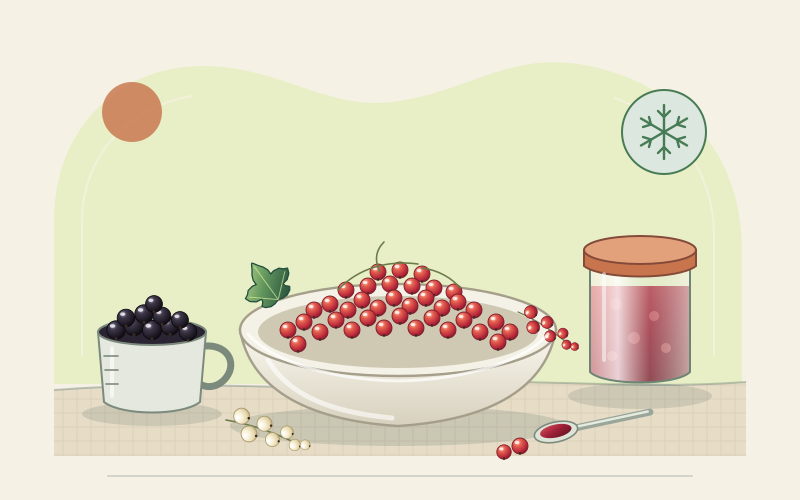
A patient shrub, strung with summer jewels.

Grow red and white currants or their black-currant relatives where winters provide real dormancy. Match the cultivar to local rules, understand its pollination needs, and prune for the wood that species fruits on.

Two botanical identities
Red/white or black White currants are pale forms of Ribes rubrum; black currants are Ribes nigrum.
First meaningful harvest
2–3 years Establish roots first; a light second-year crop precedes fuller fruiting.
Season
Winter chill, cool summer Spring frost, hot sites and inadequate chilling can reduce the crop.
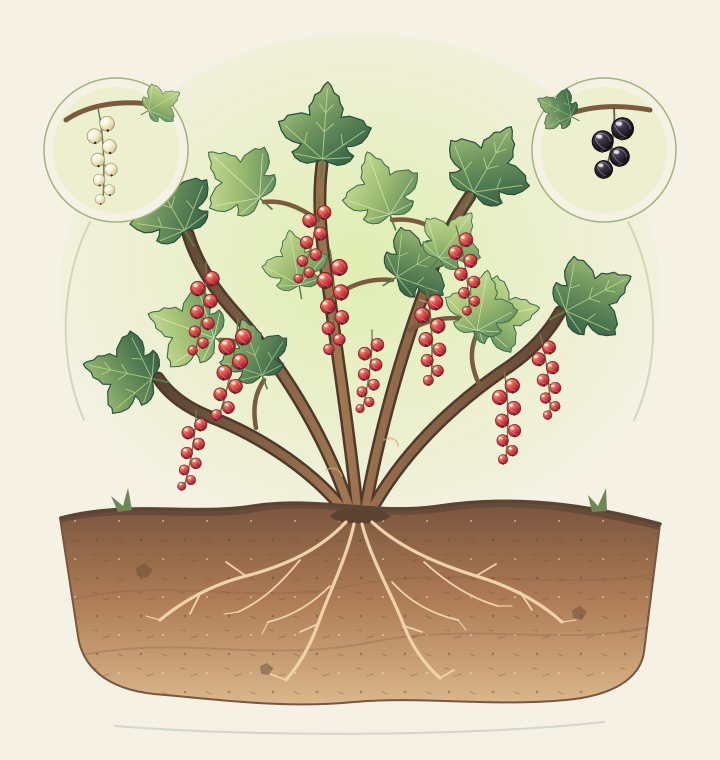
Currant shrub with woody canes, lobed green leaves and hanging strigs of translucent red, pearl-white and glossy black berries.
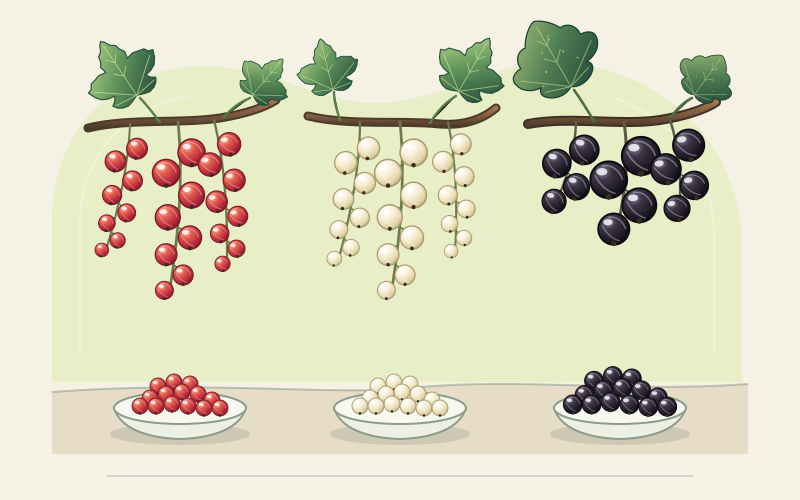
Red and white currants share Ribes rubrum; black currant is Ribes nigrum. Their fruiting wood and pruning differ.

Crop profile

Currants, from dormant cane to strig

Cold-climate perennial shrubs grown for tart berries in summer. Red and white currants are forms of Ribes rubrum; black currant is the distinct species Ribes nigrum. Adequate winter chilling, locally suitable cultivars, pollination and species-specific pruning determine reliable fruiting.

Botanical name
Ribes rubrum (red and white currants) and Ribes nigrum (black currant)
Family
Grossulariaceae
Origin
Western Europe for Ribes rubrum; Europe and northern Asia for Ribes nigrum
Growth
2–3 years From planting a young bush to a light first crop and then substantial fruiting. Remove first-season flowers to favour establishment; expect a light crop in the second year and a fuller crop by the third under suitable conditions. Nursery-stock age, chill, frost, heat, pruning and pollination can change this timing.

Nutrition / raw red and white currants

High nutrient density · editorial rank 3

“High” is Rooted’s qualitative editorial category, based on protein, fibre, folate, iron and potassium density. It is not an official nutrient score or a promise of a health outcome.

Approximate values per 100 g currants, red and white, raw.
NutrientAmount
Protein1.4 g
Fibre4.3 g
Folate8 µg
Iron1 mg
Potassium275 mg

Basis: Approximate values per 100 g currants, red and white, raw (USDA FoodData Central SR Legacy 173964). View the USDA reference.

Vitamin C has a species-specific value. The raw red-and-white record supplies 41 mg per 100 g. European black currants, raw (173963) supply 181 mg per 100 g in a separate record. Neither value applies to juice, jam or dried “currants.”

These figures describe raw edible red and white currants, not black currants, dried Zante currants, juice, jam or cooked fruit. Cooking, added sugar, storage and portion size change the food actually eaten.

At the table

Let sharp fruit brighten a varied meal

  • Yogurt, skyr or fortified soy alternatives — protein and texture: Tart raw currants add fruit, fibre and vitamin C to foods that contribute protein and other nutrients. Choose unsweetened products where preferred and check fortification on the label. Stir fresh red or white currants through plain yogurt or a fortified soy alternative with oats.
  • Oats, barley or whole-grain bread — energy and fibre variety: Grains turn a small serving of berries into a more substantial breakfast or snack. Their fibre and micronutrient content varies by grain and degree of refining. Use currants to top porridge, or serve them beside whole-grain toast and a protein-containing spread.
  • Nuts, seeds or soft cheese — flavour and nutrient variety: Currants bring acidity and colour to ingredients with different nutrient profiles. This is a flexible culinary pairing, not a requirement for absorbing the fruit’s vitamin C. Add white currants to a grain salad with toasted seeds, or serve red currants with a small cheese board.

The essentials

Six seasons of care, repeated each year

Start with legal, healthy stock and build a framework that matches the species. Local conditions always outrank a generic calendar.

  1. Check climate and planting rules

    Currants need winter dormancy and sufficient chilling; many warm or near-equatorial highland sites are unsuitable even when nights feel cool. Before ordering, ask local agricultural authorities about Ribes restrictions tied to white-pine blister rust. Black currants and five-needle pines are especially susceptible, and rules vary by jurisdiction.

  2. Choose certified cultivars

    Red and white currants are forms of Ribes rubrum; black currant is Ribes nigrum. Buy certified virus-free, locally adapted plants, with verified rust resistance where needed. Red currants are generally self-fruitful, but some black currants are self-sterile and require a compatible second cultivar. Flowers are insect-pollinated.

  3. Plant during dormancy

    Use a sheltered site with sun or light shade, avoiding deep shade, frost pockets and hot reflected surfaces. Plant bare-root stock while soil is workable and unfrozen, or container stock in a locally cool establishment period. Space red/white bushes about 1.2–1.5 m apart and black currants about 1.5–1.8 m; adjust for vigour and training.

  4. Establish before expecting fruit

    Water new bushes thoroughly and through dry spells, mulch the root zone without burying stems, and remove perennial weeds. Removing first-season flowers directs resources into roots and young wood. A light crop may follow in year two and a fuller crop by year three; do not judge a young bush by mature yields.

  5. Prune for the fruiting wood

    Red and white currants fruit at the base of one-year shoots and on spurs of older wood: keep an open framework and retain productive two- and three-year wood. Black currants crop best on strong young growth: once established, remove up to a third of the oldest stems at the base each dormant season. Always first remove dead, diseased, crossing and low wood.

  6. Harvest, chill and preserve

    Cut ripe red or white strigs whole; pick black strigs or berries as the cultivar ripens. Taste for ripeness and protect fruit from birds with taut, wildlife-safe netting. Refrigerate promptly in a shallow, breathable container and use within a few days. Wash before use, freeze sound dry berries on a tray before packing, and follow tested recipes for jams and jellies.

Growing notes by place

Winter chill comes before planting dates

Compare broad conditions, then verify cultivar chill, pollination, local plant-health rules and your own weather.

Cool, temperate and often maritime, with winter chilling and locally damaging late-spring frosts.

Northwestern Europe

Red, white and black currants suit many British, Irish and nearby gardens. Shelter blossoms from wind and frost, and allow air movement in humid sites.

Indicative planting
Plant bare-root certified stock while dormant, commonly November–March when soil is neither frozen nor waterlogged. Container plants establish best in the same cool window; water spring or summer plantings carefully.
Indicative harvest
Pick ripe strigs from July into August according to cultivar and district. A light crop is typical in year two and fuller cropping by year three after planting and establishment.
Soil and moisture
Moisture-retentive but well-drained, fertile soil with organic matter; mulch around, not against, stems and avoid stagnant air and waterlogging.

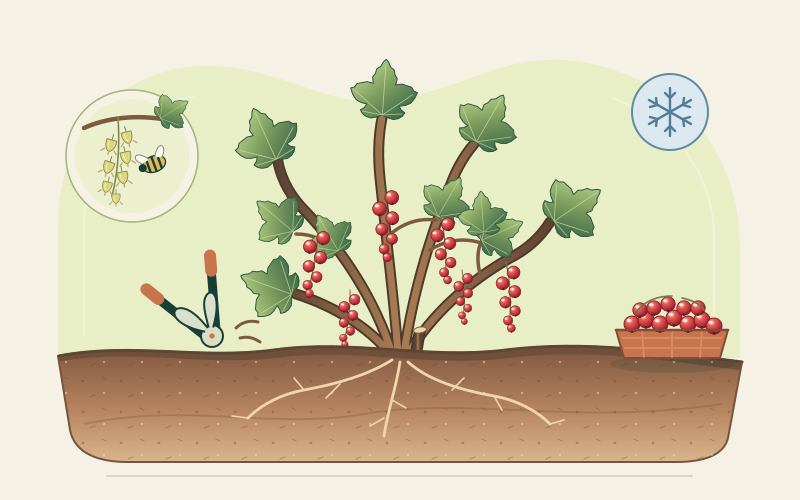
Field note: Prune red and white currants to retain fruitful older spur wood; renew black currants more strongly because they crop best on vigorous young wood. Remove frost covers during flowering so insects can enter.
Dates are indicative. Winter chill, cultivar, local law, frost forecasts and recent weather—not the calendar alone—should guide planting and harvest.

Cool-temperate Northern Hemisphere · example

A perennial rhythm

This is a maintenance guide for an established bush, not a promise of fruit in its planting year. Shift every operation with local dormancy and weather.

  1. November–March

    Plant certified stock while dormant and soil is workable. Prune according to species and training form; retain older fruiting spurs on red/white currants and renew old black-currant stems at the base.

  2. March–May

    Mulch and water new or dry plants. Watch swelling buds and blossom for late frost; use temporary cover overnight, then remove it during the day so pollinating insects can reach flowers.

  3. June–August

    Maintain moisture as fruit swells without waterlogging. Net ripening berries safely, then cut full-coloured, good-tasting strigs. Chill the harvest promptly and process or freeze surplus.

  4. September–October

    Remove obviously diseased material and keep the root zone weeded. Let growth harden and leaves fall naturally; plan replacements and obtain any required black-currant pollinizer before the dormant season.

In the first year, favour roots and framework over berries. In warm regions without dependable winter chill, no pruning calendar can substitute for an unsuitable climate.

From the field journal

Plant, prune and preserve your currants

Practical reading for choosing a species, matching its fruiting wood and bringing a tart summer crop to the table.

Your next harvest begins here

Plant for the third summer.

A well-chosen bush can fruit for many years. Begin with climate and local law, give the roots a season to establish, and learn the pruning difference before reaching for the secateurs.

Open the growing guide