
Crop 019 / Zea mays

Sow in a block, and choose the harvest before the seed.

Grow corn for tender sweet cobs or mature dry grain. Wait for warm soil, plant several short rows for wind pollination, and match sweet, flint, dent, popcorn or flour types to the food, feed or processing you intend.

Pollination
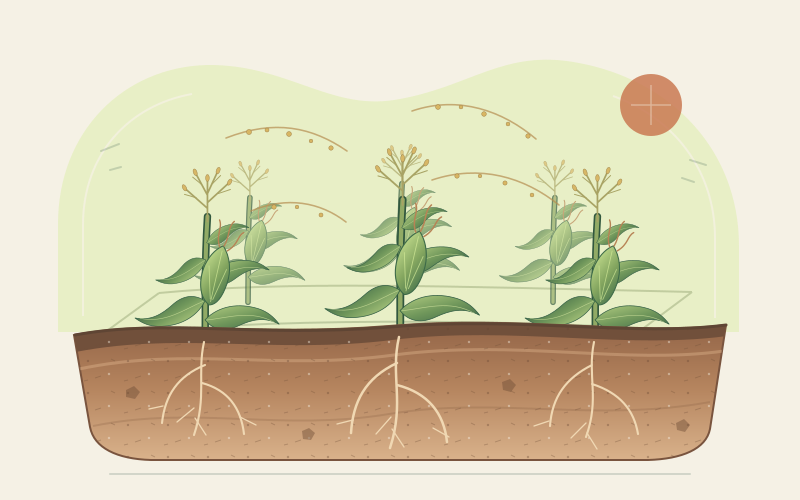
Plant a block Several short rows give wind-borne pollen a better chance of reaching neighbouring silks.
Typical crop window
70–150 days From direct sowing to the harvest stage for the stated type; dry grain may then need further drying.
Season
Warm and frost-free Heat, steady moisture and enough time to mature determine sweet and dry harvests.
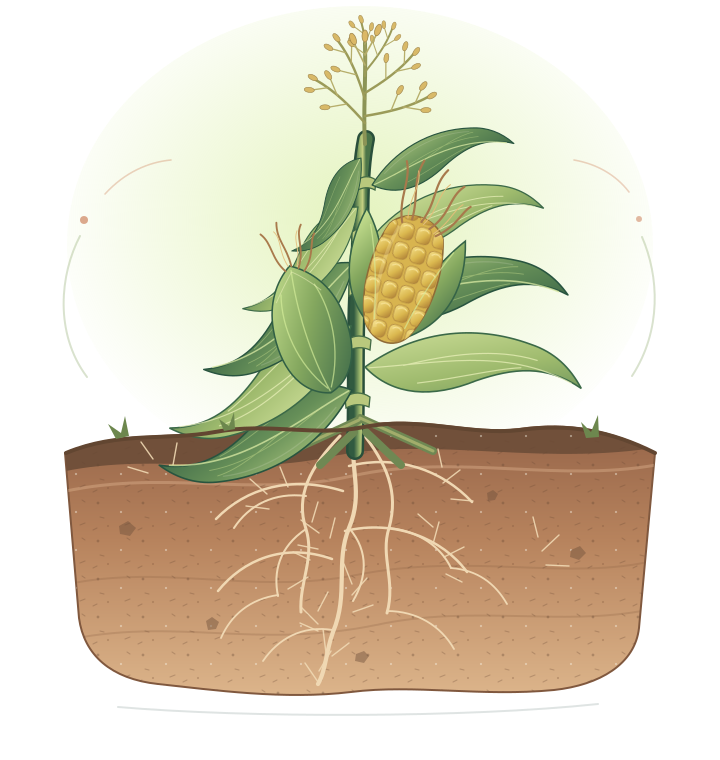
Corn plant with upright green leaves, pollen-bearing tassel, husk-covered ears with silks and branching roots in a soil cutaway.
Wind carries pollen from the tassel to the silks; each successfully pollinated silk can form a kernel on the ear.

Know the crop

Crop profile

A warm-season annual grass covering sweet corn picked immature for immediate food and field or other dry types harvested mature for milling, storage or feed. Sweet corn is not nutritionally interchangeable with mature dent, flint, flour or popcorn, and dry grain intended for storage needs a longer season and thorough drying.

Crop essentials

Botanical name
Zea mays
Growth
70–150 days From direct sowing to the harvest stage for the stated type. Early sweet corn can approach 70–100 days, while field and other dry-grain types commonly need about 100–150 days before mature harvest, followed by drying as needed. Cultivar, heat, planting date, frost and autumn rain shift the window.
Family
Poaceae, the grass family
Origin
Mesoamerica
Habit
Warm-season annual grass grown for immature sweet ears or mature dry kernels

Nutrition / cooked sweet corn

Nutrition, in context

Moderate Editorial nutrient-density rank 2. This is Rooted’s qualitative category for protein, fibre, folate, iron and potassium in the site’s cooked-food comparison, with highlights adding context. It is not an official nutritional score or a universal ranking of vegetables.

Reference nutrients per 100 g sweet yellow corn, cooked, boiled, drained, without salt
Nutrient Amount
Protein 3.41 g
Fibre 2.4 g
Folate 23 µg
Iron 0.45 mg
Potassium 218 mg
  • Provides some protein, fibre, folate and potassium, plus vitamin C (5.5 mg), in the cooked sweet-corn reference.
  • The same reference contains lutein + zeaxanthin (906 µg), a composition fact rather than a claim of a health outcome.
  • These values describe immature sweet yellow corn after boiling, not raw sweet corn, mature field or dry corn, cornmeal, masa, popcorn or animal feed.

Basis: Approximate values per 100 g sweet yellow corn, cooked, boiled, drained, without salt (USDA FoodData Central SR Legacy 169999); this is not a field-corn or mature dry-grain reference. Sweet corn is best eaten or preserved promptly because eating quality changes after harvest. Field and other dry types must reach maturity and be dried to a safe moisture for the intended storage period before clean, protected, airtight storage. Food and feed lots both need protection from mould and pests; do not use mouldy grain. Values do not measure absorption or individual needs.

At the table

Build a varied meal around corn

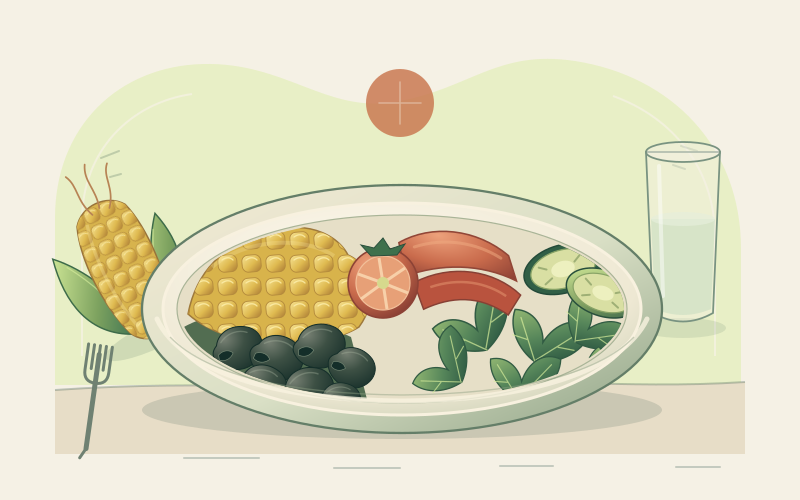
  • Beans or other pulses. Complementary amino-acid patterns: Pulses add protein, fibre and folate and have essential-amino-acid patterns that complement maize across a varied diet. They need not be eaten in the same meal. Serve sweet corn with black beans and peppers, or use mature food-grade dry corn in tortillas beside beans.
  • Squash and leafy or fruiting vegetables. Garden and meal variety: Corn, climbing beans and squash can share a well-planned bed where space and local conditions permit, but this is not a required planting formula. Their harvests also make a varied meal. Grow corn in blocks with an appropriately timed bean and squash companion planting, then serve the vegetables together.
  • Eggs, fish, yogurt or tofu. Protein variety: These accompaniments add protein and different nutrients to a corn-based meal. Choose according to preference and overall needs rather than treating sweet corn as a complete meal by itself. Make a corn, bean and tofu salad, or serve corn with fish and leafy vegetables.

The essentials

From warm soil to sweet cobs or dry grain

Six practical stages. Adapt timing, cultivar, feeding and protection to your heat, frost-free season, rainfall and local pests.

  1. Choose the kernel type and use

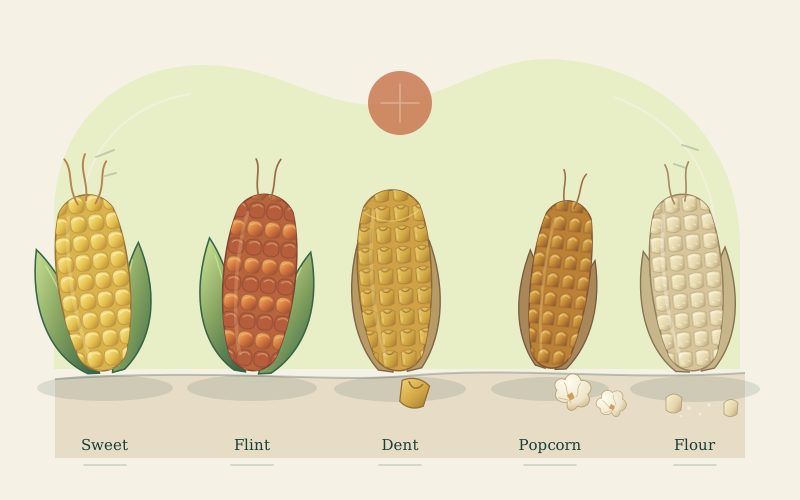
    Sweet corn is picked immature for fresh food or prompt preservation. Flint has hard outer starch for mature milling and other food uses; dent has a soft central crown and is widely used for food, livestock feed and industrial processing; flour corn has soft starch for grinding; specialised popcorn needs mature kernels with suitable popping moisture. Match the named cultivar to your season and intended food, feed or processing route.

  2. Direct-sow into warm soil

    Choose full sun and fertile, moisture-retentive but free-draining soil. Direct-sow after local frost danger has passed and the soil has warmed, following the packet’s depth and cultivar guidance rather than rushing into cold, wet ground. In a short season, choose an early type; any protected start still needs enough total warmth and time outdoors to mature.

  3. Plant a block and leave room

    Corn is wind pollinated: pollen from each tassel must reach the silks for kernels to form. Use several short rows in a roughly square block rather than one long row, commonly at least four rows. A common starting spacing is 20–30 cm between plants within wider access rows, but follow the cultivar’s instructions and thin crowded seedlings so roots do not compete excessively.

  4. Feed by soil test and water at flowering

    Corn has a substantial nitrogen demand, but compost is not an exact fertiliser calculation and excess nitrogen can delay maturity or pollute water. Use a soil test and local rates, timing any recommended supplement to active growth. Weed shallowly, water the root zone without persistent saturation, and maintain steady moisture especially before tasselling, through silking and during ear filling.

  5. Prevent local pest and disease problems

    Buy sound seed, choose resistance for locally named diseases and rotate away from corn where practical. Inspect seedlings, leaves and ear tips to identify cutworms, caterpillars, birds or other local problems before acting. Physical covers used early must come off before flowering; use wildlife-safe barriers, balanced nutrition and local diagnosis rather than improvised treatments, and never consume mouldy ears.

  6. Harvest and store by maturity

    Pick sweet corn when silks brown and filled kernels release milky juice; cool and refrigerate promptly, or preserve with a tested method. Let flint, dent, flour and popcorn reach mature hard kernels, then bring ears under cover before damaging wet weather, finish drying with airflow and store clean, sound grain in food-safe airtight containers. Condition popcorn gradually and test a sample; discard mouldy or doubtful food or feed grain.

Growing notes by place

Read your region, then read your weather

Compare broad growing conditions, then adjust for your own frost dates, altitude, rainfall and soil.

Cool, temperate and often maritime, with limited summer heat and locally short frost-free seasons.

Northwestern Europe

Early sweet corn can crop in warm sheltered gardens and under favourable cover; dry-grain types are much less reliable where autumn is cool or wet.

Indicative planting
Sow under cover in April–May and transplant after local frost, usually late May–June, or direct-sow once soil is warm. Plant in blocks for pollination and choose an early sweet cultivar.
Indicative harvest
Pick sweet corn when silks brown and kernels release milky juice, commonly August–September. Dry types need mature hard grain and may not finish reliably; dry any mature harvest under cover before storage.
Soil and moisture
Fertile, moisture-retentive but free-draining soil in full sun; warm the bed where practical, avoid waterlogging and maintain water during flowering.

Field note: Treat sweet and dry-corn maturity as different goals, shelter young plants from cold wind and do not leave damp mature grain in sealed storage.
Dates are indicative. Local frost forecasts, heat, seasonal rainfall and recent weather—not the calendar alone—should guide sowing and harvest.

Cool-temperate Northern Hemisphere · example

A warm-season rhythm

A compact planning guide, not a fixed schedule. Shift it with latitude, altitude, cultivar and local conditions.

  1. March–May

    Choose a cultivar whose sweet or dry harvest fits your frost-free season. Prepare a fertile, drained bed, check soil nutrients and wait for local frost danger to pass and soil to warm before direct sowing.

  2. May–June

    Sow several short rows in a pollination-friendly block, using the packet’s depth and spacing. Thin crowded seedlings, control small weeds shallowly and protect young plants from locally identified pests.

  3. June–August

    Maintain even moisture through tasselling, silking and ear filling, following a soil test for any nitrogen supplement. Inspect leaves and ears regularly, and remove any early insect covers before flowering.

  4. August–October

    Pick sweet corn at the milky stage and cool it promptly. Leave dry types to mature, then bring ears under cover before prolonged wet weather, finish drying and store only clean, sound grain protected from moisture and pests.

The 70–150-day window runs from direct sowing to the harvest stage for the stated type. Early sweet corn can approach 70–100 days; dry-grain types commonly need 100–150 days plus drying, and cool conditions or autumn rain can change the schedule.

From the field journal

Grow, choose and cook your corn

Practical reading for wind-pollinated blocks, kernel-type choices and balanced meals without confusing sweet corn with mature dry grain.

Your next harvest begins here

Start with a warm, well-planned block.

Choose the kernel type and harvest you want, give several rows room to pollinate, and keep notes on heat, water and maturity. A small block can teach you the difference between a sweet-cob crop and grain worth storing.

Open the growing guide