
Crop 009 / Brassica oleracea var. capitata

Give a cool-season head the room to firm.

Grow cabbage for compact early hearts or dense heads for storage. Match the cultivar to its harvest season, transplant into firm fertile soil, protect the bed before pests arrive, and keep growth steady as each head fills.

Harvest by head and season
Early or storage types Choose a cultivar for the intended harvest window and intended use.
Typical transplant-to-head window
70–120 days For many cultivars; raising the transplant adds time, and weather and type shift maturity.
Season
Cool and steadily moist Local heat, frost, rainfall and cultivar determine the useful growing window.
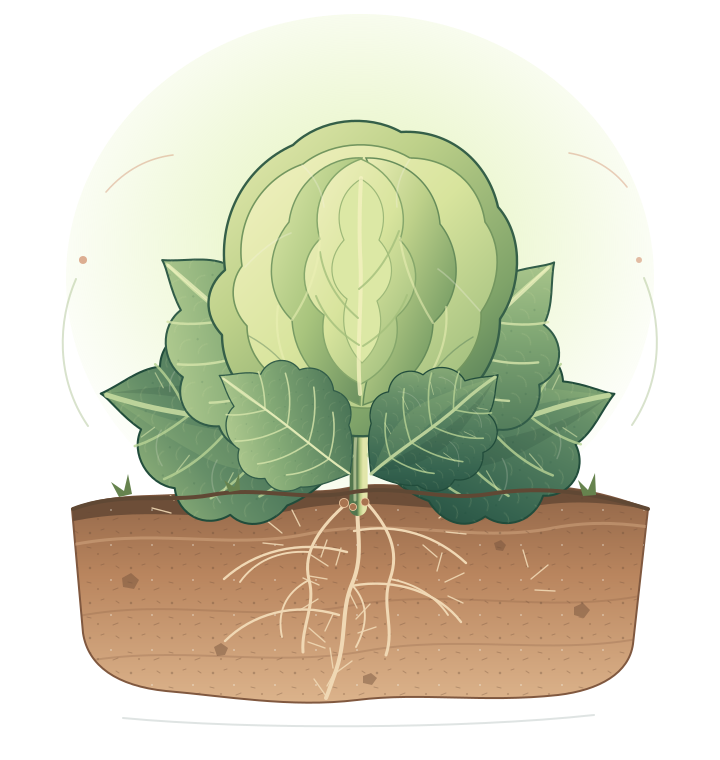
Cabbage plant with a firm rounded head, broad outer leaves and branching roots in a soil cutaway.
Broad outer leaves surround the developing head; steady growth, enough space and sound wrapper leaves support a firm harvest.

Know the crop

Crop profile

A cool-season headed brassica with early, autumn and storage cultivars. The crop needs steady growth and enough time for heads to firm; heat, drought and local brassica pests can alter the useful window.

Crop essentials

Botanical name
Brassica oleracea var. capitata
Growth
70–120 days From transplanting to a firm head for many cultivars. Direct-sown crops need the full nursery period added, while early small-headed types are faster and storage types slower. Temperature, spacing and cultivar strongly affect maturity.
Family
Brassicaceae, the brassica family
Origin
Coastal western and southern Europe
Habit
Cool-season headed brassica, usually grown for one harvest of a firm head

Nutrition / boiled and drained

Nutrition, in context

High Editorial nutrient-density rank 3. This is Rooted’s qualitative category for protein, fibre, folate, iron and potassium in the site’s cooked-food comparison, with highlights adding context. It is not an official nutritional score or a universal ranking of vegetables.

Reference nutrients per 100 g common cabbage, cooked, boiled, drained, without salt
Nutrient Amount
Protein 1.27 g
Fibre 1.9 g
Folate 30 µg
Iron 0.17 mg
Potassium 196 mg
  • Contains vitamin C (37.5 mg) and vitamin K (108.7 µg) in the same cooked reference.
  • Provides some fibre and folate, with modest protein, iron and potassium concentrations.
  • This record concerns common cooked cabbage, not raw, red, Savoy or Chinese cabbages.

Basis: Approximate values per 100 g common cabbage, cooked, boiled, drained, without salt (USDA FoodData Central SR Legacy 169976). Boiling and draining can move water-soluble nutrients into cooking water. Cultivar, leaf age, preparation and serving size change intake; these values do not measure absorption or individual needs.

At the table

Build a varied meal around cabbage

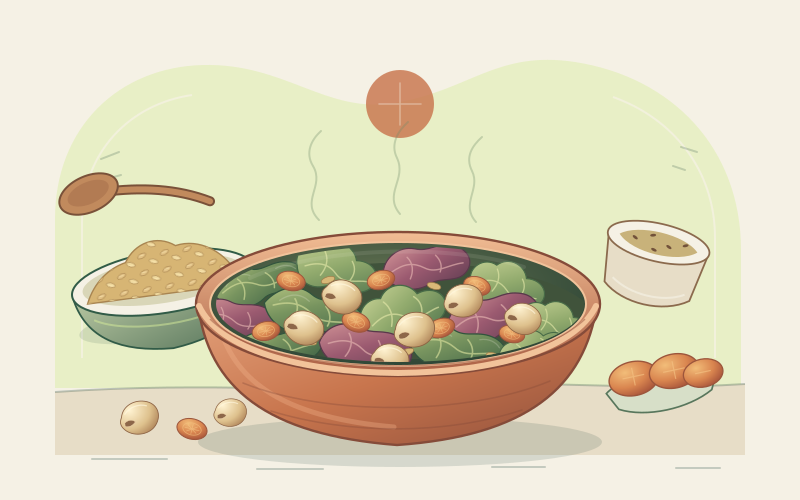
  • Beans, chickpeas or lentils — Protein and fibre. Pulses add protein, fibre, folate and iron to cabbage, making the meal more varied. Particular foods do not have to be combined at every meal. Cook cabbage into a white-bean stew or serve it with lentil dal.
  • Potatoes, rice or whole-grain bread — A varied meal. Starchy foods make a cabbage-based meal more substantial and add their own nutrients. Include a protein-containing food as preferred. Serve cabbage with potatoes and beans, or with rice and tofu.
  • Carrots, peppers or tomatoes — Vegetable variety. Other vegetables add contrasting textures and nutrients. This is a flexible meal suggestion, not a required nutrient-combining rule. Make a cabbage, carrot and sweet-pepper sauté to serve with chickpeas.

The essentials

From cool-season transplant to firm head

Six practical stages. Adapt timing, cultivar, spacing and protection to your rainfall, summer heat, winter cold and local pests.

  1. Choose a cultivar for a cool-season harvest

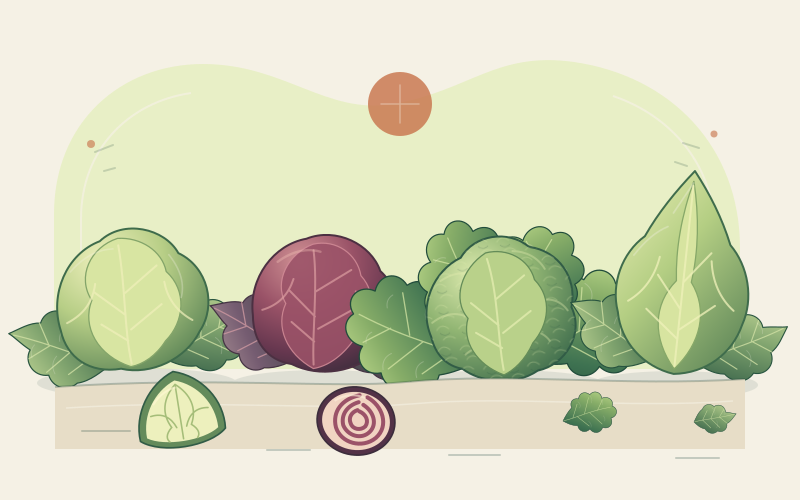
    Match the seed’s spring, summer, autumn, winter or overwintering classification to local conditions rather than treating every cabbage as interchangeable. Compact early types and large storage heads need different timing. Raise plants in clean modules or a protected seedbed, giving seedlings bright light and enough room to stay sturdy.

  2. Transplant firmly and allow space

    Harden off indoor-raised plants gradually, then move them with the root ball intact. Set plants so the lowest leaves sit just above the soil without burying the growing point, firm the soil around the roots and water in. As a starting range, allow about 30 cm for compact cultivars and 45 cm or more for larger types, following the packet.

  3. Keep growth steady as heads fill

    Use fertile, moisture-retentive but well-drained soil and check moisture below the surface during establishment and dry spells. Uneven watering as heads fill can contribute to splitting. Mulch after the soil has warmed, weed shallowly, and base nutrient decisions on a soil test; excess late nitrogen can encourage loose leaves and delay or weaken the head.

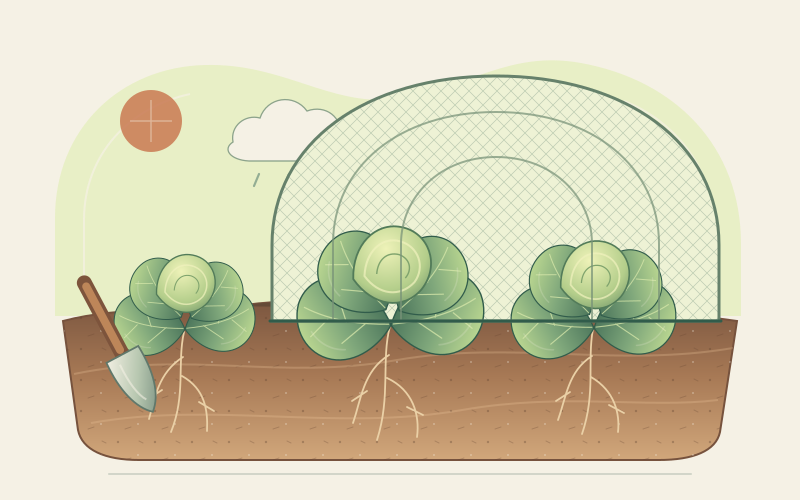
  4. Fit netting before pests arrive

    Install fine insect-proof mesh immediately after planting, before butterflies lay eggs or root flies reach the stems. Support it clear of the foliage, allow for mature spread and secure every edge. Check that no insects are trapped inside, inspect leaf undersides when you lift the cover, and remember that insect mesh does not necessarily exclude birds.

  5. Manage clubroot with rotation and a soil test

    Use clean transplants, avoid moving contaminated soil and rotate away from susceptible brassicas where clubroot is confirmed. Examine swollen or distorted roots and seek local diagnosis rather than assuming. Do not add lime by routine: test the soil first and follow the report’s material and rate, because raising pH does not reliably eliminate an established infestation.

  6. Cut firm heads and store sound ones

    Press the head gently and cut when dense and firm for its type, before mature heads split or deteriorate. Retain a few healthy wrapper leaves and use cracked heads promptly if sound. Refrigerate whole, unwashed heads for short keeping; for longer storage, choose a keeping cultivar and use mature, unbruised heads in a cold, humid, frost-free store, inspecting them regularly.

Growing notes by place

Read your region, then read your weather

Compare broad growing conditions, then adjust for your own frost dates, altitude, rainfall and soil.

Cool, temperate and often maritime; exposed, northern and upland sites have shorter growing seasons.

Northwestern Europe

Cabbage suits much of Britain, Ireland and the Low Countries. The calendar here concerns summer and autumn heading types, not every overwintered spring cabbage.

Indicative planting
Sow February–April under cover and transplant April–June after hardening off. Choose cultivars matched to the intended harvest season.
Indicative harvest
Cut firm heads from June–October according to cultivar and planting date. Harvest before severe weather splits or damages mature heads.
Soil and moisture
Fertile, firm and moisture-retentive but well-drained soil, with organic matter and a near-neutral pH where possible.

Field note: Net against caterpillars and pigeons, rotate with other brassicas and water during head formation.
Dates are indicative. Local frost forecasts, heat, seasonal rainfall and recent weather—not the calendar alone—should guide sowing and harvest.

Cool-temperate Northern Hemisphere · example

A cool-season heading rhythm

A compact planning guide, not a fixed schedule. Shift it with latitude, altitude, cultivar and local conditions.

  1. February–April

    Prepare a fertile, drained bed and start spring and summer cultivars under cover where conditions are cold. Keep seedlings bright and sturdy, and use soil-test results to plan nutrient or pH adjustments.

  2. April–June

    Harden off and transplant at the cultivar’s final spacing. Firm plants in, water thoroughly and fit pest barriers before damage begins. Start later or storage types where their local sowing window arrives.

  3. June–September

    Keep moisture steady as heads fill, weed shallowly and inspect leaf undersides. Cut early heads as they become firm, and harvest promptly rather than leaving mature heads to split.

  4. September–November

    Cut later and storage heads before damaging hard freezes or prolonged wet weather. Select sound keeping types with intact wrappers for cold, humid, frost-free storage and inspect them regularly.

The 70–120 day window runs from transplanting for many cultivars, not from sowing. Early small-headed types are faster and storage types slower; temperature, spacing and cultivar strongly affect maturity.

From the field journal

Grow, choose and cook your cabbage

Practical reading for firm heads, informed variety choices and balanced meals without superfood claims.

Your next harvest begins here

Start with a few well-spaced heads.

A small planting is enough to learn the rhythm of transplanting, protecting and harvesting. Match the cultivar to your season, keep growth steady and record which heads firm well in your conditions.

Open the growing guide