
Crop 034 / Vicia faba

Cool soil now, full pods later.

Direct-sow broad beans into the locally cool season, support the upright stems before they lean, and pinch growing tips once the lowest flowers have set small pods. Pick plump green seed for the kitchen or leave mature seed to dry for storage.

One annual, two harvests
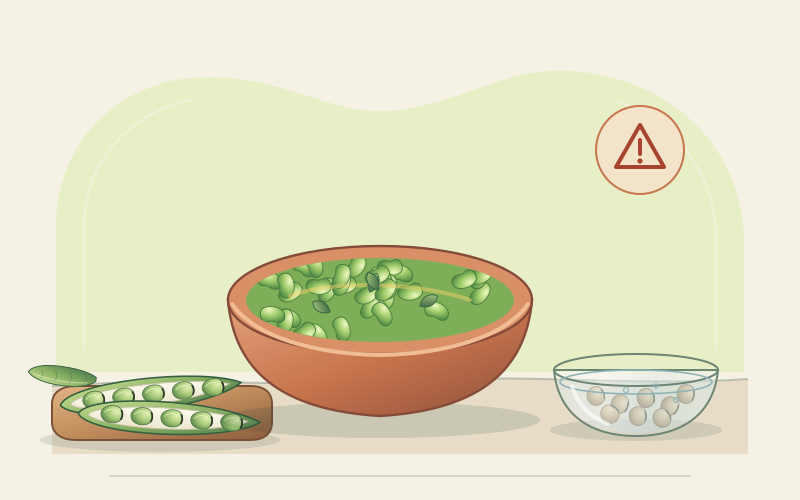
Fresh or dry seed Shell plump green beans for prompt cooking, or let pods mature for a thoroughly dried storage crop.
Typical crop window
80–180 days From direct sowing to fresh or dry harvest; autumn-sown crops take longer in elapsed time because they overwinter.
Season
Cool, with moist roots Sow into workable soil and plan flowering before sustained heat, without leaving the bed waterlogged.
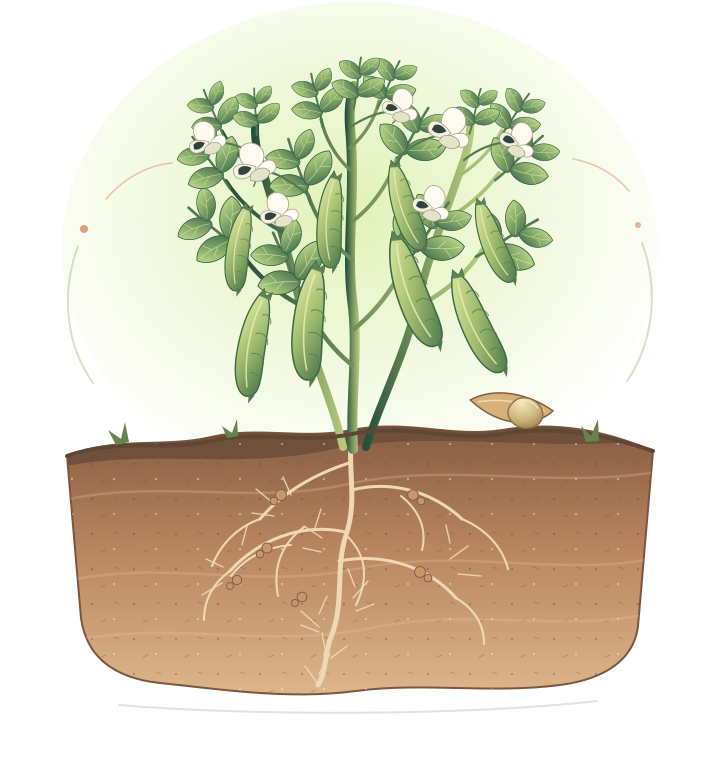
Upright broad bean plant with thick stems, paired oval leaves, white and dark-marked flowers, long green pods and branching nodulated roots in a soil cutaway.
Broad beans are upright annuals, not climbing beans. Their large seeds develop in long pods above a branching root system.

Know the crop

Crop profile

A cool-season annual pulse grown for fresh green seed or mature dry seed. Broad beans are direct sown into cool, workable soil, usually supported as they grow, and pinched at the tips once the lowest flowers have set small pods. Hot weather can shorten flowering, while wet soil and humid ripening weather increase crop problems.

Crop essentials

Botanical name
Vicia faba
Growth
80–180 days From direct sowing to fresh shelling or dry-seed harvest. Many spring-sown crops yield fresh beans in about 80–120 days; dry seed commonly needs about 120–180 days. Cultivar, temperature and elevation alter maturity, and autumn-sown crops have a longer elapsed calendar because they overwinter.
Family
Fabaceae, the legume family
Origin
Domesticated in the Near East; its precise wild origin remains uncertain
Habit
Cool-season annual with upright, hollow stems, compound leaves without climbing tendrils, and long pods; fresh and dry harvests have different endpoints

Nutrition / boiled without salt

Nutrition, in context

High Editorial nutrient-density rank 3. This is Rooted’s qualitative category for protein, fibre, folate, iron and potassium in the site’s cooked-food comparison, with highlights adding context. It is not an official nutritional score or a universal ranking of pulses.

Reference nutrients per 100 g mature broad beans (fava beans), cooked, boiled, without salt
Nutrient Amount
Protein7.6 g
Fibre5.4 g
Folate104 µg
Iron1.5 mg
Potassium268 mg
  • Provides protein, dietary fibre and folate in the cooked edible portion.
  • Contains non-heme iron and potassium; these are nutrient contents, not absorbed amounts.
  • These figures describe mature boiled seed, not raw dry seed, fresh immature beans or canned products.

Basis: Approximate values per 100 g mature broad beans (fava beans), cooked, boiled, without salt (USDA FoodData Central SR Legacy 173753). Cook fresh broad beans before eating. Sort and rinse dry seed, soak if using that method, then boil in fresh water until fully tender.

Favism warning: People with glucose-6-phosphate dehydrogenase (G6PD) deficiency can develop haemolytic anaemia after eating fava beans. Susceptible people must avoid them; cooking does not make fava beans safe for people with this condition.

At the table

Build a varied meal around broad beans

  • Rice, barley or whole-grain flatbread — Complementary amino-acid patterns. Broad beans and cereal grains have different essential-amino-acid patterns that can complement each other within a varied diet. They do not need to be combined in the same meal. Serve cooked broad beans with rice and vegetables, or beside barley and greens.
  • Tomatoes, sweet peppers or lemon — Vitamin C and non-heme iron. Vitamin-C-rich foods eaten with broad beans can support absorption of their non-heme iron. Actual absorption depends on the whole diet and iron status. Add tomatoes and lemon to a broad-bean stew, or serve it with sweet peppers.
  • Leafy greens, carrots or cabbage — Vegetable variety. Other vegetables add flavours, textures and nutrients without any mandatory pairing ratio. No single food or combination prevents or treats disease. Cook broad beans with carrots and cabbage, or serve them with leafy greens and a grain.

The essentials

From cool soil to a fresh bowl or dry jar

Six practical stages. Match cultivar and timing to local frost, heat, rainfall and the harvest you want.

  1. Choose the cultivar and sowing season

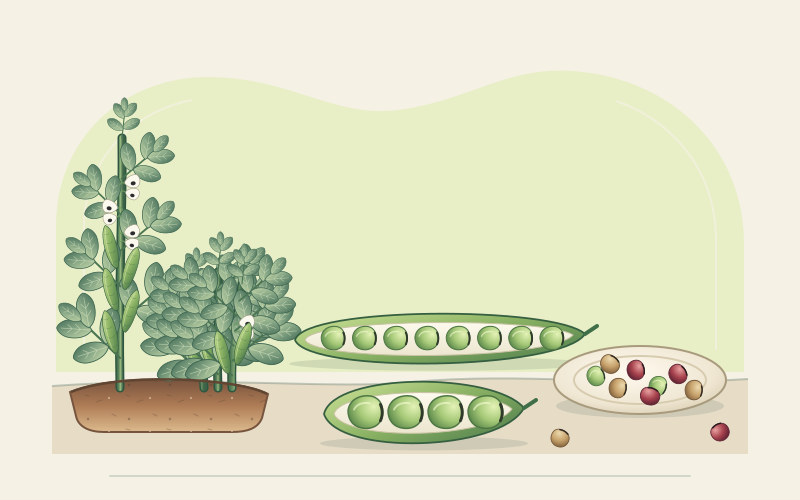
    Select a locally adapted broad bean for your intended sowing date, plant height and harvest. Only use autumn sowing where winters are suitable and the packet explicitly rates the cultivar for it. Dwarf types fit small spaces; longpod, Windsor and coloured-seed types differ in form, but no class guarantees local performance.

  2. Direct-sow into cool, workable soil

    Sow where plants will grow, generally about 5 cm deep and 15–23 cm apart, with roughly 45 cm between single rows; follow the packet for the cultivar. Broad beans suit sunny, sheltered, free-draining ground. Spring sowing is safer than autumn sowing where soil stays wet or winter cold is severe.

  3. Support the row before stems lean

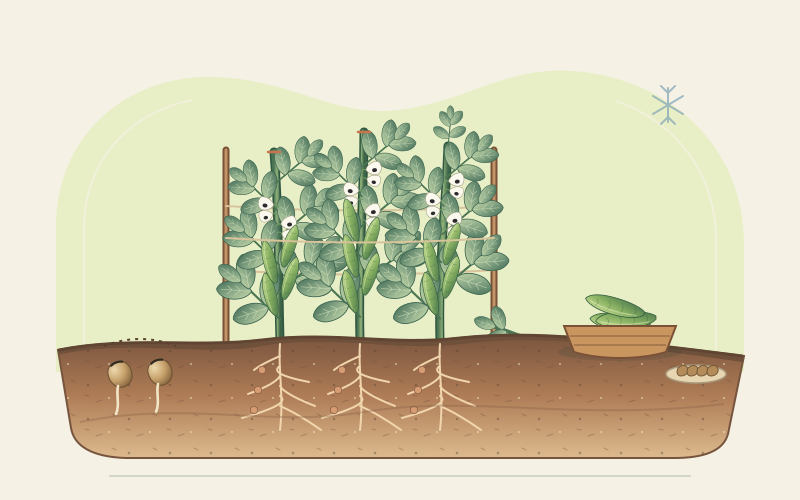
    Broad beans do not climb. Place sturdy stakes at row ends and at intervals along long rows, then run string around the row at about 30 cm height intervals as plants grow. Compact cultivars may need only twiggy supports. Install the main supports early to avoid damaging roots later.

  4. Water, weed and pinch at pod set

    Keep moisture adequate during establishment, flowering and pod filling without saturating soil. Weed while plants are young and avoid heavy nitrogen feeding. Once the lowest flowers have formed small pods, pinch out the soft shoot tips; this can limit further soft growth and reduces the tips favoured by black bean aphids.

  5. Pick fresh pods or wait for maturity

    For shelling, pick well-filled green pods from the lowest nodes upward, before the seed attachment scar turns black and the beans become tough. Very young pods can be cooked whole when tender. For dry seed, leave pods on the plant until they darken and seeds are mature and hard; harvest before prolonged wet weather causes mould or sprouting.

  6. Chill fresh beans or dry seed completely

    Shell fresh beans, refrigerate promptly and cook before eating; blanch before freezing if using that preservation method. For storage, shell or thresh dry pods, remove debris and spread seed in a ventilated place until thoroughly hard and dry. Discard mouldy or doubtful seed, then store it in a labelled airtight container in a cool, dark, dry place. Drying is not cooking.

Growing notes by place

Read your region, then read your weather

Compare broad growing conditions, then adjust for your own frost dates, altitude, rainfall and soil.

Cool, temperate and often maritime, with mild western coasts, colder uplands and frequently damp winters.

Northwestern Europe

Broad beans suit the cool season. Use spring sowing where winter waterlogging or severe cold makes autumn establishment unreliable; only cultivars explicitly rated for autumn sowing belong in that slot.

Indicative planting
Direct-sow March–May in most gardens. In mild, sheltered, free-draining sites, sow an autumn-hardy cultivar in October–November or under protection in February.
Indicative harvest
Pick fresh pods about May–August, beginning with the lowest pods. Leave a dry-seed crop until pods darken and seed is hard, then finish drying under cover if rain persists.
Soil and moisture
Fertile, moisture-retentive but free-draining soil in sun and shelter; avoid saturated ground and excessive nitrogen.

Field note: Support rows with stakes and string before stems lean, and pinch tips only after the lowest flowers have formed small pods.
Dates are indicative. Local frost forecasts, heat, seasonal rainfall, altitude and recent conditions—not the calendar alone—should guide sowing and harvest.

Mediterranean lowlands · example

An autumn-to-early-summer rhythm

A compact planning guide for mild lowlands, not a fixed schedule. Cold uplands and other regions need their local sowing season.

  1. October–December

    Choose a locally adapted autumn-sowing cultivar. Prepare a sunny, free-draining bed and direct-sow while soil is workable, before persistent cold or waterlogging.

  2. January–March

    Check overwintered plants, remove weeds and install row supports before stems lean. Protect only as local frost and the cultivar require; cold uplands may sow later instead.

  3. March–May

    Water at soil level during dry flowering and pod-filling periods. When the lowest flowers have set small pods, pinch out soft shoot tips and inspect for black bean aphids.

  4. April–July

    Pick fresh pods from the lowest nodes as they fill. For dry seed, wait for mature dark pods, harvest before prolonged wet or very hot weather, and finish drying seed under ventilation.

This example follows autumn establishment into spring harvest. Elsewhere, use locally recommended dates and the 80–180 day window as general context; overwintering and cold highland crops can take longer in elapsed time.

From the field journal

Grow, choose and cook your broad beans

Practical reading for cool-season sowing and support, informed cultivar choices, and safe preparation grounded in an exact cooked reference food.

Your next harvest begins here

Start with a short row in the cool season.

A small block is enough to learn the crop’s rhythm from direct sowing to filled pods. Put supports in early, pinch at pod set, and decide whether the harvest is bound for the refrigerator or the dry-store jar.

Open the growing guide