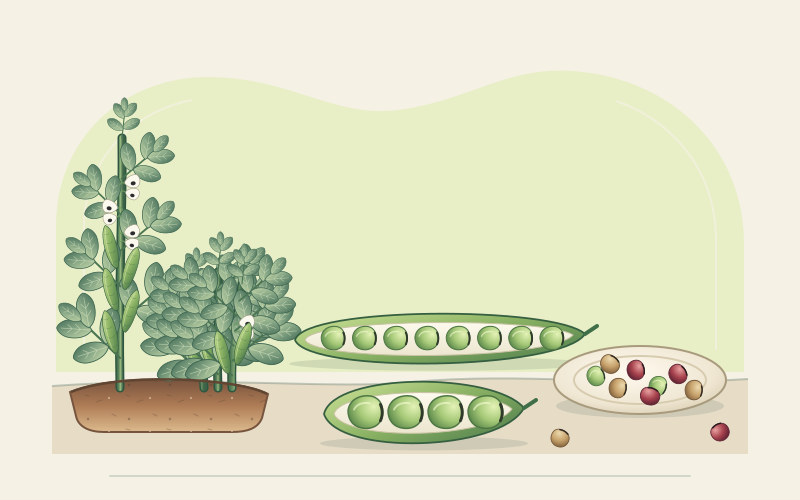
Many garden forms, one broad bean species
Broad bean, fava bean and faba bean all refer to Vicia faba. Field bean, horse bean and tick bean usually refer to smaller-seeded cultivated forms used for feed or other purposes, while garden catalogues often emphasise larger-seeded culinary forms. These everyday groups overlap with older botanical classifications and should not be treated as separate crop species.
Longpod and Windsor are traditional garden descriptions based especially on pod and seed form. Dwarf describes plant size, not a separate pod type. Autumn-hardy describes suitability for a particular sowing season, and a coloured-seed or crimson-flowered label describes appearance. A single cultivar can therefore belong to more than one of these practical categories.
No category is a guarantee of flavour, maturity, frost survival, yield or disease resistance. Suppliers can also describe the same trait differently. Read the botanical name, cultivar name, sowing instructions, expected height, days to harvest and local trial evidence together.
Compare the practical garden categories
| Category | Typical distinguishing trait | Choice question |
|---|---|---|
| Longpod | Long, relatively narrow pods with numerous seeds; individual seeds often smaller than Windsor forms | Do you want this pod form and a full-sized row crop? |
| Windsor | Shorter, broader pods with fewer, generally larger seeds | Is a large fresh or dry seed the kitchen priority? |
| Dwarf | Compact plant habit, often useful in containers or small, exposed gardens | Does the stated mature height fit the space and container? |
| Autumn-hardy | Bred or selected for autumn sowing where winter conditions suit it | Are local winters and drainage suitable, not merely the calendar? |
| Coloured seed or flower | Green, buff, brown, purple or reddish seed, or ornamental crimson flowers | Is the colour desired alongside—not instead of—local performance? |
Longpod: length and seed number
Longpod cultivars produce characteristically elongated pods, often with more seeds than a Windsor-type pod. ‘Masterpiece Green Longpod’ is a familiar catalogue example with green seed. Pod length does not tell you the plant is a climber: longpod plants remain upright broad beans and commonly need row support. Nor does more seed per pod automatically mean more food per plant.
Compare stated plant height, maturity and eating quality. A longpod name can describe the pod without specifying whether the cultivar is suitable for autumn sowing, so check that instruction separately.
Windsor: broad pods and large seed
Windsor types are known for relatively broad pods and large, often flattened seeds. ‘Broad Windsor’ or similar names appear in many North American seed lists. Large seed can be useful for shelling and dry storage, but it can become tough if left too long at the fresh stage. Pick filled green pods while the attachment scar remains pale or green for a tender fresh harvest.
Windsor is not a winter-hardiness rating. Plants with heavy pods still need support, and a large-seeded cultivar grown in an untried climate should be judged by its actual flowering and maturity rather than its culinary reputation.
Dwarf: compact, not necessarily support-free
Dwarf cultivars such as ‘The Sutton’ are useful where a full-sized row would be unwieldy. Their compact habit suits large containers and small blocks, and nearby stems may help support one another. Twiggy sticks or a low string can still prevent leaning in wind or under pod weight. Container width, depth, watering and stability remain important.
Dwarf does not mean early, everbearing or suitable for a small pot. Check the supplier’s expected spread and follow the recommended spacing and container volume. The crop remains an annual with one main flush of lower-to-upper pod production rather than a perpetual harvest.
Choose for sowing season and seed colour separately
Autumn-hardy means suitable conditions as well as suitable genetics
‘Aquadulce Claudia’ is widely recommended for autumn sowing in suitable British conditions. That does not make every autumn planting safe: severe cold, exposed wind, saturated soil and pest damage can still destroy a stand. Use a cultivar explicitly rated for autumn sowing and choose it only where local experience supports the practice. In colder or waterlogged gardens, spring sowing is more reliable.
An autumn-sown crop can provide an early harvest, but its elapsed time from sowing is long because winter intervenes. Do not compare its calendar duration directly with a spring-sown crop’s 80–120 days to fresh pods. Late-winter sowing under protection is a different choice again and still requires careful hardening off if plants are raised in containers.
Colour is a culinary and visual trait
Broad bean seed may dry green, cream, buff, brown or reddish purple, and cultivars such as ‘Crimson Flowered’ add ornamental flower colour. Fresh and dry seed from one plant can also differ in colour. Cooking, seed coat removal and storage alter appearance further. Colour is a legitimate reason to grow a variety, but it does not establish a nutrient ranking or a safer preparation method.
No seed colour or cultivar should be assumed safe for a person with G6PD deficiency. Favism is associated with fava beans as a crop, not with a single garden type. Cooking, drying, shelling or choosing a particular colour does not remove that risk for susceptible people.
Let local adaptation make the final choice
Start with the sowing season. A short northern spring needs a cultivar that can flower and fill pods before sustained heat. A Mediterranean lowland autumn crop needs winter adaptation and enough time to finish before summer. Highland growers should use cultivars or landraces proven at similar elevation. Disease pressures and rainfall patterns also vary too much for one universal recommendation.
| Check | Question to answer |
|---|---|
| Identity | Is it a named cultivar of Vicia faba from a reputable supplier? |
| Sowing window | Is it recommended for autumn, late-winter protection or spring sowing? |
| Maturity | Can it produce fresh or dry seed within the local cool season? |
| Plant habit | Will its height and spread fit the row, supports or container? |
| Harvest use | Do you want small whole pods, fresh shelling seed or dry storage seed? |
| Local evidence | Are maturity and disease claims supported by nearby trials or experience? |
Trial two suitable cultivars side by side if space permits. Record emergence, winter survival where relevant, flowering, height, lodging, pod maturity, eating quality and symptoms. Repeat a promising trial before relying on it. Our growing guide covers the supports and pinching common to full-sized types.
Save seed with crossing and food safety in mind
Broad beans can cross-pollinate with the help of insects. Growing two cultivars beside each other can therefore produce seed whose next generation differs from the parent, even though the pods on the current plant show the mother plant’s traits. If maintaining a named cultivar matters, follow a recognised seed-saving guide for isolation and population size rather than assuming one plant or one pod will stay true.
Select healthy plants representative of the desired type and let seed mature fully. Do not build a seed stock from plants with seed-borne or residue-borne disease symptoms. Dry the seed thoroughly before airtight storage, label cultivar and year, and keep planting seed separate from treated or seasoned food. For eating, follow the safe preparation guide; saved dry seed is not ready to eat merely because it is hard.