
Crop 046 / Asparagus officinalis

Plant the bed. Grow the fern. Then pick the spears.

Asparagus is a long-lived perennial, not a quick annual. Start with healthy one-year-old crowns or less expensive seed, give the roots a sunny, free-draining permanent home, and let young plants build fern before taking a light seasonal harvest.

Crop habit
Long-lived perennial A dedicated bed can crop for many years when crowns and summer fern remain healthy.
First light harvest
About 2–3 years Roughly two years after planting one-year crowns or three after sowing seed; never a heavy early cut.
Edible season
Seasonal young spears Stop cutting after the local spring window and let all later shoots become fern.
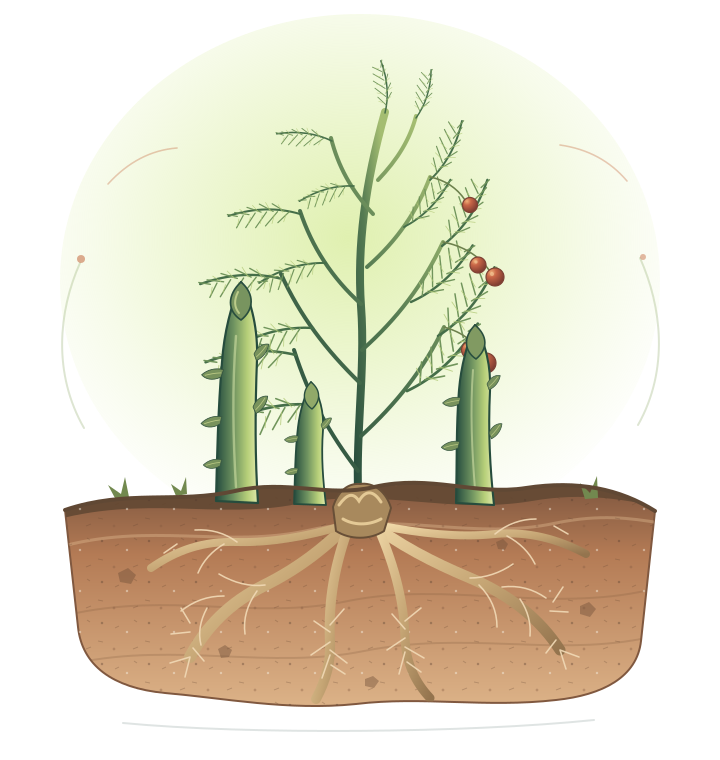
Asparagus plant with green spring spears, branching feathery fern, red berries on a female stem and a spreading crown and roots in a soil cutaway.
The edible spear is a young shoot. Uncut shoots become feathery fern that feeds the underground crown; red berries on female plants are not food.

Know the crop

Crop profile

A long-lived perennial grown for young spring spears. One-year-old crowns establish faster than seed, but either route needs patient fern growth, excellent drainage and no heavy early harvest before a seasonal cutting window begins.

Crop essentials

Botanical name
Asparagus officinalis
Growth
2–3 years From planting one-year-old crowns to a first light harvest in about two years, or from sowing seed in about three years. Do not harvest in the planting year; local guidance may recommend waiting longer. Full seasonal production follows further establishment.
Family
Asparagaceae, the asparagus family
Origin
Mediterranean region and western Asia
Habit
Herbaceous perennial with seasonal spears, summer fern and an underground crown

Nutrition / boiled and drained

Nutrition, in context

High Editorial nutrient-density rank 3. This is Rooted’s qualitative category for protein, fibre, folate, iron and potassium in the site’s cooked-food comparison, with highlights adding context. It is not an official nutritional score or a universal ranking of vegetables.

Reference nutrients per 100 g asparagus, cooked, boiled, drained, without salt
Nutrient Amount
Protein2.4 g
Fibre2 g
Folate149 µg
Iron0.91 mg
Potassium224 mg
  • Contains folate, vitamin K (50.6 µg) and vitamin C (7.7 mg) in the same cooked reference.
  • Provides fibre and some potassium, iron and protein as part of a varied meal.
  • The drained boiled values are not interchangeable with raw, roasted, canned or frozen cooked asparagus.

Basis: Approximate values per 100 g asparagus, cooked, boiled, drained, without salt (USDA FoodData Central SR Legacy 168390). Cooking method, discarded cooking water, cultivar, spear thickness and serving size change nutrient intake. Values describe the reference food, not absorbed amounts or individual dietary needs.

At the table

Build a varied meal around asparagus

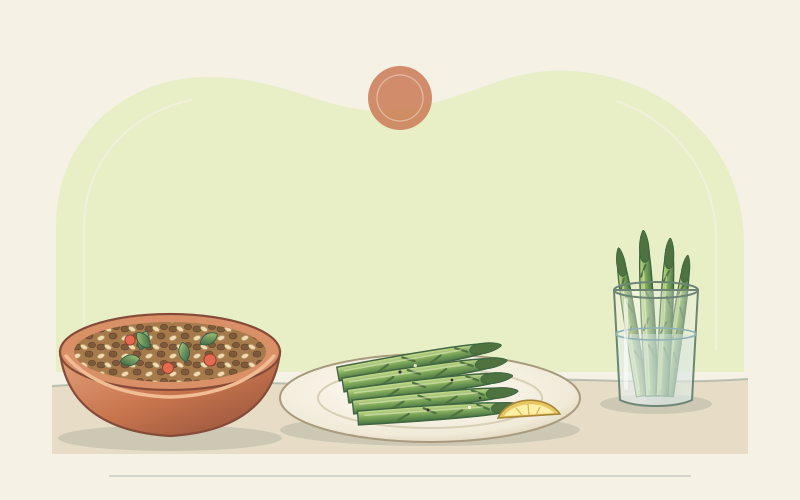
  • Beans, lentils or chickpeas — Protein and fibre. Pulses make an asparagus meal more substantial and add protein, fibre, folate and minerals. Their amino-acid patterns can complement grains across a varied diet without a required combination at one meal. Serve asparagus with a white-bean and lemon salad or add it to a lentil and vegetable stew.
  • Rice, pasta, bread or potatoes — A varied meal. Grains and starchy foods add energy and their own nutrients alongside asparagus. Choose accompaniments that fit dietary preferences and needs. Toss asparagus and chickpeas with whole-grain pasta, or serve it beside potatoes and beans.
  • Eggs, fish, yogurt or tofu — Protein variety. These foods add protein and different nutrients to an asparagus dish. No single accompanying food is necessary to make the vegetable useful. Try asparagus with tofu and rice, or serve it with eggs and whole-grain toast.

The essentials

From a permanent bed to a bounded spring harvest

Six practical stages across multiple years. Adapt timing, cultivar, irrigation and winter care to your own climate.

  1. Commit to the right site

    Choose full sun and a permanent bed where tall fern will not shade other crops. Drainage is essential: use raised beds on heavy ground and avoid hollows where water stands. Remove perennial weeds before planting because later deep cultivation can damage crowns.

  2. Choose crowns or seed

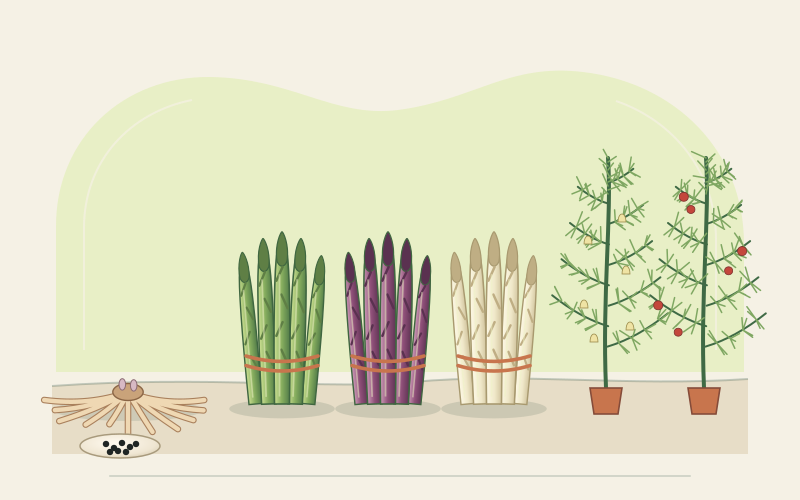
    Healthy dormant one-year-old crowns cost more but usually allow a first light harvest a year sooner. Seed is cheaper and offers more plants, but needs careful nursery raising and about three years before cutting. Select locally adapted cultivars rather than assuming one variety suits every climate.

  3. Plant without crowding roots

    Follow local depth guidance, commonly a trench or hole around 15–20 cm deep. Set buds upward, spread the fleshy roots and cover according to the supplier’s method, watering to settle soil. Allow roughly 30–45 cm between plants and ample access between rows.

  4. Build fern, not an early crop

    Do not harvest in the planting year; seed-raised plants need an even longer establishment period. Water young plants through dry spells, hand-weed carefully and keep every spear growing into fern. This foliage stores energy in the crown for later spears.

  5. Protect the perennial cycle

    Support tall stems in wind and inspect for asparagus beetles and other local pests. After the seasonal harvest, maintain healthy fern through summer. Cut stems down only after they yellow or brown in autumn or the local dormant season; remove berry-bearing litter where self-sown seedlings are a problem.

  6. Cut a short seasonal flush

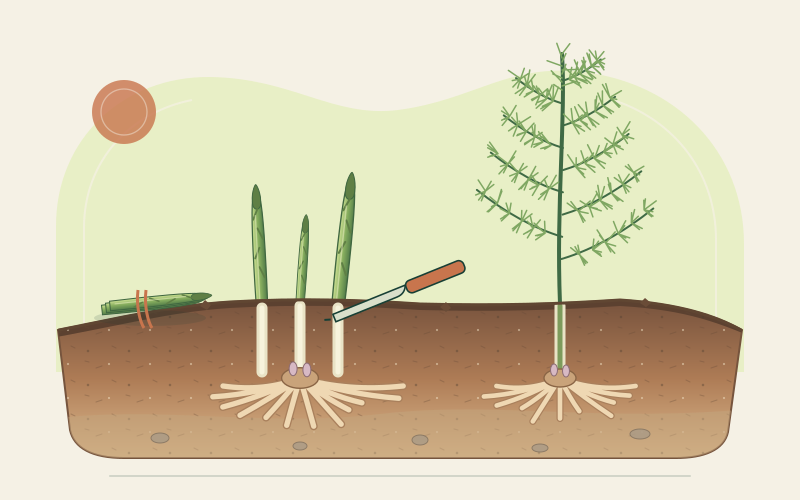
    Begin lightly about two years after planting crowns or three after seed. On established plants, cut tender spears at or just below the soil surface when roughly 15–23 cm tall, before tips open. Harvest only during the local 6–8-week window, stop if spears become persistently thin, and leave all later shoots.

Growing notes by place

Read your region, then read your perennial cycle

Compare broad conditions, then adjust for frost, altitude, rainfall, dormancy and the age of your own bed.

Cool, temperate and often maritime, with milder western coasts and colder, later springs inland and at elevation.

Northwestern Europe

A traditional permanent crop in Britain, Ireland, the Low Countries and nearby districts. Sheltered, sunny and well-drained ground matters more than squeezing in an early planting.

Indicative planting
Sow indoors around February or outdoors in March–April, or plant dormant one-year-old crowns in March–April when soil is workable. Seed-raised plants need a nursery year before final spacing.
Indicative harvest
Do not cut in the planting year. Begin a short harvest about two years after planting crowns or three after sowing; established beds commonly cut from mid-April into June for about 6–8 weeks, then let all spears fern.
Soil and moisture
Deep, fertile and free-draining soil in a permanent sunny bed; remove perennial weeds and use a raised bed where heavy soil stays wet.

Field note: Hand-weed without spearing roots, support tall ferns in wind and stop the seasonal harvest on schedule so foliage can replenish the crowns.
Dates are indicative. Bed age, local frost forecasts, seasonal rainfall, winter dormancy and recent weather—not the calendar alone—should guide planting and harvest.

Permanent bed · multi-year establishment

A patient perennial rhythm

A planning sequence rather than a fixed calendar. Shift each stage with local conditions and follow regional advice on first harvest.

  1. Before planting

    Choose a sunny, sheltered and free-draining permanent site. Remove perennial weeds, test soil and order healthy crowns or raise seedlings for the local planting window.

  2. Year 1

    Plant crowns or seedlings, water and hand-weed. Harvest nothing: every spear must become fern. Support stems and protect the foliage that is building the root system.

  3. Years 2–3

    Continue full fern growth. Depending on the starting material and local guidance, begin a brief, light harvest around year 2 for crowns or year 3 for seed, then stop and regrow fern.

  4. Each established year

    Cut spears only in the local spring or post-dormancy window, generally no more than 6–8 weeks. Grow and support fern all summer, then remove stems after natural dieback.

The 2–3 year window means time to a first light harvest, not full production. Starting with a one-year-old crown does not make the new bed ready for a full cut immediately.

From the field journal

Plant, choose and cook your asparagus

Practical reading for a well-drained perennial bed, informed choices between crowns and seed, and seasonal spears in balanced meals.

Your next harvest begins with patience

Give one small asparagus bed time to establish.

A well-chosen site, clean crowns or carefully raised seedlings, and two to three patient growing seasons matter more than an early picking. Protect the fern now and the seasonal spears will follow.

Open the growing guide