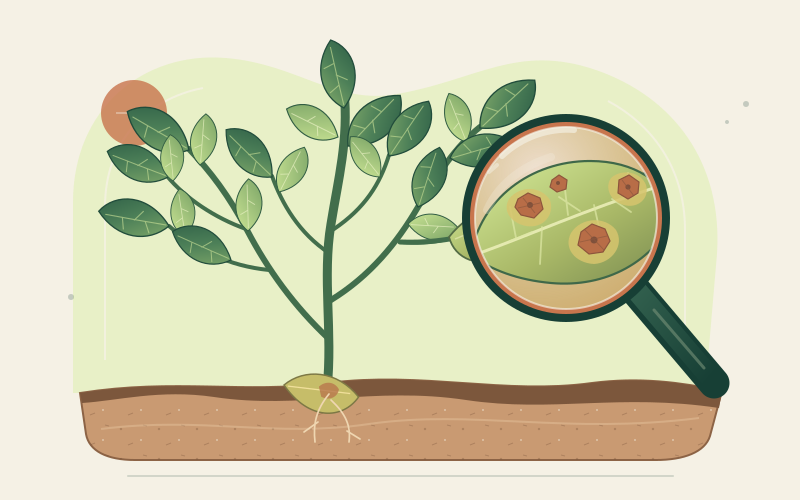
Prevention is a season-long practice
A spot, hole, or half-eaten leaf is evidence, but not a diagnosis. Similar symptoms can have different causes, and a low level of damage often needs no treatment. Integrated pest management begins with prevention and observation, uses physical, cultural, and biological options where they work, and reserves pesticides for a clearly identified problem and a justified need.
- Plant certified seed and varieties with locally relevant resistance; resistance reduces risk but does not guarantee protection.
- Rotate potatoes away from tomatoes and other solanaceous crops where possible, and remove volunteer potato plants and old cull piles.
- Give plants space, keep foliage as dry as practical, maintain even soil moisture, and avoid waterlogging.
- Inspect upper and lower leaf surfaces, stems, and soil regularly. Note the weather and photograph changes before removing evidence.
- Clean soil from tools, sort tubers before storage, and tolerate harmless wildlife and minor cosmetic damage.
Rotation and clean tools are valuable, but they do not stop every threat: late blight spores can travel on air, and some soil organisms persist for years. No single ritual makes a crop invulnerable.
Late blight: act quickly, but confirm carefully
Late blight, caused by Phytophthora infestans, affects potatoes and tomatoes. On potato leaves, look for grey-green, water-soaked patches, often at tips or edges, that enlarge and turn brown or black. In humid conditions, a fine white layer of spores may appear on the underside. Stems can develop dark lesions; infected tubers may show discoloured patches and a firm, reddish-brown, granular rot, sometimes followed by softer secondary decay. Other diseases and weather damage can look similar.
Cool, damp conditions favour many outbreaks, although risk depends on the pathogen population and region. Start with clean seed, remove volunteers and discarded tubers, choose suitable resistant varieties, and follow local blight forecasts where available. Water at the base and allow air to move around plants, but do not rely on these steps alone: wind-driven spores can still arrive.
If late blight is strongly suspected, contact local extension or plant-health guidance promptly. Do not assume that picking off one leaf has contained it. Heavily infected foliage or plants may need to be removed and bagged for disposal according to local rules; do not compost material unless your local authority specifically says the process will destroy the pathogen. Guidance may recommend removing tops before lifting tubers to limit spores washing into soil. Lift in dry conditions when advised, keep tubers dry, inspect them repeatedly, and never store rotting ones or save them for seed.
Common scab: usually a skin problem
Common scab is associated with Streptomyces bacteria in soil. It produces rough, corky, brown patches or shallow pits on tuber skins, often without affecting the leaves. The damage is usually cosmetic: sound tubers can generally be peeled and eaten. Deep, soft, wet, or spreading decay is another matter and needs separate diagnosis. Powdery scab is a different disease, so avoid treating every scabby patch as identical.
There is no way to remove existing lesions by treating the growing plant. For the next crop, choose resistant varieties and clean seed, and maintain consistent moisture while young tubers are developing. Common scab is often more troublesome in dry and more alkaline conditions. Test soil before liming and avoid fresh manure immediately before potatoes; do not attempt aggressive acidification, which can harm soil and other crops. Rotation and organic matter can support general soil health, but neither guarantees elimination because the organisms can persist.
Colorado potato beetle: inspect leaf undersides
Adult Colorado potato beetles (Leptinotarsa decemlineata) are rounded, yellow-orange beetles with black lengthwise stripes. Their yellow-orange eggs are laid in groups beneath leaves. Young larvae are reddish and soft-bodied, becoming plumper as they feed; both larvae and adults chew foliage and can severely weaken plants. Check identification carefully rather than confusing their eggs or larvae with those of other insects.
Where this beetle is established, inspect plants regularly. Hand-pick adults and larvae into a container of soapy water and crush or scrape off eggs when practical, repeating the search after a few days. Small plantings can benefit from suitable insect mesh installed before colonisation, with edges secured and pollination not a concern for potato tuber production. Remove solanaceous weeds and rotate planting areas to make reinfestation less convenient. Avoid broad-spectrum treatments that harm natural enemies; this pest has a well-documented ability to develop insecticide resistance.
Regional status matters. In Great Britain and other places where Colorado potato beetle is regulated or not established, a suspected sighting may need to be reported rather than managed as an ordinary garden pest. Follow the current national plant-health instructions. Where pesticides are considered in regions with established populations, consult extension for current thresholds and legally permitted options; always follow the product label. This guide intentionally gives no pesticide doses.
Slugs: reduce favourable conditions
Slugs chew irregular holes in leaves and can create broad cavities in tubers, especially in damp soils and later-maturing crops. Slime trails may be visible, but their absence does not rule out below-ground feeding. Some species live mostly on decaying material and contribute to decomposition, so aim to manage damaging populations rather than eliminate every slug.
Water in the morning when feasible, avoid persistently saturated ground, and reduce dense, damp refuges immediately beside the crop without stripping the garden of all habitat. Hand collection on damp evenings, refuge traps, and close inspection can reduce local numbers; barriers around tops do little against species already in the soil. Encourage ground beetles, birds, amphibians, and other predators where appropriate. Harvest mature tubers promptly and sort out those with extensive tunnels or secondary rot. Pellets and other pesticides are not a routine first response and can affect non-target wildlife; seek local advice before considering them.
Wireworms: assess risk before planting
Wireworms are the hard, slender, yellow-brown larvae of click beetles. They can bore narrow, dark-rimmed tunnels through potato tubers, distinct from the broader surface cavities often associated with slugs. Damage is more likely in some recently grassed or weedy ground, although presence and risk vary widely.
Management works best before symptoms appear. Dig or use baited monitoring traps to check a suspect site, following local extension methods. Avoid planting straight after long-term grass where risk is known, cultivate at suitable times to expose larvae to predators and weather, and use rotations that reduce grassy weed cover. Harvest promptly once mature; prolonged time in soil can increase damage. Potato-piece traps can help monitor or remove some larvae, but they rarely clear an entire bed. Low numbers may cause only limited, trimmable damage.
When to remove plants or tubers
Use the diagnosis and the condition of the whole plant, not appearance alone, to make the decision:
- Remove heavily blighted plants or tops when local late-blight guidance calls for it, and dispose of them by the recommended route. Do not move infected material through the garden or save its tubers for seed.
- Discard soft, foul-smelling, mouldy, or extensively rotten tubers rather than storing or composting them in a basic home heap. Check neighbouring tubers, since decay spreads in storage.
- Remove plants with unexplained severe wilt or blackened stems from the production area while you seek diagnosis, especially if nearby plants are also declining. Keep a photograph or sample only as local instructions permit.
- Do not discard solely for superficial common scab. Likewise, limited pest tunnels may be trimmed from an otherwise firm, fresh-smelling tuber; discard it if decay has entered.
- Treat greening as a separate safety issue. Extensively green or bitter potatoes should not be eaten. See the growing guide’s storage and safety notes.
Let local knowledge guide treatment
Your agricultural extension service, plant clinic, or national plant-health authority can help with identification, current outbreaks, reporting duties, and legal controls. Take clear photographs of both leaf surfaces, stems, and a cut tuber where relevant, and record the variety, planting date, recent weather, and how quickly symptoms spread. Ask before posting samples, especially when a regulated pest is possible.
If a pesticide is legally available and genuinely needed, the target organism and local label must match. Extension can explain current options and resistance-management guidance. Never improvise a dose, use an agricultural product on a home crop unless its label permits it, or treat first and identify later.
Sources and specialist references
- AHDB: Late blight disease and its management in potatoes
- University of Minnesota Extension: Late blight of tomato and potato
- Royal Horticultural Society: Potato scabs
- University of Minnesota Extension: Colorado potato beetle
- Royal Horticultural Society: Wireworms
- Royal Horticultural Society: Slugs and snails
- UK Government: Colorado potato beetle identification and reporting