Crop 001 / Solanum tuberosum

A good harvest starts underground.

Grow satisfying potatoes with healthy seed, well-prepared soil, and steady care. This field journal keeps each step clear, from the first sprout to the storage crate.

Underground tubers
Stems, not roots They swell on stolons beneath the soil.
Common crop window
70–140 days Variety and growing conditions set the pace.
Favourable soil for bulking
15–20 °C High soil temperatures can slow tuber formation.
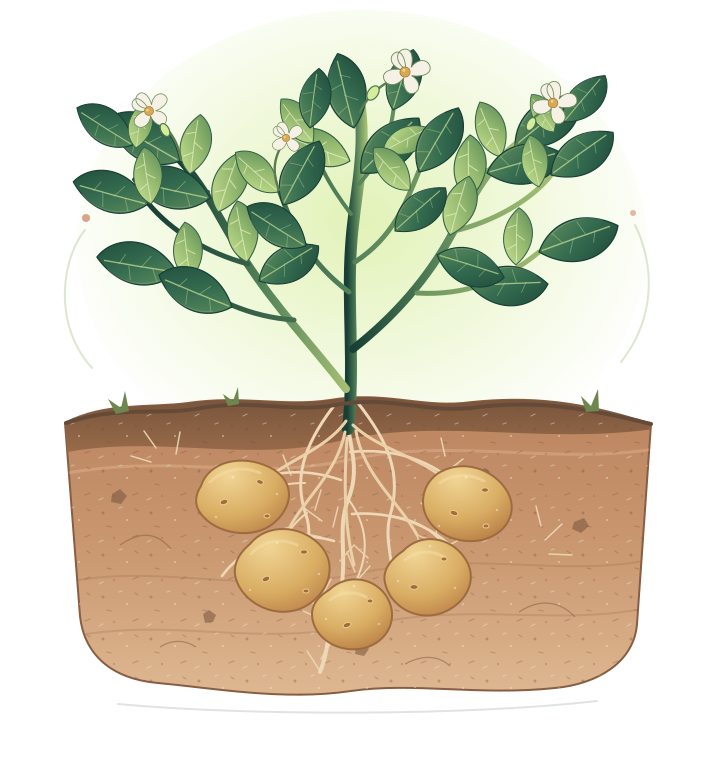
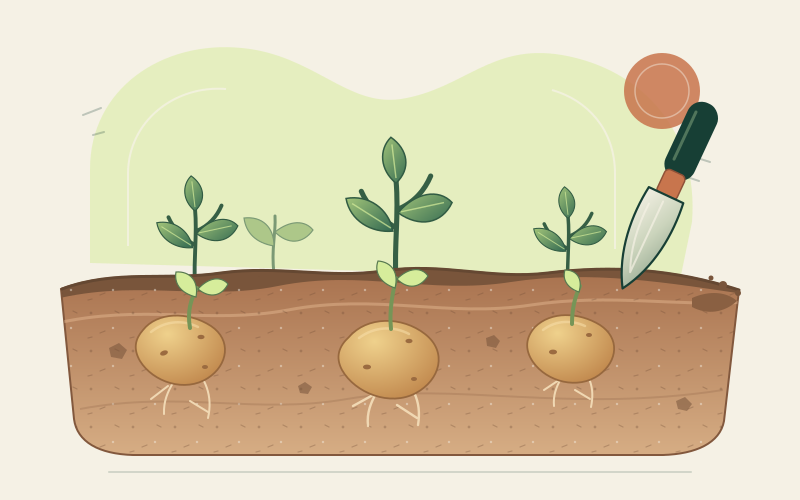
Potato plant with leaves and flowers above ground, and roots, stolons and tubers below.
The edible tubers form on underground stems called stolons; the true roots take up water and nutrients.

Crop profile

Potato, from field to plate

A versatile tuber crop grown from certified seed potatoes. Timing follows local frost, heat, rainfall, and variety, so treat growing windows as indicative.

Botanical name
Solanum tuberosum
Family
Solanaceae (nightshade family)
Origin
Andean highlands of South America
Growth
70–140 days from planting to harvest, depending on variety and growing conditions.

Nutrition / plain boiled

Moderate nutrient density

“Moderate” is Rooted’s qualitative editorial category, based on protein, fibre, folate, iron, and potassium density in cooked foods. It is not an official nutrient score.

Approximate nutrient content per 100 g plain boiled potato.
Nutrient Amount
Protein1.9 g
Fibre1.8 g
Folate10 µg
Iron0.31 mg
Potassium379 mg

Basis: potatoes boiled in their skins, flesh only, without added salt, from USDA FoodData Central. Values are approximate; variety, cooking method, and portion size change the nutrients eaten.

At the table

Pair with beans and varied vegetables

  • Common beans: add protein, fibre, and folate to a potato meal. Try them together in a stew, salad, or simple seasoned bowl.
  • Vegetables and fruit: vary the colours and types across meals. Vitamin-C-rich peppers, broccoli, tomatoes, or citrus fruit can support absorption of non-heme iron.

Legumes and grains have complementary essential-amino-acid patterns, but they need not be eaten in the same meal. No fixed same-meal formula is needed; variety across the day is enough.

The essentials

From seed potato to storage

Six practical stages. Adapt the timing to your weather, soil, and chosen variety.

  1. Choose seed potatoes

    Start with healthy, certified seed potatoes where available. Pick a variety suited to your season, space, and cooking plans.

  2. Chit for sturdy sprouts

    Set tubers rose-end up in a cool, bright, frost-free place for four to six weeks. Short, strong sprouts are the aim.

  3. Prepare the soil

    Loosen the bed and add mature compost. Aim for friable, well-drained soil; avoid waterlogging and fresh manure.

  4. Plant into workable soil

    As severe frost risk recedes, plant about 10–15 cm deep and 30 cm apart, leaving 60–75 cm between rows.

  5. Earth up and water

    When shoots reach 15–20 cm, draw soil around the stems while leaving the tops exposed. Repeat as needed and water steadily in dry spells.

  6. Harvest and store

    Lift storage crops after the tops die back. Dry sound tubers briefly in shade, then store them cool, dark, and ventilated. Discard green tubers.

Growing notes by place

Read your region, then read your weather

Compare broad growing conditions, then adjust for your own altitude, exposure, and soil.

Cool temperate · maritime to continental

North-western Europe

Spring planting suits the region’s cool growing season. Early varieties can be lifted in early summer, while maincrops mature later; warm, wet weather can increase blight pressure.

Indicative planting
March to May, once soil is workable and severe frost risk has passed
Indicative harvest
June to September, depending on variety and planting date
Soil and moisture
Fertile, friable, and well drained, with steady moisture but no waterlogging

Field note: Protect new shoots from late frost and earth up before tubers are exposed to light.
Dates are indicative. Let local frost forecasts, soil temperature, and recent weather guide planting.

Cool-temperate Northern Hemisphere · example

A season on the calendar

A compact planning rhythm, not a fixed schedule. Shift it with latitude, altitude, variety, and local conditions.

  1. February–March

    Chit seed potatoes and prepare beds when the soil is workable.

  2. March–May

    Plant as severe frost risk recedes; protect emerging shoots from late frost.

  3. May–August

    Earth up, water during dry spells, and check regularly for pests and disease.

  4. July–October

    Harvest according to variety and maturity; dry storage tubers before putting them away.

From the field journal

Grow with a little more confidence

Practical reading for planning the crop, choosing tubers, and responding when something looks wrong.

Your next harvest begins here

Start with one good bed.

You do not need a large plot to learn the crop. Begin with sound seed potatoes, give the roots room, and keep notes as the season unfolds.

Open the growing guide