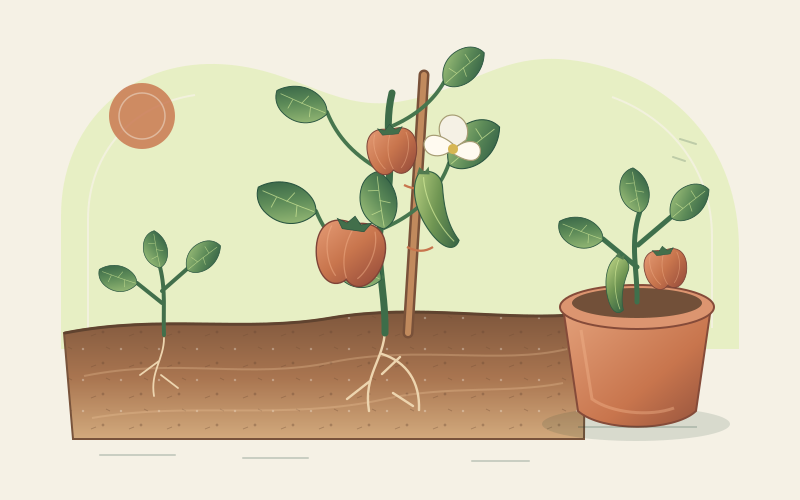
A warm-season crop, not a race to early planting
Sweet bells, frying peppers, and chillies share a broad need for warmth, although their species and cultivars differ. In temperate gardens they are usually grown as annuals. Frost can kill them, and cold soil can leave transplants stalled. Choose a sheltered, sunny site; in very hot climates, light afternoon shade can reduce stress and sunscald.
Rooted’s 60–100 day window is an indicative interval to a first useful harvest under suitable conditions, not a guarantee. Check whether a supplier counts from sowing or from transplanting. Green fruit can be picked before its final ripe colour, while red, yellow, orange, or other fully coloured fruit needs longer. Cool nights, heat waves, cultivar, and plant establishment all shift the calendar. Our pepper types guide helps match those choices to your season.
Transplant and care for the crop
-
Raise or buy a sturdy young plant
Peppers are generally easier to establish from transplants than from direct outdoor sowing in a short season. If raising seed yourself, follow the packet’s timing and provide bright light and suitable warmth after emergence. Choose stocky plants without spots, distortion, or visible insects. Harden off home-grown or protected plants gradually over several days, increasing exposure to outdoor sun, wind, and temperature rather than moving them straight from a windowsill to full sun.
-
Wait for frost-free weather and warm soil
Plant out only after local frost danger has passed and nights have begun to warm. Oregon State Extension suggests soil of at least 16°C (60°F); local guidance may set a later date for exposed or northern gardens. Prepare a sunny bed with free-draining soil. Do not cultivate wet ground into hard clods or solve poor drainage by simply adding a little sand. Mature compost can improve structure where needed, while a soil test is the best guide to pH and nutrient corrections.
-
Set plants at their original depth
Water the transplant, keep its root ball intact, and set it no deeper than it grew in its pot. Follow the supplier’s spacing, commonly around 35–45 cm between plants. Firm gently and water at the base. Temporary shelter from wind or harsh sun can prevent wilting. Keep a label: sweet and hot seedlings look alike.
-
Use a drained, generously sized container
For one full-sized pepper, start with a container around 20 litres (5 US gallons), adjusting for compact cultivars and local advice. It must have open drainage holes; raise the pot slightly if a flat patio blocks them. Use a fresh, free-draining potting mix rather than dense garden soil. Containers warm quickly but also dry quickly, so check them often in hot or windy weather. Do not leave the pot standing in a saucer of water, and follow the potting mix or fertiliser label rather than feeding automatically.
-
Keep moisture steady, not saturated
Feel below the surface and water deeply when needed instead of following a rigid daily calendar. Flowering and fruit development are especially sensitive to dry soil, while waterlogging damages roots. Water at soil level and mulch warm beds to limit evaporation and weeds, keeping mulch away from the stem. Wide wet–dry swings can contribute to flower loss and blossom end rot. That dark sunken fruit patch is a physiological disorder involving water and calcium movement, not automatically a sign that a calcium spray is required.
-
Support branches before fruit weighs them down
A short stake, small cage, or several canes and soft ties can keep a fruit-laden plant upright. Install support early to avoid piercing roots later. Tie loosely enough for stems to thicken, and support heavy branches without pulling them into an unnatural position. Compact cultivars may need little assistance, while tall plants and exposed containers benefit most. Retain a healthy leaf canopy: stripping foliage exposes fruit to sunscald and does not reliably hasten ripening.
Read flower and fruit problems in context
Pepper flowers can set fruit through self-pollination, so a lack of bees is not the first explanation for every fallen blossom. Cold nights, excessive heat, dry soil, waterlogging, wind, low humidity, and heavy nitrogen feeding can all interfere with flowering or fruit set. Under protective covers, monitor temperature and ventilate before the air becomes excessively hot; Oregon State advises venting above 32°C (90°F). Do not respond to one fallen flower with several fertilisers or improvised remedies.
Look for patterns across the plant and the weather. Buds dropping during a heat wave call for different action from poor growth after cold nights. Pale exposed patches may be sunscald, while distorted new growth can involve aphids, viruses, or other causes. Keep soil moisture steady, preserve shade from healthy leaves, and consult local extension when symptoms spread. More heat is not always better for a warmth-loving crop.
Prevent pest and disease problems where possible
Begin with healthy seed and transplants, allow air to move between plants, and inspect leaf undersides and growing tips weekly. Aphids may cluster on tender shoots; flea beetles chew small holes; thrips, caterpillars, slugs, and fruit-damaging bugs occur in different regions. A firm water spray can dislodge a small aphid colony, and hand removal or a well-fitted barrier may suit some pests. Identify the culprit before intervening, and protect natural enemies by avoiding unnecessary broad-spectrum sprays.
Where space permits, rotate peppers and their nightshade relatives away from a bed for several years when soil-borne disease has been identified. Rotation does not stop flying insects or wind-blown spores. Avoid working plants while wet, clean tools after diseased material, and do not assume a home compost heap will destroy every pathogen. Wilting, mosaic patterns, and leaf spots can have overlapping causes; use local diagnosis rather than colour alone. Any legally available pesticide must match the crop, pest, and site on its label.
Pick green or fully coloured, then cool promptly
Most peppers are edible at full-sized green stage, before their final ripe colour. This gives a firmer, often more grassy or bitter flavour depending on cultivar. Leaving fruit to become red, yellow, orange, brown, or another named ripe colour usually takes more time and can change sweetness and flavour. Hot peppers can also be picked at either stage; green does not mean heatless. Cut through the stem with clean secateurs or a knife, leaving a short stem attached, rather than pulling hard enough to break a branch.
Harvest regularly and before frost. Wear gloves for hot peppers, keep hands away from your face, and wash tools and hands afterwards. Refrigerate fresh peppers clean and dry in a produce bag or container. Oregon State gives an ideal range of 7–10°C (45–50°F) and a general fresh life of one to two weeks; domestic refrigerators are colder, so inspect for soft or pitted fruit and use it promptly. Discard mouldy or doubtful peppers.
For a surplus, freezing cleaned pieces is straightforward, and suitable cultivars can be dried thoroughly. Pickling and canning require a tested recipe with the specified acidity, processing method, and time; adding vegetables or changing proportions can make an improvised canned product unsafe. Saving seed for next year raises separate questions about cultivar type and cross-pollination, covered in the variety guide.