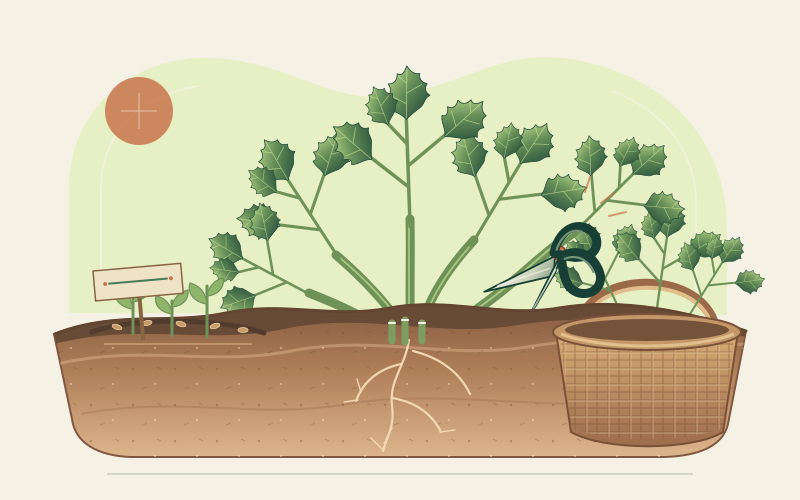
A biennial herb, usually managed as an annual
Parsley, Petroselinum crispum, belongs to Apiaceae, the carrot family. In its first growing season it normally builds a low crown of divided leaves and a storage root. After sufficient time and cold, a surviving plant can send up a flowering stem, set seed and complete its biennial cycle in the second year. Culinary gardeners usually replace it each year because second-year growth shifts towards flowering and older leaves can become coarse or bitter.
Rooted’s 70–90 days is an indicative window from sowing to the first substantial bunch, not from transplanting. It includes the slow emergence period. A few leaves may be taken earlier from a strong plant, while cold soil, old seed, dryness or heat can delay the first useful picking. Repeated harvest then continues well beyond that date when the crown remains healthy.
Sowing and care through the season
-
Begin with fresh seed and a fine bed
Germination commonly takes 2–5 weeks and can take longer in unfavourable conditions. Fresh seed improves the odds but does not make emergence immediate. Choose fertile, moisture-retentive yet free-draining soil in sun or light partial shade. Remove stones and large clods from the shallow sowing zone, and mark rows or pots so the waiting period does not lead to accidental disturbance.
-
Sow shallowly and keep the surface moist
Direct sow roughly 0.5–1 cm deep, with the supplier’s packet taking priority. Water gently before or after sowing without washing seed into clumps. The shallow seed zone must not dry out during germination, but saturated soil and a hard surface crust are also unhelpful. Soaking seed in warm water for up to 24 hours is an option suggested by some extension guides; it is not a substitute for steady seedbed care.
-
Use modules for an earlier, gentler start
Indoor sowing about 6–8 weeks before planting out can help in a short spring. Use modules or small pots so several seedlings can be separated with limited root disturbance. Give them bright light, move crowded plants on before they become root-bound, and harden them off gradually. A transplant’s outdoor harvest may come sooner, but its total age still includes the nursery weeks.
-
Thin for a sturdy crown
Seedlings first carry narrow seed leaves that do not resemble mature parsley. Wait until plants can be handled, then thin in stages rather than leaving a dense clump. Final spacing of roughly 15–30 cm suits many leafy cultivars, adjusted to packet guidance and mature size. Snip unwanted seedlings where pulling would disturb their neighbours; sound thinnings can be eaten.
-
Water established plants according to need
Check the soil rather than following a rigid schedule. Water deeply when required, allowing excess to drain, and pay special attention to containers in warm weather. Mulch established plants to conserve moisture, suppress weeds and reduce soil splash without burying the crown. Parsley in fertile garden soil may need little feeding; container plants can benefit from a balanced feed used according to its label when growth indicates a need.
Work with heat, cold and common leaf problems
Parsley handles cool weather and established plants tolerate light frost, but hard freezes, frozen ground and cold waterlogged soil can kill or severely damage them. A cold frame, cloche or suitable fleece can buffer light cold where locally appropriate. A bright indoor pot may extend picking, although low winter light often produces thinner growth. In hot, dry weather, light afternoon shade and mulch reduce stress; neither makes an unwatered plant invulnerable.
Slugs and snails are especially damaging to young plants. Inspect after dusk, hand collect where practical and reduce unnecessary damp refuges close to seedlings. Aphids may cluster on tender growth and attract predators; check before acting and avoid broad-spectrum treatment that removes beneficial insects. Parsley can also host carrot-family pests, including carrot fly and leafmining insects. Securely edged fine mesh, installed before adults arrive, can help where local experience supports it.
Leaf spots, distorted growth and internal tunnels have different causes. Encourage airflow, avoid prolonged leaf wetness, remove badly damaged leaves and rotate away from related crops where a disease has been identified. Do not diagnose from colour alone. Seek local extension identification for persistent problems, and follow the current crop label and pre-harvest interval exactly for any legally available control.
Harvest whole outer stems and cool the crop
For cut-and-come-again harvest, choose older stems around the outside and snip each complete stalk near the base. Leave the central growing point and several younger stems. Take a few stems from each plant rather than stripping one bare. Simply removing leaf blades and leaving long naked stalks is less productive. Pick regularly while growth is healthy, and reduce pressure on plants stressed by drought, disease or flowering.
Cool sound leaves promptly. Before eating, wash hands and rinse the parsley under plain running water, separating the leaves enough to release grit; soap and produce washes are not recommended. Dry with a clean cloth or paper towel. Refrigerate perishable cut parsley at or below 4°C / 40°F in a clean, suitable container, keep it away from raw meat juices and use it while quality remains good. Discard slimy or badly spoiled leaves.
For longer keeping, freeze clean chopped parsley in small portions, with or without water in an ice-cube tray, and use it in cooked dishes after the texture softens. To dry it, use a well-ventilated method or a dehydrator according to its instructions; leaves should crumble and stems break when fully dry. Pack thoroughly dry herbs in an airtight container in a cool, dark, dry place. Parsley kept in oil is a different, perishable preparation: follow a tested refrigeration guide and never treat a homemade herb-and-oil jar as shelf-stable.