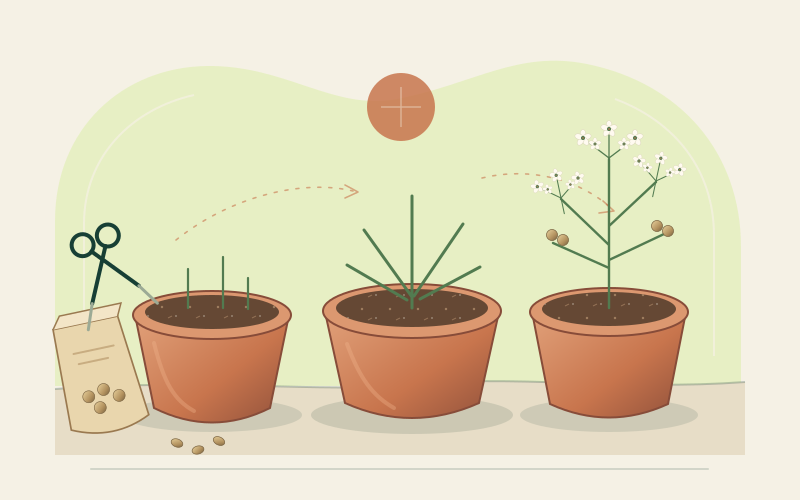
Plan for two different harvests
Coriander, Coriandrum sativum, is an annual in the Apiaceae family. Cilantro usually names its fresh leaves and tender stems; coriander seed names the dry, round fruits used as a spice. The leaves have a bright, polarising aroma, while the ripe seed is warmer and citrusy. They are not interchangeable flavourings.
Rooted’s general 40–55-day window is from direct sowing to first leafy harvest under favourable cool conditions. Young leaves may be ready earlier. A seed crop needs roughly 90–110 days or longer, because the plant must bolt, flower, pollinate and ripen. These are planning ranges, not guarantees: temperature, cultivar, moisture and sowing date shift both.
For leaves, think of coriander as a short-term salad herb. Sow a little every 3–4 weeks during suitable weather. For seed, make an early sowing in full sun and leave enough frost-free, reasonably dry time for ripening. One plant can supply leaves and later seed, but frequent hard cutting is not compatible with the strongest seed yield.
Sow directly and keep growth steady
Choose a cool window and suitable container
Spring and autumn are reliable starting points in many temperate gardens; mild-winter climates often favour autumn through early spring. Choose sun in cool conditions and light afternoon shade when growing leaves in warmth. Soil or potting compost should drain freely while retaining enough moisture for steady growth.
Use a pot with drainage holes and enough depth for the taproot. Supermarket herb pots often contain many crowded seedlings intended for immediate use. If planting them on, harden them off and follow local guidance; a fresh direct sowing is usually simpler.
Sow the round seed shallowly
Coriander dislikes transplant disturbance, so direct sowing is the default. Follow the seed packet first. Cover the seed lightly with fine soil or compost, water gently and keep the surface moist through the usual one-to-three-week germination period. Do not crush culinary seed unnecessarily before sowing; intact, viable garden seed works.
For leaf harvest, aim eventually for roughly 5–10 cm between plants, adjusting to the packet and desired size. Thin or space plants intended for seed to about 20 cm so they can branch. Remove surplus seedlings carefully without disturbing the roots that remain.
Water by observation
Drought encourages stress and can accelerate bolting, but saturated soil is not the remedy. Check the root zone and containers frequently in wind or heat. Water thoroughly enough to moisten the compost, then let excess drain. In the ground, additional water is most useful during establishment and long dry spells.
Hand-weed while plants are small. Protect seedlings from slugs and snails where they are active, and identify aphids or other problems before acting. Encourage natural predators and follow local extension advice; never improvise pesticide mixtures or use a product contrary to its food-crop label and pre-harvest interval.
Work with bolting instead of denying it
Bolting is the shift from leaf production to a flowering stem. Heat, dry soil and changes in day length can accelerate it, though the exact response varies with cultivar and conditions. Flowering stems carry much finer leaves than the broad lower foliage, and leaf production declines as the plant invests in reproduction.
Slow-bolt cultivars such as Calypso, Cruiser or Santo can extend the leafy stage, but none is bolt-proof. Succession sowing is more dependable than repeated attempts to preserve one old planting. Pinch out an emerging flower stem if you want a little more leaf time; do not expect this to reset the plant for a whole season.
Once flowering begins, choose the useful next step. Harvest sound remaining leaves promptly, enjoy the flowers as an edible garnish from known cultivated plants, leave umbels for beneficial insects, or keep the plant for seed. Replace unwanted spent plants with a new sowing rather than treating bolting as a reason to waste the entire crop.
Harvest leaves and roots with different consequences
Begin cutting cilantro when plants are about 10–15 cm tall. Take a few outer leaves and tender stems from each plant with clean scissors, leaving the growing centre intact. Allow recovery before the next light picking. Regular moderate harvest can keep plants productive for a while, but it cannot prevent eventual flowering.
Cultivated coriander roots are edible and used in some cuisines, especially in pounded pastes with garlic and pepper. Pulling the root ends that plant’s harvest. Use plants that have finished leaf production or grow a dedicated root crop, rather than sacrificing a healthy succession plant unexpectedly. Root size and flavour vary, and the root is not the swollen storage root of a carrot.
Use only positively identified Coriandrum sativum grown for food. Never substitute an unidentified wild member of Apiaceae: the family includes deadly poisonous look-alikes. Loosen soil before pulling to avoid snapping the root, discard damaged or rotten portions, and wash soil from the fine root thoroughly under clean running water before trimming or pounding.
Catch, clean and completely dry coriander seed
Green fruits can be used fresh for a different, milder flavour, but the familiar dry spice is harvested when fruits turn brown and mature. Watch the umbels: ripe seed can fall naturally. Cut whole stems into a paper bag, or tie a breathable paper bag around a cut bundle, so shaking does not scatter the harvest. Avoid sealed plastic around damp plants.
Spread the material in a thin layer in a dry, well-ventilated place protected from rain, pests and contamination. When fully dry, rub or shake fruits free, winnow away light chaff and remove damaged debris. Continue drying until no coolness, softness or damp odour remains. Store only fully dry seed in a clean airtight container, labelled with crop and date, in a cool dark cupboard.
Keep planting seed in a separate labelled envelope or container so it is not confused with spice. Seed saved from an open-pollinated plant may cross with other coriander nearby, and hybrid cultivars may not reproduce their catalogue traits. Do not eat mouldy or doubtful seed. Toasting is a flavour step, not a substitute for drying or safe storage.
Treat fresh herbs as perishable produce
Wash hands and clean utensils before preparation. Rinse cilantro under clean running water just before use or storage according to your chosen method; do not use soap, detergent or disinfectant. Washing reduces contamination but does not eliminate every microorganism. Keep herbs away from raw meat, poultry, seafood and contaminated boards.
Refrigerate perishable fresh herbs at 4°C / 40°F or below. Remove yellowed, slimy or rotten leaves and avoid sealing dripping-wet herbs where condensation encourages decay. Use a clean container or bag with enough humidity to prevent wilting, inspect often and use promptly. Refrigerate prepared herb sauces and mixed dishes promptly in clean covered containers.
Fresh leaves, roots, green seed and dry seed have different storage needs. Do not apply a dry-spice cupboard method to fresh produce, or assume that refrigeration makes old herbs indefinitely safe. Ordinary culinary use needs no detox, cleanse or medicinal claim.