
Crop 053 / Coriandrum sativum

Sow a little, pick cool, then let the seed ripen.

Grow coriander for fresh cilantro leaves, aromatic seed, or both. Treat leaf production as a short cool-season crop, repeat small sowings, and accept flowering as the start of the seed harvest rather than a failure.

One annual, several harvests
Leaf, root and seed Use known cultivated plants; leaves and ripe seed need different timing.
First leafy harvest
40–55 days From direct sowing under favourable cool conditions; young leaves can be earlier.
Keep leaves coming
Small repeat sowings Heat and dry soil hasten bolting; no cultivar stays leafy indefinitely.
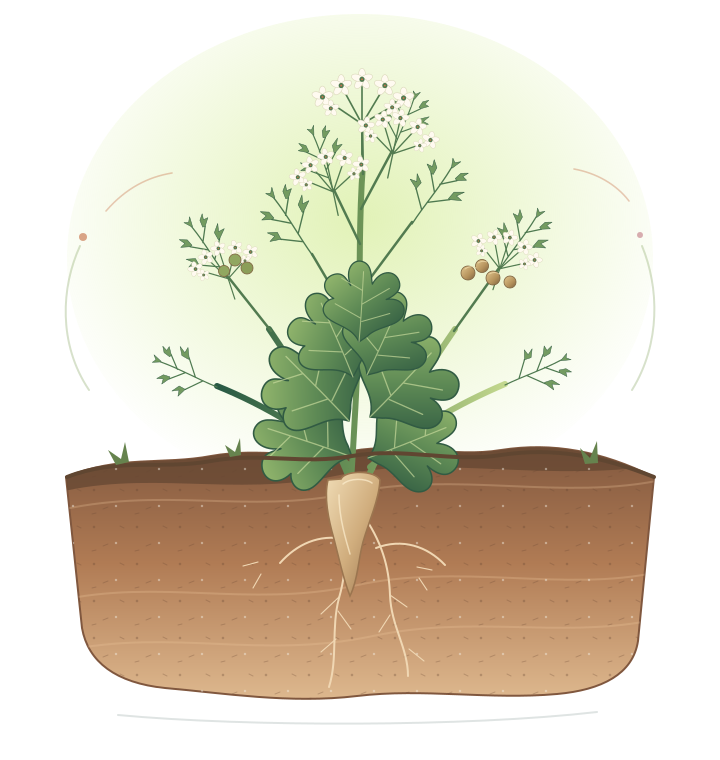
Coriander plant with broad lower cilantro leaves, finely divided upper leaves, white flower umbels, green and tan seeds, and a slender taproot in a soil cutaway.
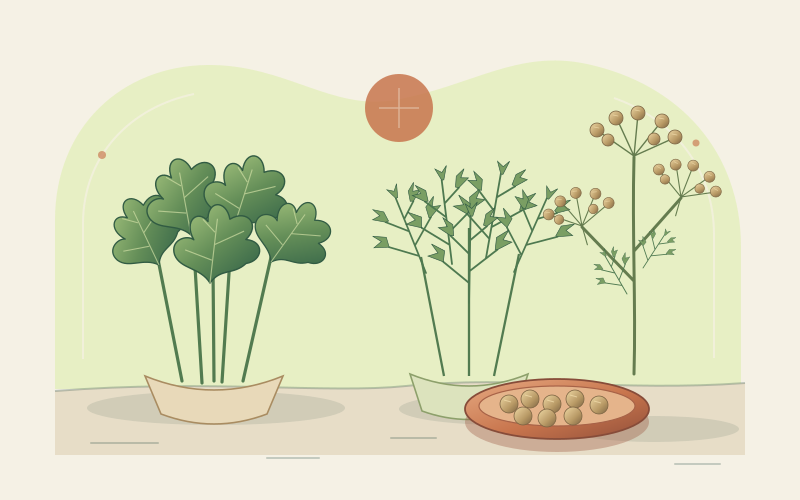
The lower leaves are broader than the fine foliage on flowering stems. A single annual can supply cilantro, roots and finally coriander seed.

Know the crop

Crop profile

A quick annual herb whose leaf and seed crops ask for different patience. Sow repeatedly for cilantro; give seed plants a longer, sunny run to mature dry fruit. “Coriander” can mean the whole plant or its seed, while “cilantro” usually means the fresh leaves and stems.

Crop essentials

Botanical name
Coriandrum sativum
Growth
40–55 days From direct sowing to the first leafy harvest under favourable cool conditions; young leaves may be cut earlier. Plants can bolt rapidly in heat and dry soil. Allow roughly 90–110 days or longer for ripe seed, depending on weather and sowing date.
Family
Apiaceae
Origin
Southern Europe, North Africa and western Asia
Habit
Annual grown for leaves, edible roots and aromatic dry seed

Nutrition / raw cilantro leaves

Nutrition, in context

Very high Editorial nutrient-density rank 4. This is Rooted’s qualitative category for protein, fibre, folate, iron and potassium in the site’s crop comparison, with highlights adding context. It is not an official nutritional score or a universal ranking of herbs.

Reference nutrients per 100 g coriander (cilantro) leaves, raw
NutrientAmount
Protein2.13 g
Fibre2.8 g
Folate62 µg
Iron1.77 mg
Potassium521 mg
  • Contains vitamin K (310 µg), vitamin A (337 µg RAE) and vitamin C (27 mg) in the same 100 g raw-leaf reference.
  • Provides folate, potassium and non-heme iron, but a typical herb garnish is much smaller than the 100 g reference amount.
  • These raw cilantro values do not describe dried coriander seed, roots, cooked leaves or a prepared sauce.

Basis: Approximate values per 100 g coriander (cilantro) leaves, raw (USDA FoodData Central SR Legacy 169997). Values describe raw leaves, not absorbed amounts or individual dietary needs. Serving size, washing, trimming and preparation change intake. Coriander seed has a different nutrient profile and is not nutritionally interchangeable with the leaves.

At the table

Use the herb within a varied meal

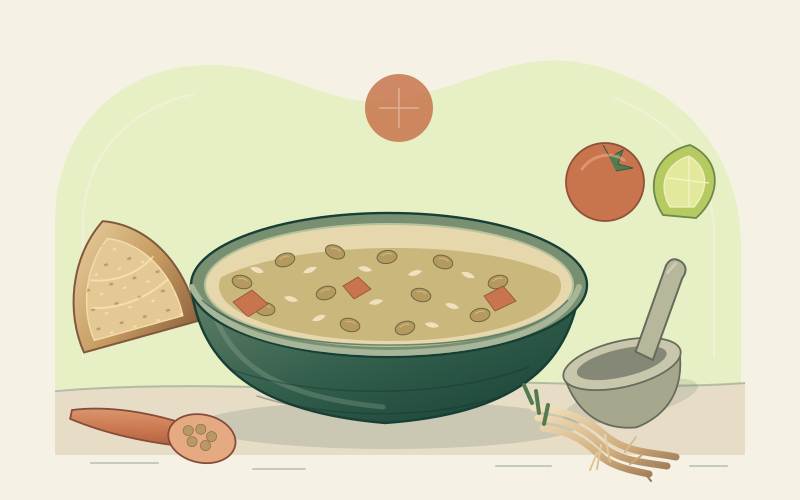
  • Beans or lentils with grains. A varied meal. Legumes and grains make a cilantro-garnished dish more substantial and contribute protein, fibre and other nutrients. The herb adds aroma rather than replacing those foods. Finish lentil and rice bowls with chopped cilantro and a spoonful of plain yogurt or a dairy-free alternative.
  • Tomatoes, peppers or citrus. Fresh flavour and variety. These ingredients combine well with raw cilantro and add their own nutrients, including vitamin C. A salsa or salad remains one part of a varied diet rather than a treatment. Mix cilantro with tomatoes, sweet peppers, cooked beans and lime juice.
  • Eggs, fish, tofu or yogurt. Protein variety. Protein-containing foods turn an herb-heavy sauce or salad into a more complete meal. Choose according to dietary preference; no single accompaniment is essential. Serve coriander seed and cilantro with tofu and vegetables, fish and rice, or yogurt and flatbread.

The essentials

From quick leaves to fully dry seed

Six practical stages. Decide whether each sowing is mainly for leaves or seed, then adapt timing and protection to local heat, frost and rainfall.

  1. Choose the harvest and a cool window

    For cilantro, use spring, autumn or another locally mild period and plan small repeat sowings. For coriander seed, sow early enough for flowering and dry ripening before damaging frost or prolonged wet weather. Leaf cultivars can still make seed, while seed types are not necessarily the best prolonged leaf crop.

  2. Direct-sow into drained soil

    Coriander dislikes root disturbance, so sow where it will grow or use a suitably deep pot from the start. Follow the packet first; a shallow covering of fine soil or compost is usual. Space leaf plants about 5–10 cm apart, and give seed plants more room—around 20 cm—to branch and mature.

  3. Keep moisture even, not saturated

    Water gently after sowing and keep the seed zone moist through emergence. Once established, avoid both drought stress and soggy soil. Containers dry quickly in heat and wind, so check them often. Morning or evening watering and light midday shade can help summer leaf crops without preventing eventual bolting.

  4. Pick lightly and sow the next batch

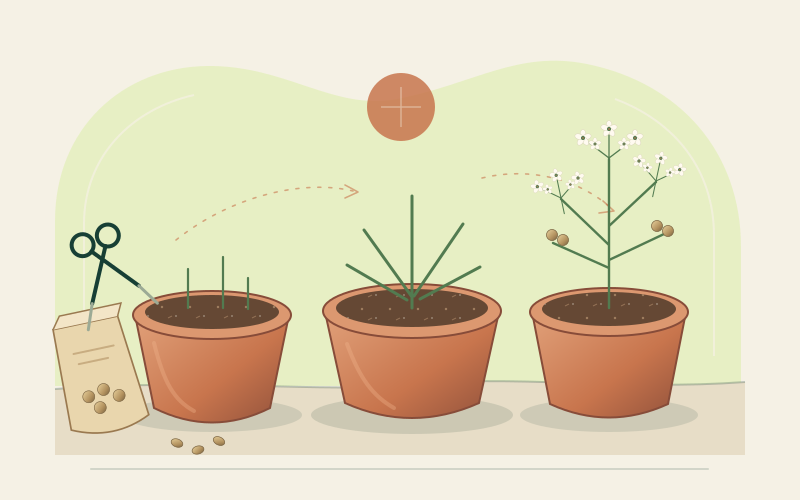
    Start cutting when plants reach about 10–15 cm, taking a few outer leaves from each plant and leaving the centre to grow. Repeat after recovery rather than stripping one clump. For a steady supply, sow a new small pot or short row every 3–4 weeks during suitable weather.

  5. Respond to bolting without waste

    Removing a young flower stem may briefly prolong leaf harvest, but flowering is inevitable. Use sound remaining leaves promptly, leave the plant for pollinators and seed, or replace it with the next sowing. Do not call a slow-bolt cultivar bolt-proof: heat, drought and day length still influence flowering.

  6. Harvest cleanly and dry seed fully

    Wash fresh leaves and known cultivated roots under clean running water, chill perishable herbs promptly and discard rotten material. For seed, cut stems when the round fruits turn brown and dry readily, enclose them in a paper bag to catch shattering, then separate and dry completely before airtight storage. Keep seed for sowing separately from kitchen spice.

Growing notes by place

Read your region, then read your weather

Compare broad growing conditions, then adjust for your own frost dates, altitude, rainfall and soil.

Cool, temperate and often maritime, with colder springs and more exposure in northern and upland districts.

Northwestern Europe

Coriander suits small spring-to-autumn sowings in Britain, Ireland and nearby areas. Cool conditions favour leaves; hot, dry spells accelerate flowering.

Indicative planting
Direct-sow small batches from April–August once soil is workable, repeating every 3–4 weeks. Use cloches for earlier or later leaf crops and spring to early summer for seed.
Indicative harvest
Cut leaves roughly 40–55 days after a favourable sowing, then take light repeat pickings before bolting. Leave spring sowings to ripen seed in late summer.
Soil and moisture
Fertile, free-draining soil or peat-free potting compost; full sun in cool weather and light midday shade for summer leaf crops.

Field note: Keep containers just moist, remove flower stems for a short delay in leaf decline, and protect seedlings from slugs and snails.
Dates are indicative. Local frost forecasts, heat, seasonal rainfall and recent weather—not the calendar alone—should guide sowing and harvest.

Cool-temperate Northern Hemisphere · example

A short-leaf, long-seed rhythm

A compact planning guide, not a fixed schedule. Shift it with latitude, altitude, cultivar and local conditions.

  1. March–April

    Prepare a drained bed or deep containers. Begin direct sowing when soil is workable, using protection in cold districts. Make the first small leaf sowing and reserve an early row for seed.

  2. May–June

    Repeat small sowings every 3–4 weeks in suitable weather. Keep moisture even, thin for the intended harvest and begin light leaf picking when plants are 10–15 cm tall.

  3. July–August

    Use light midday shade for leaf crops and expect faster bolting in heat. Sow another batch where conditions allow; leave chosen plants to flower and form green then brown seed.

  4. September–October

    Cut seed stems as fruits ripen and catch shattering seed in a paper bag. Dry seed completely before storage. Make protected late leaf sowings where local autumn conditions permit.

The general 40–55-day window runs from direct sowing to first leafy harvest under favourable cool conditions. Young leaves can be earlier; ripe seed commonly needs roughly 90–110 days or longer, and weather can extend either window.

From the field journal

Grow, choose and use coriander

Practical reading for repeat leaf harvests, useful cultivar choices, seed and root cookery, and nutrition without detox claims.

Your next harvest begins here

One pot now, another in a few weeks.

A small sowing is enough to learn coriander’s quick rhythm. Pick before flowering, keep the next batch coming, and let one planting finish as fragrant seed.

Open the growing guide