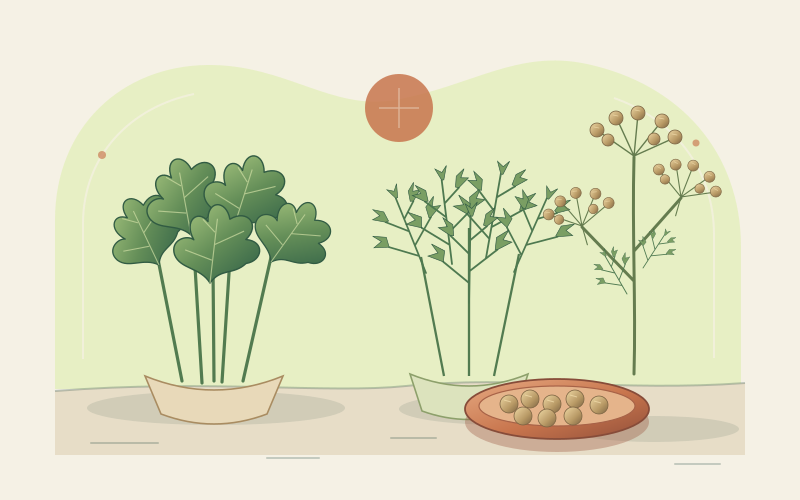
One species, different selection goals
Leaf cilantro and spice coriander come from the same species, Coriandrum sativum. A packet labelled for leaves is not a different botanical plant from one labelled for seed. Selection has nevertheless produced differences in leaf size, stem habit, speed of flowering and seed yield.
Rooted’s indicative first-leaf window is 40–55 days from direct sowing in favourable cool conditions. Ripe seed generally needs roughly 90–110 days or longer. Supplier days may count from a different stage or describe ideal conditions, so use them for comparison and keep your own emergence, harvest and bolting notes.
Start with three questions: do you mainly want repeated cilantro pickings, a dry spice crop, or a flexible mixture? How long is your mild growing window? Is a fine-leaf texture or broad bunching leaf more useful in your kitchen? Only then compare cultivar names.
Leaf cultivars: slower to bolt, not incapable of it
Calypso and Cruiser: prolonged leaf production
Calypso is widely listed as slow to bolt and has an RHS Award of Garden Merit at the time of the cited guide. It is a sensible candidate where a long leaf harvest is the priority. Cruiser is another RHS-listed, compact selection with large leaves and slow-bolt performance. These descriptions arise from particular trials; neither guarantees the same date in a hot container or dry bed.
Santo and Leisure: familiar bunching candidates
Santo and Leisure are commonly offered as leaf coriander cultivars selected for delayed flowering compared with less specialised material. Read the current supplier description and look for independent local trial evidence. “Santo” on one packet should identify a cultivar, but production conditions still determine leaf quality and harvest length.
Confetti: fine, milder foliage
Confetti has finely divided, feathery foliage and is described by the RHS as milder with a slight sweetness. It offers a different texture from broad bunching leaves. Fine foliage does not make it botanically closer to dill, and the name does not promise a non-bolting plant. Grow it when its texture and flavour suit the intended dish.
| Selection | Useful distinction | Do not assume |
|---|---|---|
| Calypso | Slow-bolt leaf candidate | Permanent summer leaf production |
| Cruiser | Compact, relatively large leaves | Identical timing in every climate |
| Santo or Leisure | Bunching and delayed-flowering candidates | Bolt-proof performance |
| Confetti | Fine, milder-flavoured foliage | A different species or no seed crop |
Seed cultivars and the whole-plant compromise
Some catalogues offer seed-oriented coriander selected for abundant, relatively large fruits or vigorous branching. Descriptions such as “Moroccan” may refer to a regional seed type rather than a tightly standardised modern cultivar. Compare the actual supplier’s botanical name, seed size, maturity and intended use instead of assuming every geographically named packet is equivalent.
Leaf cultivars can still produce useful coriander seed. Leave healthy plants after moderate picking, reduce competition and give them enough room to branch. Seed-oriented plants can also provide leaves, but their foliage may be coarser or their leaf stage shorter than a specialised slow-bolt selection. The best dual-purpose choice is the one whose compromise you actually want.
Coriander’s culinary “seeds” are botanically dry fruits. Each round fruit can split into two mericarps. This explains the seam visible on whole spice and is why some sowing instructions mention splitting, but home growers can sow intact viable seed according to the packet. There is no need to buy a separate plant species for roots: known cultivated plants of any suitable selection have edible roots, although pulling ends growth.
Local evidence beats a universal “best” list
Bolting responds to temperature, day length, water stress and growing conditions. A cultivar that stayed leafy in a cool maritime trial may bolt rapidly in a hot inland garden. An RHS award is useful evidence of performance in the charity’s trials, not a worldwide guarantee. Likewise, a supplier’s “heat tolerant” description should not be read as immunity to drought or heat.
Ask nearby gardeners, extension services or trial gardens which selections produce leaves reliably in your actual sowing window. For seed, check whether the cultivar has time to ripen before autumn cold or seasonal rain. Choose fresh viable seed from a reputable supplier and store it cool and dry according to the packet.
Run a small comparison if space allows. Sow two cultivars on the same day in matching pots, with several plants of each. Record emergence, first leaf harvest, first visible flower stem, leaf flavour and eventual seed yield. Repeat in another suitable season before declaring a winner; one heatwave can dominate an otherwise careful trial.
Seed saving needs a little genetic caution
Coriander flowers can be cross-pollinated by insects. If maintaining a cultivar matters, learn local isolation and population-size guidance rather than assuming one saved plant will reproduce the packet exactly. Seed from hybrid cultivars is especially unlikely to give uniform offspring with all the parent’s traits.
For ordinary home use, save from healthy, productive known plants and label the harvest with cultivar and year. Let fruits mature brown on the plant, catch them before shattering and dry completely before closed storage. Mouldy or damp seed should not be kept for food or sowing. The seed-harvest guide covers handling in detail.
Read beyond the front of the packet
Confirm Coriandrum sativum, intended leaf or seed use, days to harvest, sowing depth, spacing and local sowing period. “Cilantro”, “Chinese parsley” and “coriander leaf” are naming variations, not cultivar evidence. “Slow bolt” is a comparative trait, while “microgreen” describes a very young harvest method with its own food-safety considerations.
Do not pay a premium for detox, heavy-metal cleanse or medical promises. Select for observable garden and kitchen traits instead. The seed-to-spice guide gives the shared cultivation method for every named selection.