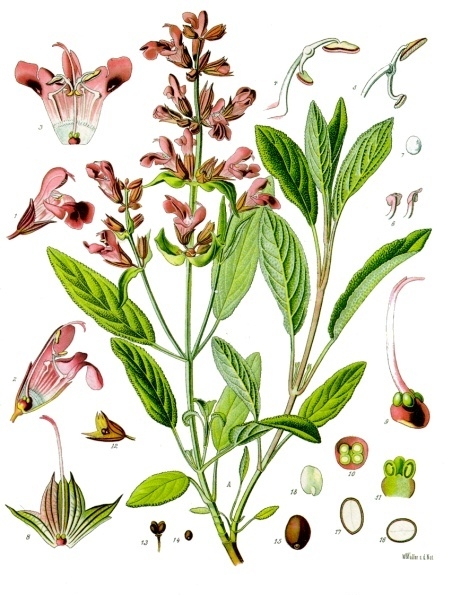
Traditionally used for sore throat and pharyngitis; mouth ulcers and gum inflammation; tonsillitis.
Traditional uses
- For sore throat and pharyngitis—gargling is the primary method
- For mouth ulcers and gum inflammation
- For tonsillitis (as supportive treatment)
- Astringent action tones and tightens inflamed tissue
Conditions it is used for
Respiratory System
Women’s Health
Oral & Dental Health
In the old texts
The Latin name Salvia derives from “salvare” (to save/heal), indicating its historical importance. Sage has been a primary throat remedy in European medicine since antiquity. Dioscorides, Galen, and later herbalists all documented it. Its astringent and antimicrobial properties make it specific for throat inflammation.
What does the work
- Rosmarinic acid
- Phenolic acid ester found in rosemary, lemon balm, sage, holy basil, and many Lamiaceae.
- Thymol
- Monoterpene phenol found in thyme and oregano.
- Volatile oils
- Complex mixtures of terpenes, terpenoids, and phenylpropanoids responsible for plant aromas and many therapeutic effects.
Cautions
- Pregnancy Serious
Many herbs cross the placental barrier and may stimulate uterine contractions (emmenagogue/oxytocic effects) or disrupt fetal development. Alkaloids, volatile oils, and anthraquinone laxatives carry particular risk 1. - Blood sugar Take care
Herbs containing berberine, cinnamaldehyde, or chromium-potentiating compounds can lower blood glucose via AMPK activation or enhanced insulin sensitivity 2, risking hypoglycemia when combined with diabetes medications.
These are the cautions recorded for this plant, not a complete list. Doses, preparations and interactions vary; ask a pharmacist or qualified practitioner before combining a herb with medication.
Research references
- Ernst E. Herbal medicinal products during pregnancy: are they safe?. BJOG, 2002.
- Lee YS et al.. Berberine, a natural plant product, activates AMP-activated protein kinase with beneficial metabolic effects in diabetic and insulin-resistant states. Diabetes, 2006.