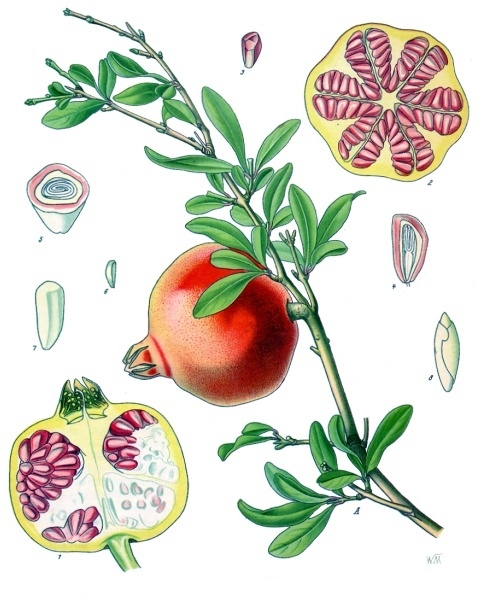
Traditionally used for acute non-bloody diarrhea; chronic loose stools.
Traditional uses
- For acute non-bloody diarrhea
- For chronic loose stools
- Astringent action tones and tightens intestinal mucosa
- The fruit juice is nutritive but has different (milder) properties
Conditions it is used for
Digestive System
In the old texts
The ROOT BARK of pomegranate (not the fruit rind, which treats diarrhea) is a traditional anthelmintic documented by Dioscorides and in Ayurvedic texts. It contains alkaloids specifically active against tapeworms.
What does the work
- Alkaloids
- Nitrogen-containing organic compounds with potent pharmacological activity.
Cautions
- Pregnancy Serious
Many herbs cross the placental barrier and may stimulate uterine contractions (emmenagogue/oxytocic effects) or disrupt fetal development. Alkaloids, volatile oils, and anthraquinone laxatives carry particular risk 1. - Children Take care
Children have immature hepatic CYP450 enzyme systems and lower body mass, making them more susceptible to dose-dependent toxicity. Many herbs lack pediatric pharmacokinetic data. - GI upset Worth knowing
Many herbs cause dose-dependent gastrointestinal irritation via direct mucosal contact (capsaicin, volatile oils), osmotic effects (saponins), or stimulation of gastric acid secretion (bitters).
These are the cautions recorded for this plant, not a complete list. Doses, preparations and interactions vary; ask a pharmacist or qualified practitioner before combining a herb with medication.
Research references
- Ernst E. Herbal medicinal products during pregnancy: are they safe?. BJOG, 2002.