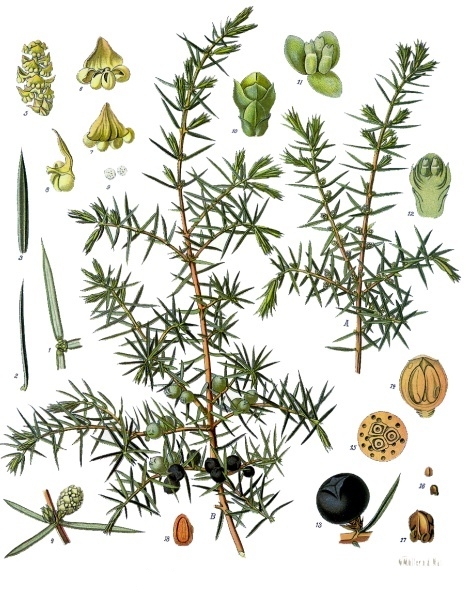
Traditionally used for UTI; water retention; urinary tract disinfectant.
Traditional uses
- For UTI (antimicrobial and diuretic)
- For water retention
- As urinary tract disinfectant
Conditions it is used for
Urinary & Kidney System
In the old texts
Juniper berries have been used for urinary conditions across European and Native American traditions. The volatile oils (particularly terpinen-4-ol) have antimicrobial and diuretic effects. Juniper was used for “dropsy” (edema) and urinary infections.
What does the work
- Volatile oils
- Complex mixtures of terpenes, terpenoids, and phenylpropanoids responsible for plant aromas and many therapeutic effects.
Cautions
- Drug interactions Serious
Herbs can alter drug metabolism via CYP450 induction (St. John’s wort induces CYP3A4 1) or inhibition (piperine inhibits CYP3A4 and P-glycoprotein), causing subtherapeutic or toxic drug levels. - Kidney conditions Serious
Herbs containing oxalates (rhubarb, sorrel), aristolochic acid, or high-dose tannins can cause tubular damage, interstitial nephritis, or aggravate existing renal impairment by increasing filtration burden. - Pregnancy Serious
Many herbs cross the placental barrier and may stimulate uterine contractions (emmenagogue/oxytocic effects) or disrupt fetal development. Alkaloids, volatile oils, and anthraquinone laxatives carry particular risk 2. - Blood sugar Take care
Herbs containing berberine, cinnamaldehyde, or chromium-potentiating compounds can lower blood glucose via AMPK activation or enhanced insulin sensitivity 3, risking hypoglycemia when combined with diabetes medications. - Short-term use only Take care
Chronic use of stimulant laxatives (anthraquinones) causes electrolyte depletion and dependency 4; prolonged sympathomimetic use (ephedra) risks cardiovascular damage; extended kava use may cause hepatotoxicity.
These are the cautions recorded for this plant, not a complete list. Doses, preparations and interactions vary; ask a pharmacist or qualified practitioner before combining a herb with medication.
Research references
- Moore LB et al.. St. John’s wort induces hepatic drug metabolism through activation of the pregnane X receptor. Proc Natl Acad Sci USA, 2000.
- Ernst E. Herbal medicinal products during pregnancy: are they safe?. BJOG, 2002.
- Lee YS et al.. Berberine, a natural plant product, activates AMP-activated protein kinase with beneficial metabolic effects in diabetic and insulin-resistant states. Diabetes, 2006.
- Xu JD et al.. Emodin induces chloride secretion in rat distal colon through activation of mast cells and enteric neurons. Br J Pharmacol, 2012.