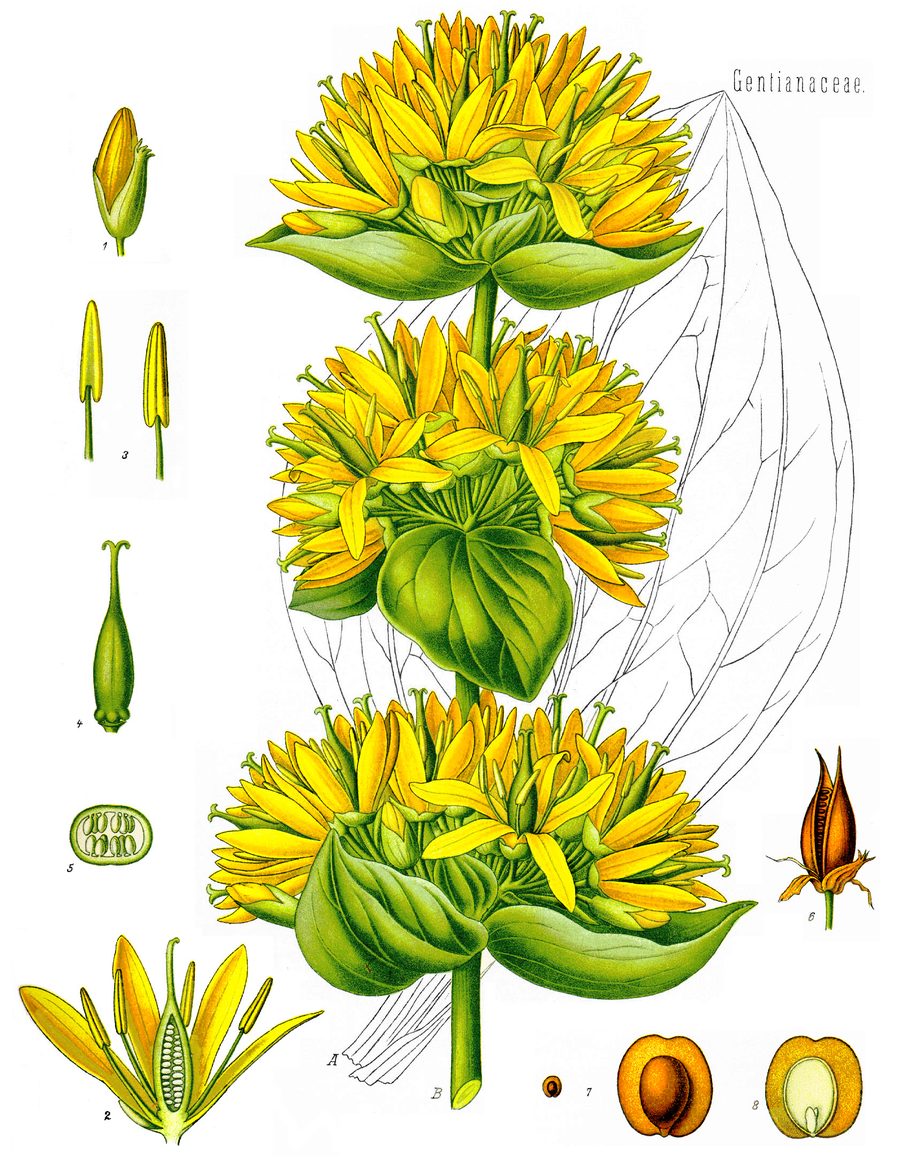
Traditionally used for loss of appetite and weak digestion; convalescence and recovery from illness; “atonic” digestion.
Traditional uses
- For loss of appetite and weak digestion
- Before meals to stimulate digestive secretions
- For convalescence and recovery from illness
- For “atonic” digestion—slow, weak, insufficient
Conditions it is used for
Digestive System
In the old texts
Gentian is the archetypal “bitter” in European herbal tradition. Named after King Gentius of Illyria (2nd century BCE) who reportedly discovered its properties. It forms the base of many traditional European digestive bitters and aperitifs. The bitter taste itself triggers digestive secretions—a principle recognized across traditions.
What does the work
- Alkaloids
- Nitrogen-containing organic compounds with potent pharmacological activity.
Cautions
- Pregnancy Serious
Many herbs cross the placental barrier and may stimulate uterine contractions (emmenagogue/oxytocic effects) or disrupt fetal development. Alkaloids, volatile oils, and anthraquinone laxatives carry particular risk 1. - Blood pressure Take care
Herbs with ACE-inhibiting, calcium-channel-blocking, or vasodilatory activity may cause additive hypotension when combined with antihypertensive drugs, particularly in salt-depleted individuals. - GERD / Acid reflux Worth knowing
Peppermint and other carminatives relax the lower esophageal sphincter via calcium channel blockade and smooth muscle relaxation, worsening gastroesophageal reflux symptoms.
These are the cautions recorded for this plant, not a complete list. Doses, preparations and interactions vary; ask a pharmacist or qualified practitioner before combining a herb with medication.
Research references
- Ernst E. Herbal medicinal products during pregnancy: are they safe?. BJOG, 2002.