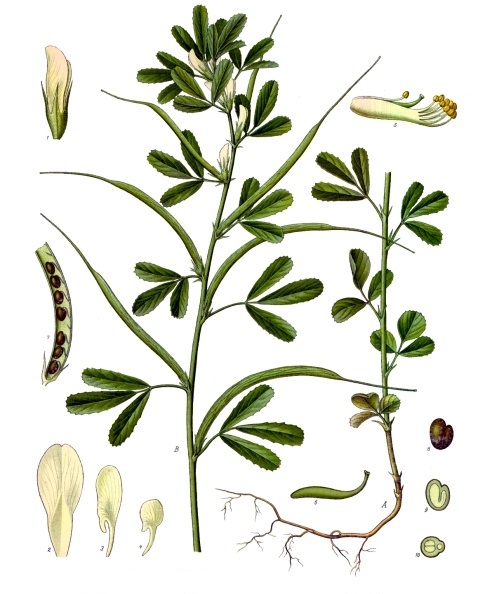
Traditionally used for insufficient milk supply.
Traditional uses
- For insufficient milk supply
- Effects often noticed within 24-72 hours
- Continue as long as needed
Conditions it is used for
Women’s Health
In the old texts
Fenugreek is the most commonly used galactagogue worldwide. It has been used for centuries across Middle Eastern, Indian, and other traditions to support milk production. Its mechanism is not fully understood but may involve effects on sweat gland tissue (breasts are modified sweat glands).
What does the work
- Alkaloids
- Nitrogen-containing organic compounds with potent pharmacological activity.
- Flavonoids
- Large class of polyphenolic compounds (>6000 known).
- Saponins
- Triterpene or steroidal glycosides that foam when shaken in water (Latin sapo = soap).
Combines well with
Blessed Thistle Western herbalism
Enhanced galactagogue effect
How: Diosgenin (fenugreek) may support prolactin signaling through steroidal saponin pathways; cnicin (blessed thistle) is a sesquiterpene lactone bitter that stimulates digestive and lactation reflexes via vagal nerve activation
Cautions
- Pregnancy Serious
Many herbs cross the placental barrier and may stimulate uterine contractions (emmenagogue/oxytocic effects) or disrupt fetal development. Alkaloids, volatile oils, and anthraquinone laxatives carry particular risk 1. - Allergic reactions Take care
Asteraceae (chamomile, echinacea, feverfew) contain sesquiterpene lactones that can trigger contact dermatitis and cross-reactive IgE-mediated responses in ragweed-sensitive individuals. - Blood sugar Take care
Herbs containing berberine, cinnamaldehyde, or chromium-potentiating compounds can lower blood glucose via AMPK activation or enhanced insulin sensitivity 2, risking hypoglycemia when combined with diabetes medications. - Thyroid conditions Take care
Goitrogens (isothiocyanates from cruciferous plants) inhibit thyroid peroxidase, reducing iodine organification and T4 synthesis. Bugleweed directly suppresses TSH and peripheral T4-to-T3 conversion. - GI upset Worth knowing
Many herbs cause dose-dependent gastrointestinal irritation via direct mucosal contact (capsaicin, volatile oils), osmotic effects (saponins), or stimulation of gastric acid secretion (bitters).
These are the cautions recorded for this plant, not a complete list. Doses, preparations and interactions vary; ask a pharmacist or qualified practitioner before combining a herb with medication.
Research references
- Ernst E. Herbal medicinal products during pregnancy: are they safe?. BJOG, 2002.
- Lee YS et al.. Berberine, a natural plant product, activates AMP-activated protein kinase with beneficial metabolic effects in diabetic and insulin-resistant states. Diabetes, 2006.