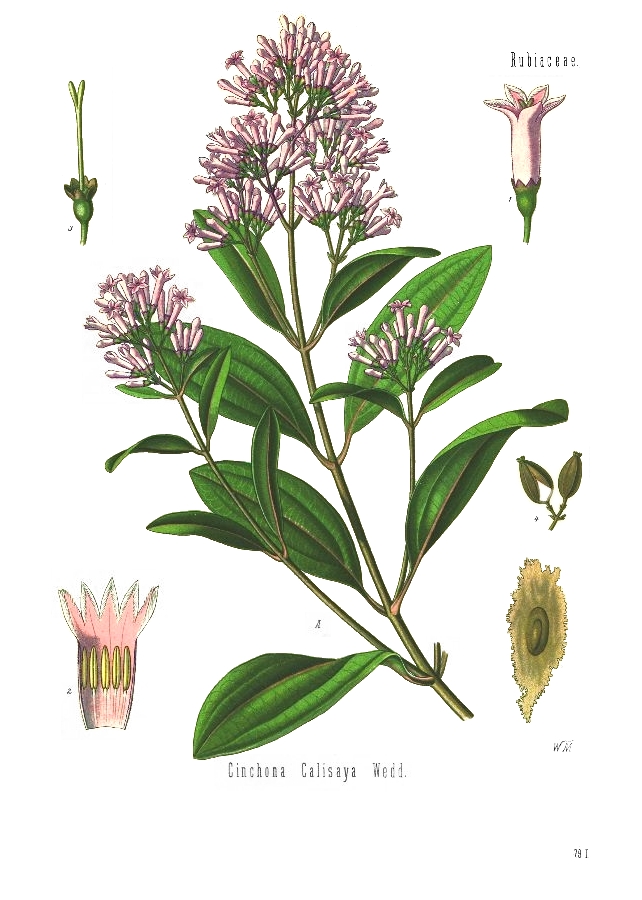
Traditionally used for intermittent fevers with the chills-fever-sweat cycle.
Traditional uses
- For intermittent fevers with the chills-fever-sweat cycle
- Historically specific for malaria
- Also used for general fever and as a bitter tonic
Conditions it is used for
Fever & Infection
In the old texts
Cinchona bark is one of the most significant medicines in human history. Indigenous peoples of Peru used it for fever. Spanish Jesuits brought it to Europe in the 1630s, where it became the first effective malaria treatment. Quinine was isolated in 1820, becoming the basis for antimalarial drugs. This is a clear example of traditional knowledge leading to pharmaceutical development—yet the whole bark contains multiple alkaloids that work synergistically.
What does the work
- Alkaloids
- Nitrogen-containing organic compounds with potent pharmacological activity.
Cautions
- Drug interactions Serious
Herbs can alter drug metabolism via CYP450 induction (St. John’s wort induces CYP3A4 1) or inhibition (piperine inhibits CYP3A4 and P-glycoprotein), causing subtherapeutic or toxic drug levels. - Heart conditions Serious
Cardiac glycoside-containing plants (foxglove, lily of the valley) inhibit Na+/K+-ATPase; sympathomimetics (ephedra) increase cardiac workload; both carry arrhythmia risk in pre-existing cardiac disease. - Narrow therapeutic window Serious
Plants like aconite, belladonna, and digitalis contain alkaloids or glycosides where the therapeutic dose is close to the toxic dose, requiring precise dosing — small variations can cause toxicity or treatment failure. - Pregnancy Serious
Many herbs cross the placental barrier and may stimulate uterine contractions (emmenagogue/oxytocic effects) or disrupt fetal development. Alkaloids, volatile oils, and anthraquinone laxatives carry particular risk 2.
These are the cautions recorded for this plant, not a complete list. Doses, preparations and interactions vary; ask a pharmacist or qualified practitioner before combining a herb with medication.
Research references
- Moore LB et al.. St. John’s wort induces hepatic drug metabolism through activation of the pregnane X receptor. Proc Natl Acad Sci USA, 2000.
- Ernst E. Herbal medicinal products during pregnancy: are they safe?. BJOG, 2002.