
Crop 016 / Solanum lycopersicum

Support the plant. Steady the water. Pick at colour.

Grow tomatoes through the warm, frost-free season with abundant light and support matched to their habit. Prune cordon and bush types differently, keep moisture even, and watch foliage and fruit before problems spread.

Growth habit matters
Determinate or indeterminate Choose support and pruning from the cultivar’s stated habit, not its fruit shape.
Typical first ripe-fruit harvest
60–100 days From transplanting for many cultivars; indoor seed-raising adds roughly several weeks.
Season
Warm and frost-free Local frost, heat, light and rainfall determine the useful planting window.
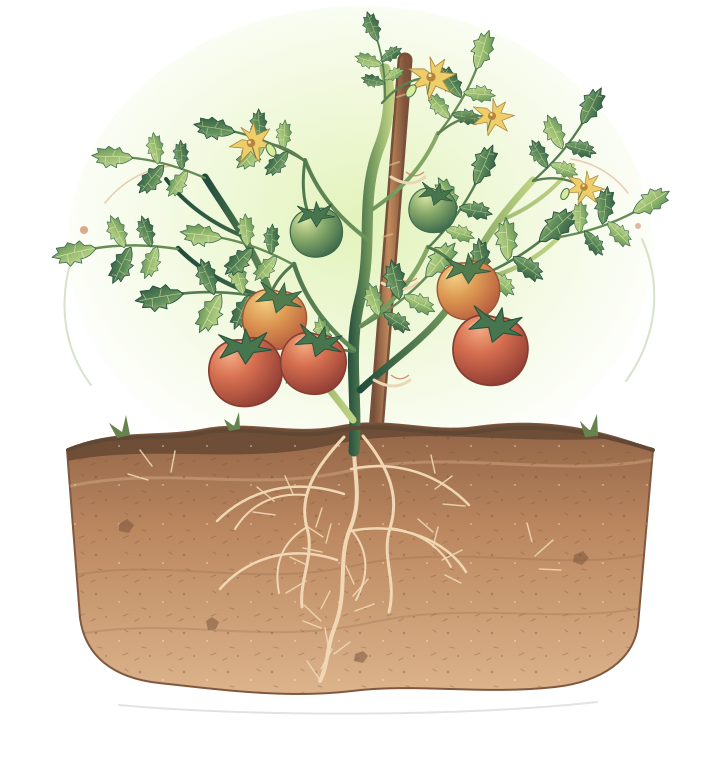
Tomato plant tied to a wooden stake, with compound leaves, yellow flowers, ripening fruit and branching roots in a soil cutaway.
A sturdy support carries branching stems and ripening fruit; ties should hold the plant loosely while leaving room for growth.

Know the crop

Crop profile

A warm-season fruit crop grown as an annual in temperate gardens. Determinate and indeterminate cultivars have different support and harvest patterns; all need frost-free conditions, sufficient warmth and steady water for reliable fruit set and ripening.

Crop essentials

Botanical name
Solanum lycopersicum
Growth
60–100 days From transplanting to first ripe fruit for many cultivars. Indoor seed-raising adds roughly several weeks before this window. Early cultivars are faster, while cool nights, heat stress and large-fruited types can delay ripening.
Family
Solanaceae, the nightshade family
Origin
Western South America, with domestication and early cultivation in Mesoamerica
Habit
Warm-season annual with determinate and indeterminate cultivars

Nutrition / red, ripe and cooked

Nutrition, in context

Moderate Editorial nutrient-density rank 2. This is Rooted’s qualitative category for protein, fibre, folate, iron and potassium in the site’s cooked-food comparison, with highlights adding context. It is not an official nutritional score or a universal ranking of vegetables.

Reference nutrients per 100 g red ripe tomatoes, cooked
Nutrient Amount
Protein 0.95 g
Fibre 0.7 g
Folate 13 µg
Iron 0.68 mg
Potassium 218 mg
  • Contains vitamin C (22.8 mg) and some potassium in the same cooked reference.
  • Has modest protein, fibre and folate concentrations compared with the cooked pulses in this comparison.
  • The reference is plain cooked ripe tomato, not raw tomato, canned stewed tomato or a prepared sauce.

Basis: Approximate values per 100 g red ripe tomatoes, cooked, with no added ingredients specified in the reference title (USDA FoodData Central SR Legacy 170050). The USDA title does not specify a cooking method or salt. Cultivar, ripeness, water loss, added ingredients and serving size change intake; listed content does not measure absorption or individual dietary needs.

At the table

Build a varied meal around tomatoes

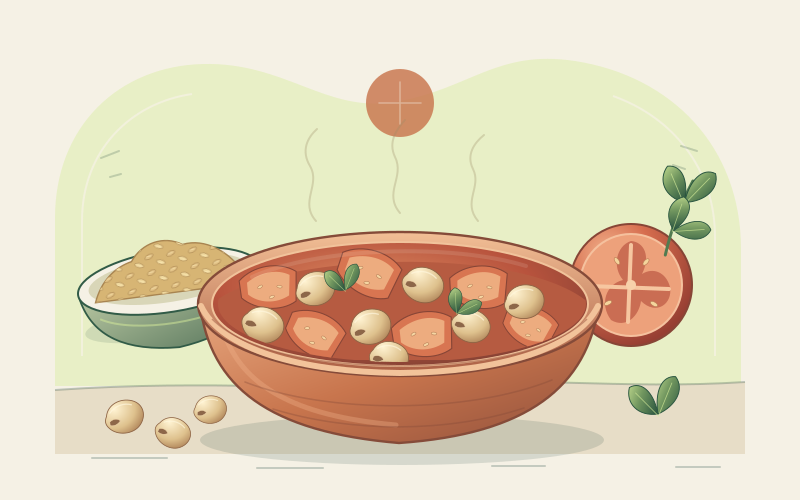
  • Beans, chickpeas or lentils — Protein, fibre and iron absorption. Pulses add protein, fibre, folate and non-heme iron, while tomato supplies vitamin C that can support non-heme iron absorption. The effect depends on the whole meal and iron status. Cook tomatoes into lentil dal, chickpea stew or a bean and vegetable sauce.
  • Rice, pasta or whole-grain bread — A varied meal. Grains make a tomato-based dish more substantial and contribute their own nutrients. Add a protein-containing food according to preference and needs. Serve tomato and beans with rice, or tomato and lentil sauce with pasta.
  • Eggs, fish, cheese or tofu — Protein variety. These accompaniments add protein and different nutrients alongside tomatoes. No single accompaniment is essential. Cook tomatoes with tofu and peppers, or serve them with fish and potatoes.

The essentials

From a sturdy transplant to ripe fruit

Six practical stages. Adapt timing, cultivar, protection and training to your frost-free season, available light and local disease pressure.

  1. Choose the habit and raise plants early

    Read the packet for determinate, indeterminate or specialist growth, fruit type and days to harvest. Start seed indoors at the locally recommended time, or buy sound transplants. Give seedlings warmth for germination and bright light immediately after emergence; pot them on before roots become congested.

  2. Harden off and transplant into light

    Gradually accustom plants to outdoor light, wind and cooler nights. Transplant after local frost risk has passed into the sunniest, most sheltered site available, using fertile soil that holds moisture without waterlogging. Follow supplier spacing, often around 45–60 cm in the ground, and water plants in.

  3. Install support at planting

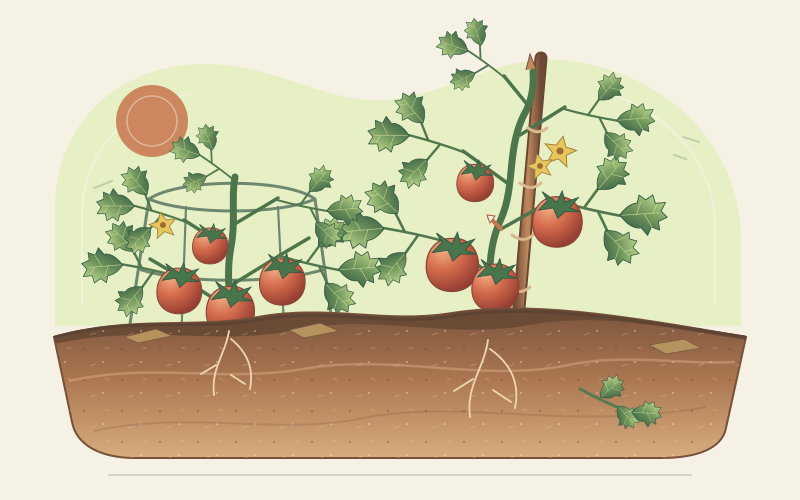
    Match a sturdy cane, cage or string system to the mature cultivar before roots spread. Tie stems loosely with soft material as they grow, leaving room for thickening. Tomatoes do not reliably climb by themselves, and heavily laden bush plants may also need support.

  4. Prune according to growth habit

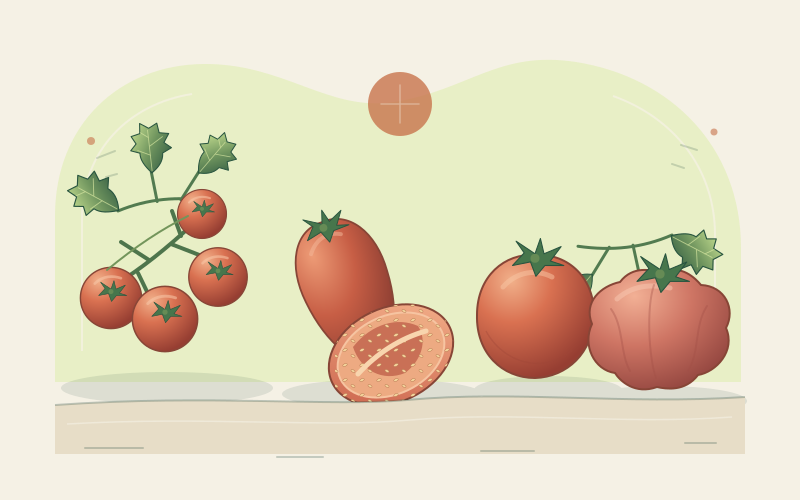
    For an indeterminate plant trained as a single-stem cordon, remove small side-shoots from leaf joints and keep tying in the leader. Do not routinely remove side-shoots from an ordinary determinate or bush plant. Semi-determinate and specialist cultivars need their supplier’s stated method; cherry, plum and beefsteak describe fruit, not pruning rules.

  5. Water evenly and address blossom end rot

    Check moisture below the surface and water at soil level, avoiding severe drying followed by flooding or persistently saturated roots. A dark, sunken blossom-end patch involves calcium shortage in the fruit tissue but does not prove the soil lacks calcium. Remove affected fruit, steady moisture, protect roots and use a soil test before adding amendments.

  6. Prevent blight and harvest attentively

    Use healthy transplants, space and support plants for airflow, and water the soil rather than the leaves. Rotation alone cannot prevent late blight; seek prompt local diagnosis for spreading lesions. Pick fruit at the cultivar’s mature colour, and gather suitable mature green fruit before frost for indoor ripening.

Growing notes by place

Read your region, then read your weather

Compare broad growing conditions, then adjust for your own frost dates, altitude, rainfall and soil.

Cool, temperate and often maritime, with limited outdoor warmth and frost-free seasons varying locally.

Northwestern Europe

Tomatoes crop reliably under cover and in warm, sheltered outdoor sites in Britain and nearby districts. Northern and upland gardens favour early cultivars.

Indicative planting
Sow February–April indoors and transplant after frost, usually May–June, once hardened off; use a greenhouse or the warmest sheltered bed.
Indicative harvest
Pick ripe fruit from July–September or into October under cover. Before frost, gather mature green fruit for indoor ripening where suitable.
Soil and moisture
Fertile, moisture-retentive and free-draining soil or containers with compost; avoid waterlogging and erratic watering.

Field note: Support plants, ventilate covered crops and water evenly; choose early cultivars for short outdoor seasons.
Dates are indicative. Local frost forecasts, heat, seasonal rainfall and recent weather—not the calendar alone—should guide sowing and harvest.

Cool-temperate Northern Hemisphere · example

A warm-season rhythm

A compact planning guide, not a fixed schedule. Shift it with latitude, altitude, cultivar and local conditions.

  1. February–April

    Start seed indoors with warmth for germination and bright light after emergence. Choose a cultivar whose habit and maturity fit the available support and frost-free season.

  2. April–June

    Pot on before roots crowd, harden plants gradually and transplant after local frost risk. Prepare a sunny, drained bed or suitable container and install support at planting.

  3. June–August

    Tie in growth and prune only according to habit. Water evenly at soil level, inspect foliage and fruit, and ventilate covered crops while maintaining airflow around outdoor plants.

  4. July–October

    Pick fruit as it reaches mature colour and continue steady care while new fruit ripens. Before frost, gather suitable mature green fruit for indoor ripening and clear diseased debris according to local guidance.

The 60–100 day window runs from transplanting to first ripe fruit for many cultivars, not from sowing. Cool nights, heat stress and large-fruited types can delay ripening; indoor seed-raising adds roughly several weeks.

From the field journal

Grow, choose and cook your tomatoes

Practical reading for warm-season care, informed cultivar choices and varied meals without health overclaims.

Your next harvest begins here

Start with the plant habit you can support.

A few well-lit plants are enough to learn the rhythm of tying, watering and picking. Match the cultivar to your season, read its pruning instructions and keep notes from transplanting to the first ripe fruit.

Open the growing guide