
Crop 048 / Helianthus annuus

Choose the seed before the flower steals the show.

Direct-sow this warm-season annual for pressing seed, striped confectionery kernels or cut flowers. Match the cultivar to that purpose, defend ripening heads from birds, and dry every food harvest before storage.

Purpose
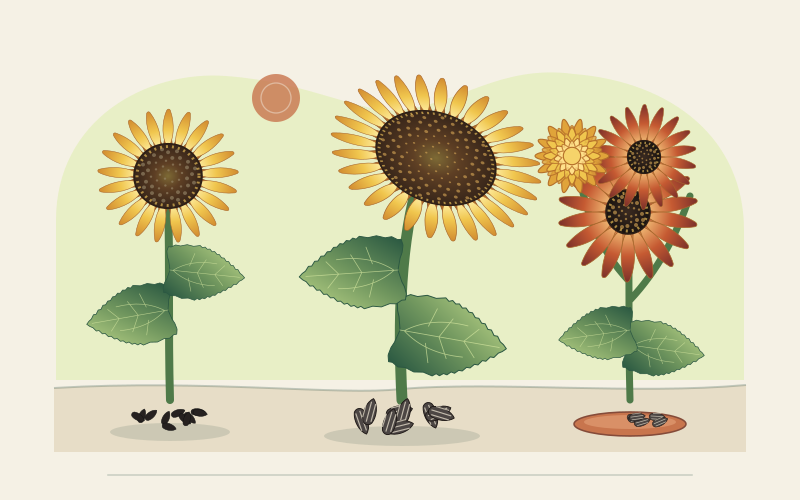
Oilseed, confectionery or ornamental Small black oilseed, large striped eating seed and pollenless cut-flower types serve different plans.
Typical crop window
80–140 days From direct sowing to mature seed; cut flowers may be earlier, while seed usually needs further drying.
Life cycle
Annual, one season A first and only seed harvest comes in the sowing season; this is not a perennial sunflower.
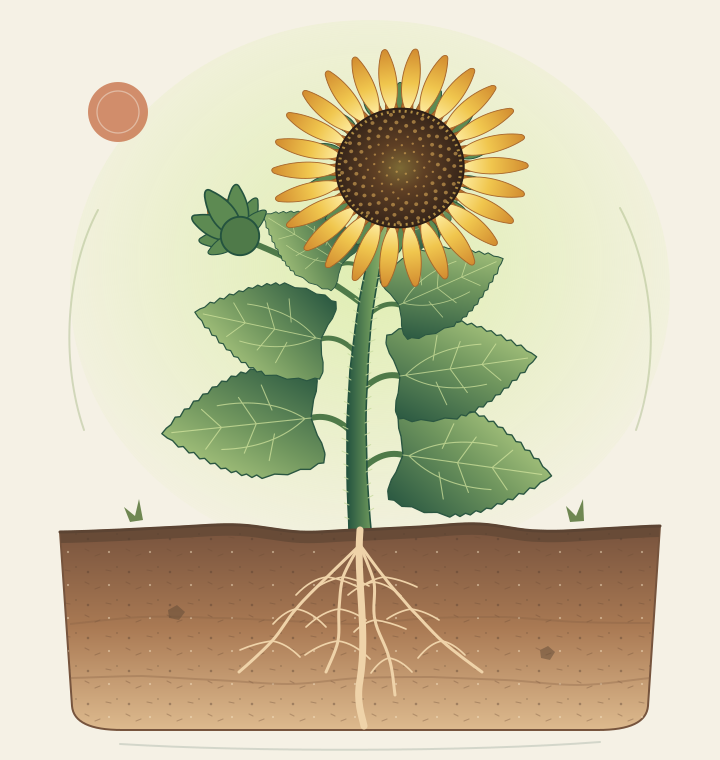
Sunflower plant with a golden composite flower head, heart-shaped leaves, sturdy hairy stem, a second developing bud, and a deep taproot with branching roots in a soil cutaway.
The apparent flower is a composite head: outer ray florets surround many disk florets. Fertilised disk florets form dry fruits commonly called sunflower seeds.

Know the crop

Crop profile

A warm-season annual grown for oil-rich seed, large confectionery kernels or ornamental flowers. Oilseed, confectionery and ornamental cultivars are not interchangeable: choose for the intended harvest, protect ripening heads from birds, and dry food seed thoroughly before storage. A few garden heads do not make home oil pressing an efficient replacement for buying oil.

Crop essentials

Botanical name
Helianthus annuus
Growth
80–140 days From direct sowing to mature seed on an annual plant. Many cultivars mature around 90–120 days, but heat, planting date and seed type shift the window; ornamental cut stems may be ready earlier and are not a seed-harvest benchmark. Mature heads commonly need further drying under cover before shelling and storage.
Family
Asteraceae, the daisy or sunflower family
Origin
Central and eastern North America
Habit
Warm-season, frost-tender annual with a sturdy stem, rough broad leaves and a composite seed head

Nutrition / raw dried kernels

Nutrition, in context

Very high Editorial nutrient-density rank 4. Rooted’s qualitative category considers protein, fibre, folate, iron and potassium with additional composition context. It is not an official score, a serving recommendation or proof of a health outcome.

Reference nutrients per 100 g sunflower seed kernels, dried (raw, hulled, not roasted)
NutrientAmount
Protein20.78 g
Fibre8.6 g
Folate227 µg
Iron5.25 mg
Potassium645 mg
  • The raw dried-kernel reference provides protein, fibre, folate, iron and potassium, plus vitamin E (35.17 mg), magnesium (325 mg) and selenium (53 µg) per 100 g.
  • Total fat is 51.46 g per 100 g, including 18.528 g monounsaturated and 23.137 g polyunsaturated fat; these are composition values, not a licence for unlimited portions or a promise of a health outcome.
  • These figures do not describe in-shell seed by total weight, roasted or salted kernels, sunflower butter or oil; pressing removes the fibre and most non-fat components.

Basis: Approximate values per 100 g sunflower seed kernels, dried (raw, hulled, not roasted; USDA FoodData Central SR Legacy 170562). The 100 g reference is a comparison basis, not a recommended serving. Harvest mature seed, clean and dry it for the intended storage period, and keep it cool, dry and protected from insects and rodents; refrigeration or freezing can extend the quality of hulled kernels. Discard mouldy, musty, insect-damaged or rancid seed rather than tasting or pressing it. Sunflower seed allergy is possible even though sunflower is not a peanut or tree nut; anyone with diagnosed allergy should avoid sunflower ingredients and follow professional advice. Home-pressed oil needs food-safe equipment, careful clarification and cold dark storage, and small batches still have modest yield and limited shelf life.

At the table

Use kernels as one part of the meal

  • Beans, lentils or chickpeas. Protein and meal variety: Sunflower kernels and pulses each contribute protein and fibre, while pulses bring different textures and nutrient profiles. A varied meal does not depend on one seed supplying everything. Sprinkle toasted hulled kernels over a bean and roasted-vegetable bowl, or stir them into a lentil salad just before serving.
  • Leafy greens, tomatoes or peppers. Vegetables and texture: Vegetables add volume, colour and other nutrients, while a measured scatter of kernels adds richness and crunch. Lemon or another acidic ingredient balances a seed-based dressing. Use ground kernels in a thick dressing for cabbage, or add whole kernels to a tomato, pepper and leafy-green salad.
  • Oats, yogurt or fruit. Everyday portions: A small amount of sunflower seed can enrich porridge or yogurt without turning the 100 g laboratory comparison into a serving target. Choose unsweetened ingredients and account for added salt in seasoned products. Add a spoonful of hulled kernels to oats with fruit, or blend a measured amount into a smoothie with yogurt.

The essentials

From warm soil to sound dry seed

Six practical stages. Adapt cultivar, sowing and protection to your frost-free season, rainfall and intended harvest.

  1. Choose oilseed, confectionery or ornamental

    Oilseed cultivars generally bear smaller black, thin-hulled seed selected for oil content; high-oleic and other oil profiles are cultivar traits. Confectionery types bear larger, often striped seed for in-shell eating or hulling. Ornamental cultivars prioritise height, branching, colour or pollenless cut flowers and may give little useful food seed. Start with the use, days to maturity and local performance on the packet.

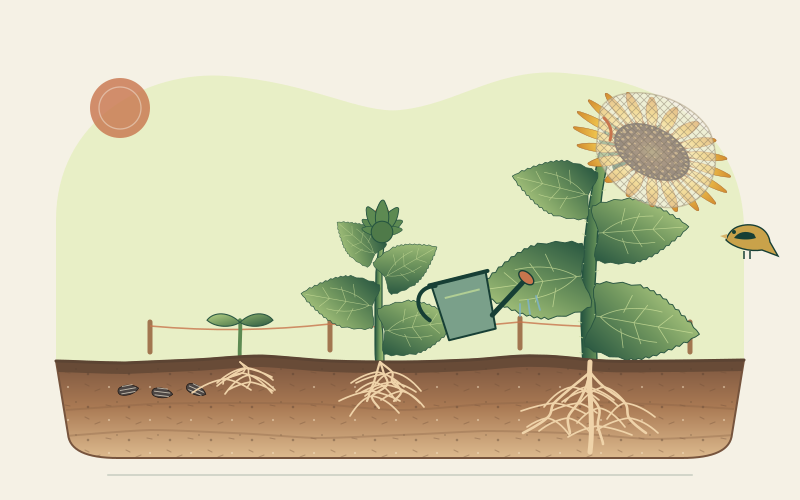
  2. Direct-sow after frost into warm soil

    Choose full sun and deep, fertile, free-draining soil. Direct-sow after local frost danger, when soil is workable and warming; around 10°C is a reasonable germination threshold, while warmer soil speeds establishment. Follow packet depth, commonly about 2–4 cm, and do not rush seed into cold wet ground. An early cultivar is safer than an excessively early sowing.

  3. Space for heads, roots and airflow

    Use the cultivar’s spacing: compact ornamentals can stand closer than giant confectionery plants, while very dense stands make smaller heads and compete for water. Thin crowded seedlings, control weeds early and avoid excessive nitrogen, which can encourage lush growth and lodging. Stake tall exposed plants loosely where needed; allow bees and other pollinators access to seed-producing flowers.

  4. Water establishment, flowering and seed fill

    Sunflowers develop deep roots but are not no-water crops. Water the root zone when soil and weather call for it, especially during establishment, flowering and seed filling. Avoid persistent saturation, and mulch without burying stems. Inspect leaves, stems and heads for locally identified insects and rots; rotate away from sunflower and related susceptible crops where local disease guidance recommends it.

  5. Share deliberately or protect from birds

    Birds can remove seed as soon as it fills. Decide whether particular heads are for wildlife and protect food heads with breathable paper or cloth bags, cheesecloth or wildlife-safe netting supported so birds cannot become trapped. Check covers often and keep them dry enough to prevent mould. Cut ornamental pollenless heads for display on the cultivar’s schedule rather than expecting a useful seed crop.

  6. Harvest, dry and store before pressing

    For seed, watch for yellowing then browning on the back of the head, drying bracts and firm filled seed; stay-green cultivars need seed inspection too. Cut with a stem section and dry in a ventilated, protected place. Shell, clean and store only thoroughly dry sound seed in food-safe airtight containers. Home pressing yields modest amounts, retains fine particles and moisture unless carefully handled, and is impractical from a handful of heads; follow the press instructions and refrigerate fresh oil for short-term use.

Growing notes by place

Read your region, then read your weather

Compare broad growing conditions, then adjust for your own frost dates, altitude, rainfall and soil.

Cool, temperate and often maritime, with variable summer heat and a risk of wet autumn seed drying.

Northwestern Europe

Early sunflowers crop in sunny sheltered gardens; large late confectionery heads and outdoor drying are less reliable in short or wet seasons.

Indicative planting
Direct-sow after local frost when soil is warm and workable, commonly late April–May; colder sites sow later. Choose an early cultivar and use the packet spacing for its mature head size.
Indicative harvest
Expect mature seed around September–October where the season allows. Protect heads from birds, cut before prolonged rain damages them, and finish drying with good airflow under cover.
Soil and moisture
Full sun and fertile, moisture-retentive but free-draining soil; avoid cold waterlogged seedbeds and excessive nitrogen that produces soft, lodge-prone growth.

Field note: Prioritise season length and a dry indoor finishing space over giant-head claims; do not seal a head or seed lot that still feels damp.
Dates are indicative. Local frost forecasts, heat, seasonal rainfall and recent weather—not the calendar alone—should guide sowing and harvest.

Cool-temperate Northern Hemisphere · example

One warm season, one seed harvest

A compact planning guide, not a fixed schedule. Shift it with latitude, altitude, cultivar and local conditions.

  1. March–May

    Choose oilseed, confectionery or ornamental cultivars whose days fit your season. Prepare a sunny drained bed, check soil fertility and wait for local frost danger to pass and soil to warm before direct sowing.

  2. May–June

    Sow at the packet’s depth and spacing, keep the seed zone moist but not saturated, and thin crowded seedlings. Control small weeds, shelter exposed young plants and identify seedling pests before treating.

  3. June–August

    Water during establishment, flowering and seed fill according to soil moisture. Keep tall stems supported where necessary, allow pollinators access to seed types and inspect foliage and heads for local disease.

  4. August–October

    Cover selected food heads against birds without trapping wildlife. Harvest mature heads before damaging wet weather, dry them with airflow, then shell, clean and store sound dry seed; press only with suitable equipment and realistic yield expectations.

The 80–140-day window runs from direct sowing to mature seed. Many cultivars mature around 90–120 days; ornamental cut stems may be earlier, while further protected drying is often needed before shelling and storage.

From the field journal

Grow, choose and use your sunflower

Practical reading for warm sowing, purpose-led cultivars, safe drying, and the difference between whole kernels and pressed oil.

Your next harvest begins here

Plan for the seed behind the petals.

Choose the use before the cultivar, give roots and heads enough room, and prepare bird protection and drying space before maturity. A food crop finishes with sound dry kernels—not merely a spectacular flower.

Open the growing guide