Crop 037 / Glycine max

Match the bean to the season.

Direct-sow soybeans after frost into warm, workable soil. Choose a cultivar for your latitude and intended harvest: pluck bright green, well-filled pods for edamame, or leave pods and seeds to mature fully for dry beans. Both forms need thorough cooking.

Two harvest stages
Edamame or dry beans Pick succulent green seeds in bright pods, or wait for mature hard seed in dry brown pods.
Typical crop window
70–150 days About 70–100 days to green edamame and 90–150 days to mature dry beans; local cultivar and weather alter timing.
Season
Warm and frost-free Direct sow after frost; photoperiod and local maturity ratings matter alongside warmth.
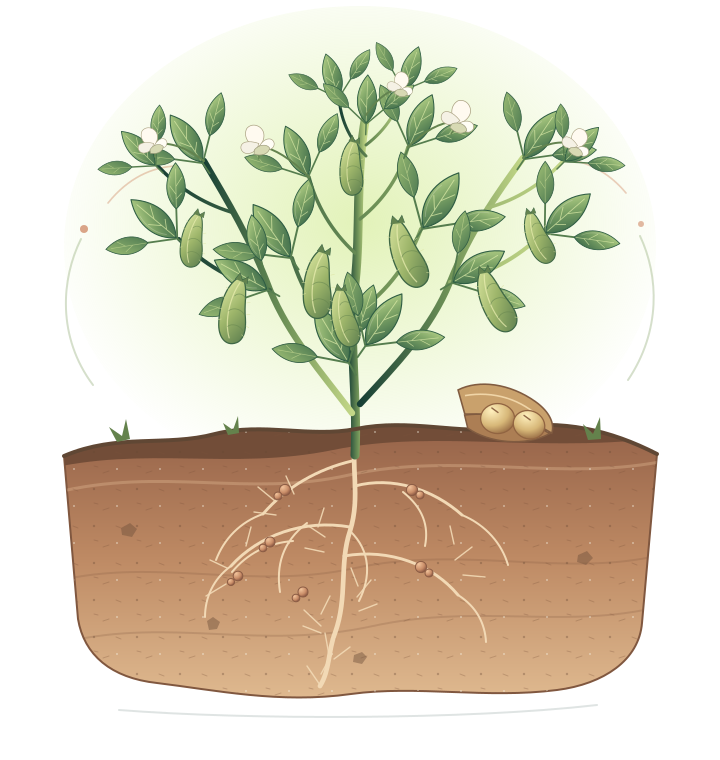
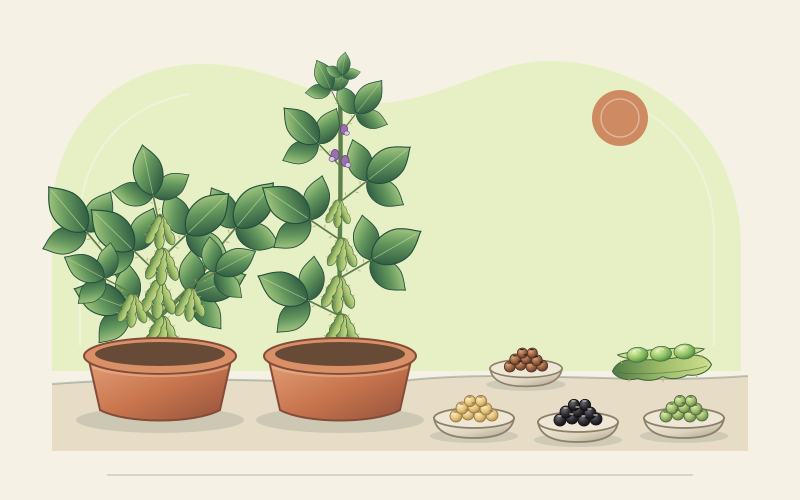
Bushy soybean plant with trifoliate leaves, clusters of fuzzy pods and a nodulated root system in a soil cutaway.
Soybeans bear trifoliate leaves and hairy pods; green filled pods and dry mature pods mark two distinct kitchen harvests.

Know the crop

Crop profile

A warm-season annual legume harvested as succulent green edamame or as mature dry beans. Direct sowing after frost, warm soil and a locally adapted maturity group are central because day length as well as temperature influences flowering and maturity.

Crop essentials

Botanical name
Glycine max
Growth
70–150 days From direct sowing to the intended first harvest: commonly about 70–100 days for well-filled green edamame pods and 90–150 days for mature dry beans. Cultivar maturity, photoperiod, latitude, temperature and sowing date shift both windows. This is an annual crop; green pods need prompt refrigeration, while dry beans need drying before storage.
Family
Fabaceae, the legume family
Origin
East Asia, domesticated from the wild soybean Glycine soja
Habit
Warm-season annual bush with trifoliate leaves and hairy pods; cultivars differ in maturity, height and determinate or indeterminate growth

Nutrition / boiled without salt

Nutrition, in context

Very high Editorial nutrient-density rank 4. This is Rooted’s qualitative category for protein, fibre, folate, iron and potassium in the site’s cooked-food comparison, with highlights adding context. It is not an official nutritional score or a universal ranking of pulses.

Reference nutrients per 100 g mature soybeans, cooked, boiled, without salt
NutrientAmount
Protein18.21 g
Fibre6 g
Folate54 µg
Iron5.14 mg
Potassium515 mg
  • Provides substantially more protein per 100 g than the site's cooked chickpea and lentil references, alongside fibre and potassium.
  • Soy protein contains all nine essential amino acids; 'complete' describes that profile, not a guarantee of adequate total protein or a health outcome.
  • These figures describe mature boiled soybeans, not raw dry seed, green edamame, tofu, soy drink, flour, miso or roasted snacks.

Basis: Approximate values per 100 g mature soybeans, cooked, boiled, without salt (USDA FoodData Central SR Legacy 174271; NDB 16109). Never eat home-grown soybeans raw. Sort and rinse dry food-grade beans, soak if using that method, then boil or simmer in fresh water until completely tender, following a reliable recipe or pressure-cooker instructions. Soaking alone is not cooking. Cool and refrigerate cooked beans promptly. Water uptake, cultivar, preparation and serving size change values per portion, and listed nutrients are not absorbed amounts.

At the table

Build a varied meal around soybeans

  • Rice, noodles or whole-grain bread — A varied protein-containing meal. Soybeans already contain all nine essential amino acids, so grains are not needed to complete their protein. Grains add their own nutrients, flavours and textures within a varied diet. Serve cooked soybeans with rice and vegetables, or add edamame to a noodle bowl.
  • Tomatoes, peppers or citrus — Vitamin C and non-heme iron. Vitamin-C-rich foods can support absorption of non-heme iron from soybeans and other plant foods. The response depends on the whole meal and individual iron status. Add sweet peppers to an edamame salad, or serve mature beans in a tomato stew.
  • Leafy greens, mushrooms or carrots — Vegetable variety. Vegetables broaden the flavours, textures and nutrients of a soybean meal; no particular combination is required. Simmer fully cooked soybeans with carrots and greens, or combine cooked edamame with mushrooms.

The essentials

From warm-soil sowing to the right pod stage

Six practical stages. Match cultivar, planting date and harvest handling to your latitude, frost-free season and intended kitchen use.

  1. Choose the use and local maturity

    Edamame cultivars are selected for eating quality at the green-seed stage, while dry-bean cultivars are intended for mature seed. Both are Glycine max. Choose locally tested seed whose maturity group fits your latitude and season; packet days alone cannot account for photoperiod, temperature and sowing date.

  2. Direct-sow after frost into warm soil

    Soybean seed is sensitive to cold, wet conditions. Direct-sow after local frost when soil is warming and a favourable forecast follows. As a general garden starting point, sow about 2.5–4 cm deep and 5–10 cm apart, with room between rows for weeding; the packet and local guidance take priority.

  3. Give sun, drainage and an open bed

    Choose full sun and soil that drains after heavy rain. Relieve compaction without working wet soil into clods, and remove weeds while small. Bush soybeans need no trellis. Space plants so their trifoliate canopy can be inspected without damaging brittle stems and pods.

  4. Water for pods; keep nitrogen modest

    Maintain suitable moisture through establishment, flowering and seed filling without saturating the bed. Avoid heavy nitrogen feeding. Where locally recommended, use fresh soybean-compatible Bradyrhizobium japonicum inoculant on ground new to soybeans; bean or pea inoculant is not interchangeable.

  5. Harvest green or mature, not in between

    For edamame, harvest when seeds nearly touch inside bright green, plump pods; yellowing pods have passed the best vegetable stage. Refrigerate promptly and cook soon. For dry beans, wait until pods are brown and dry and seeds are hard, then harvest before prolonged rain, mould or shattering.

  6. Preserve green beans or cure dry seed

    Refrigerate fresh edamame, or wash, blanch, cool and freeze it using a reliable method. Thresh dry pods, winnow and spread beans until thoroughly dry before airtight storage in a cool, dark place. Discard mouldy or doubtful seed. Neither drying nor blanching replaces the final thorough cooking needed before eating.

Growing notes by place

Read your region, then read your day length

Compare broad growing conditions, then adjust for your own latitude, altitude, frost dates, rainfall and cultivar.

Cool, temperate and often maritime, with long summer days, variable warmth and frequently damp autumn weather.

Northwestern Europe

Only very early, locally tested soybeans are plausible outdoors in many districts. A warm sheltered site may produce edamame; a mature dry crop is less reliable where autumn stays cool or wet.

Indicative planting
Direct-sow in May or early June after local frost when soil has warmed and is not saturated. Select the earliest locally recommended maturity, often group 000 or 00 where that system is used.
Indicative harvest
Pick filled green pods around August–September. Dry beans may not mature reliably; if they do, harvest before prolonged rain and finish drying with ventilation under cover.
Soil and moisture
Well-drained, moderately fertile soil in full sun; avoid cold wet seedbeds, waterlogging and heavy nitrogen feeding.

Field note: Do not import a later maturity group on the strength of its packet days alone: long days and cool temperatures can delay development.
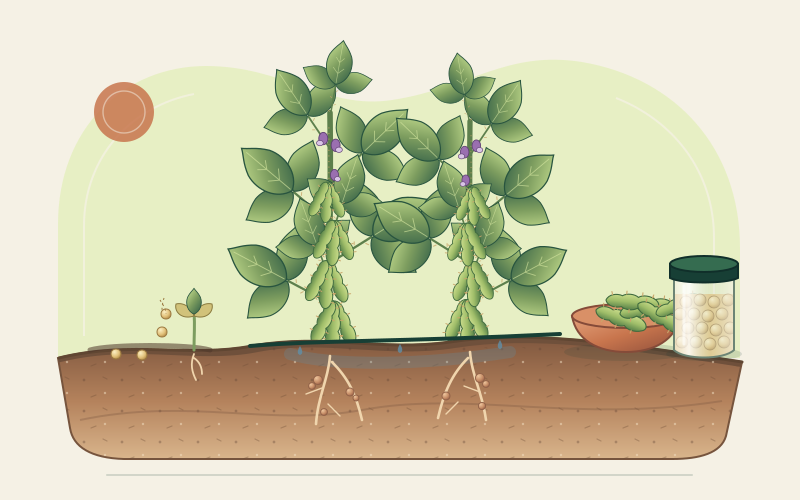
Dates are indicative. Local cultivar trials, frost forecasts, photoperiod response, seasonal rainfall and recent conditions—not the calendar alone—should guide sowing and harvest.

Northern North America · example

A warm-season rhythm with two possible finishes

A compact planning guide, not a fixed schedule. Shift it with latitude, local maturity group, frost and rainfall.

  1. April–May

    Choose locally tested edamame or dry-bean seed and prepare a sunny, free-draining bed. Wait for local frost to pass and soil to warm rather than sowing by the earliest calendar date.

  2. May–June

    Direct-sow into moist, warm soil. Check emergence, protect seedlings from local pests where needed and remove weeds while small without compacting or saturating the bed.

  3. June–August

    Maintain suitable moisture through flowering and pod filling. Begin checking early edamame as pods swell; harvest while bright green and seeds nearly touch, then chill promptly.

  4. August–October

    Finish successive edamame harvests or leave dry types to form brown pods and hard seed. Harvest before damaging frost or persistent rain, thresh and dry mature beans thoroughly before storage.

This example assumes a sufficiently warm northern growing season. Elsewhere, use locally validated sowing windows and the approximate 70–100 day edamame or 90–150 day dry-bean ranges as context, not a promise of maturity.

From the field journal

Grow, choose and cook your soybeans

Practical reading for warm-soil sowing, locally suited maturity, distinct green and dry harvests, and balanced meals grounded in the cooked reference food.

Your next harvest begins here

Start with a short row and a local cultivar.

A small warm-season bed is enough to learn how day length and temperature shape the crop. Decide whether you want green pods or a dry jar, then make prompt chilling or thorough drying part of the harvest.

Open the growing guide