
Crop 045 / Eruca vesicaria · annual salad rocket

Sow a little. Pick peppery leaves in weeks.

Rocket moves quickly from seed to salad. Keep small sowings coming, shield seedlings from flea beetles, and expect annual salad rocket to flower rather than crop indefinitely. Wild Diplotaxis follows a different rhythm.

First salad leaves
30–50 days From direct sowing in favourable conditions; slow or hot weather changes the window.
Keep the harvest coming
Sow little and often Repeat short rows every two to three weeks instead of relying on one planting.
Beyond the leaves
Flowers and seed Cream, dark-veined flowers are edible; a few plants can mature pods for seed.
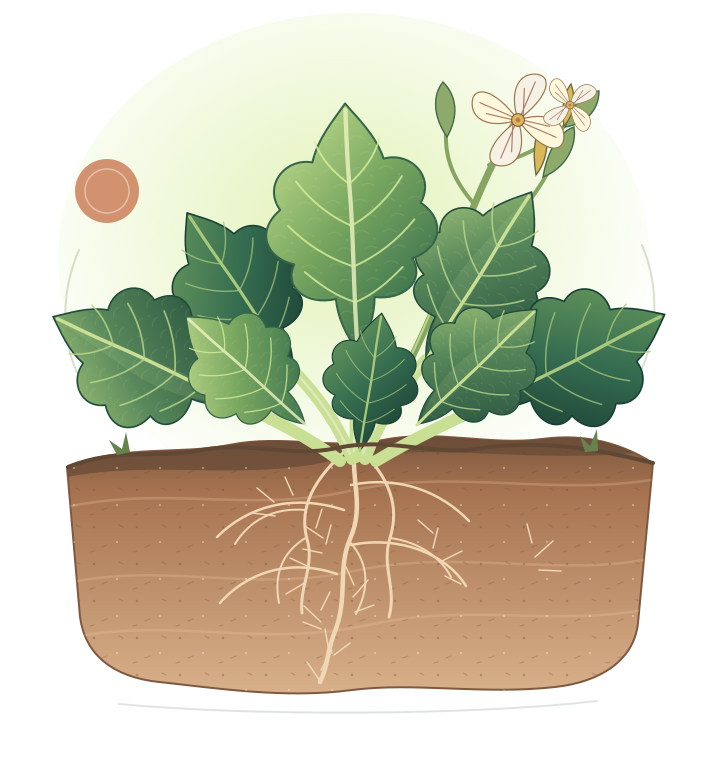
Annual salad rocket with broad, lobed green leaves, a cream flower with dark veins, and a branching taproot in a soil cutaway.
Salad rocket is an annual Eruca. Narrow-leaved, yellow-flowered wild rocket is usually perennial Diplotaxis tenuifolia.

Know the crop

Crop profile

Rocket and arugula commonly refer to annual Eruca vesicaria, often listed as subspecies sativa or by the synonym Eruca sativa. “Wild rocket” usually means a different species.

Crop essentials

Growth
30–50 days From direct sowing to the first usable salad leaves of annual Eruca vesicaria. Take a few outer leaves or cut a whole young plant; repeat sowing replaces plants as they bolt. Perennial wild Diplotaxis is generally slower to establish.
Botanical name
Eruca vesicaria (salad rocket; often E. vesicaria subsp. sativa)
Family
Brassicaceae
Origin
Mediterranean region
Habit
Annual salad rocket grown for fast leaf harvests; wild Diplotaxis tenuifolia is a separate perennial crop

Nutrition / raw

Nutrition, in context

High Editorial rank 3 of 4. This is Rooted’s qualitative category for protein, fibre, folate, iron and potassium density, with highlights adding context. It is not an official nutrient score, a health rating or a measure of absorption.

Approximate nutrients per 100 g arugula, raw, edible leaves
Nutrient Amount
Protein2.58 g
Fibre1.6 g
Folate97 µg
Iron1.46 mg
Potassium369 mg

Basis: Approximate values per 100 g arugula, raw, edible leaves (USDA FoodData Central SR Legacy 169387). The record names Eruca sativa, a synonym used for cultivated Eruca vesicaria.

The same raw 100 g reference contains vitamin K (109 µg), vitamin A (119 µg RAE), vitamin C (15 mg) and calcium (160 mg). An actual salad serving may weigh much less than 100 g.

These are raw Eruca values, not cooked-rocket values or an analysis of wild Diplotaxis. Wilting changes portion weight, and heat or discarded cooking water can reduce some nutrients. Listed content is not an absorption measure.

At the table

Let peppery leaves sharpen a varied meal

  • Beans, lentils or chickpeas with grains. Legumes and grains add protein, fibre and energy alongside a small pile of peppery leaves. Try rocket through white-bean salad with whole-grain bread, or stir it into lentil soup just before serving.
  • Tomatoes, peppers or citrus. Vitamin-C-rich foods can support absorption of non-heme iron from rocket and other plant foods in the meal. Dress rocket and beans with lemon, or add tomatoes and sweet peppers to a salad; this is not a treatment for deficiency.
  • Eggs, cheese, fish, nuts or tofu. These foods contribute different nutrients and textures alongside rocket. Use it on a tofu sandwich, beside an omelette, or with pasta, white beans and chopped walnuts.

Use tender young leaves raw, or wilt older leaves briefly into pasta, soup, eggs or a stir-fry. Wash loose harvests under clean running water and dry them gently; washing reduces rather than eliminates contamination.

The essentials

Six steps from quick leaves to flowers

Work with salad rocket’s short annual cycle. Adapt sowing and protection to local weather, and buy wild rocket on its own terms.

  1. Choose the rocket you mean

    For fast leaves in 30–50 days, choose annual salad rocket, Eruca vesicaria. Wild rocket, usually Diplotaxis tenuifolia, is perennial, slower to establish and more deeply divided, with yellow rather than cream, dark-veined flowers. Give it a longer-term place instead of expecting identical timing.

  2. Sow shallowly in a cool-season bed

    Use fertile, moisture-retentive but free-draining soil in sun or light shade. Sow outdoors about 0.5–1 cm deep when local conditions suit, or use modules for an early start. Water the drill before covering dry soil, firm gently and keep the seedbed moist. Containers need depth, drainage and frequent checks.

  3. Thin, then repeat small sowings

    Use sound thinnings as baby leaves and leave roughly 10–15 cm between plants intended for repeated picking, following the packet and leaf size wanted. Sow a short row or small container every two to three weeks during favourable weather. Crowding and age encourage annual rocket to flower.

  4. Prevent drought and heat stress

    Check moisture below the surface and water the soil before plants wilt; avoid saturated roots. Light shade can prolong summer leaf production, but no cover makes rocket immune to heat. Pinching a rising flower stem may delay the end briefly, while succession sowing provides the reliable replacement.

  5. Exclude flea beetles early

    Tiny round shot holes and small jumping beetles suggest flea-beetle feeding. Install fine, well-supported mesh immediately after sowing where damage recurs, seal the edges and do not trap infested plants beneath it. Inspect seedlings often, manage weedy brassica hosts and protect against slugs; severe damage can slow or destroy young plants.

  6. Pick leaves, then choose flowers or seed

    Begin at about 30–50 days, taking a few outer leaves or cutting a whole plant roughly 2–3 cm above the crown for possible regrowth. Older leaves suit brief cooking. Once annual rocket bolts, leaf quality declines: use clean, unsprayed flowers, compost spent plants, or leave healthy plants to mature dry pods for seed.

Growing notes by place

Follow cool growth, not a universal month

Compare broad conditions, then adjust for your frost dates, altitude, rainfall, soil and the difference between annual and wild rocket.

Cool, temperate and often maritime, with local differences in frost, exposure and summer warmth.

Northwestern Europe

Salad rocket suits Britain, Ireland and nearby districts in spring, late summer and mild autumn weather. Midsummer heat and dry soil can shorten each sowing’s leaf harvest.

Indicative planting
Direct-sow short rows from April to early September, repeating every two to three weeks while conditions suit. Use light summer shade and protection for later crops; local frost and cold soil delay early sowing.
Indicative harvest
Begin picking about 30–50 days after active growth starts, often May–October. Later protected sowings can supply winter leaves, but low light and cold slow growth.
Soil and moisture
Fertile, moisture-retentive but free-draining soil or fresh container compost; avoid both drought and waterlogging.

Field note: Cover young plants with securely edged fine mesh where flea beetles recur, and replace flowering salad-rocket plants with the next small sowing.
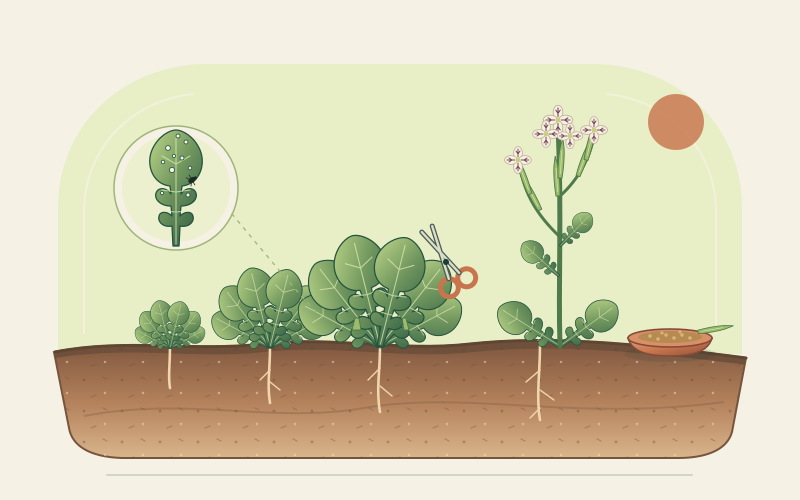

Dates are indicative. Local frost forecasts, soil conditions and recent weather—not the calendar alone—should guide sowing, protection and harvest.

Cool-temperate Northern Hemisphere · example

A relay of small sowings

A compact planning guide for annual salad rocket, not a fixed schedule or a calendar for perennial wild rocket.

  1. March–April

    Prepare a fertile, free-draining bed or container. Start under cover in cold districts or direct sow when soil is workable; protect seedlings and install mesh where flea beetles recur.

  2. April–August

    Sow short rows every two to three weeks while conditions suit. Thin crowded plants, maintain even moisture and use light shade during hot spells.

  3. May–October

    Start picking each sowing after roughly 30–50 days of active growth. Take leaves young, cook older ones briefly, and replace annual plants as flowering stems rise.

  4. August–September

    Make late sowings for autumn and protected winter leaves. Leave a few healthy spring or summer plants to flower and dry seed pods if seed saving is wanted.

The 30–50-day window begins at sowing, but cold, heat and drought shift it. Salad rocket’s several harvests do not turn it into a perennial; succession supplies continuity.

From the field journal

Grow, identify and prepare rocket

Practical reading for a fast relay of leaves, an informed choice between Eruca and Diplotaxis, and safe, flexible meals.

Your next harvest begins here

A short row now, another in a fortnight.

Rocket rewards a light touch and regular replacement. Sow less than you think you need, protect the seedlings, and keep the next small batch coming before the first flowers.

Open the growing guide