Crop 040 / Raphanus sativus

A quick crop rewards a timely harvest.

Grow radishes for crisp salad roots, peppery young greens or tender edible pods. Sow small batches in cool weather, give each plant room, and pull salad roots promptly before heat, drought or age turns them pithy and woody.

Fast salad roots
25–45 days From direct sowing under favourable cool conditions; winter and pod types take longer.
Keep the harvest coming
Small successions Sow a short row every week or two only while mild weather is likely.
More than the root
Greens and pods Use sound young leaves promptly; grow a pod type for crisp immature seed pods.
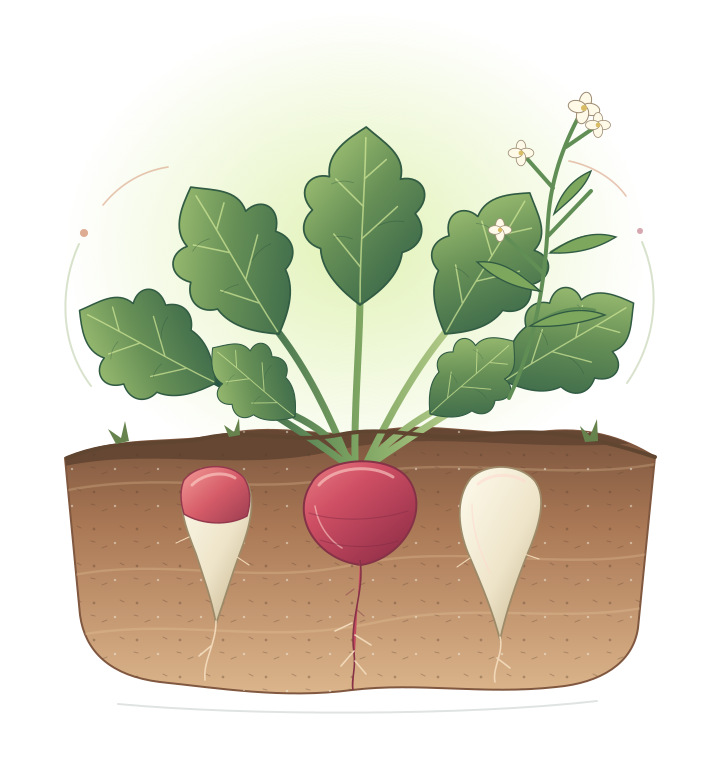
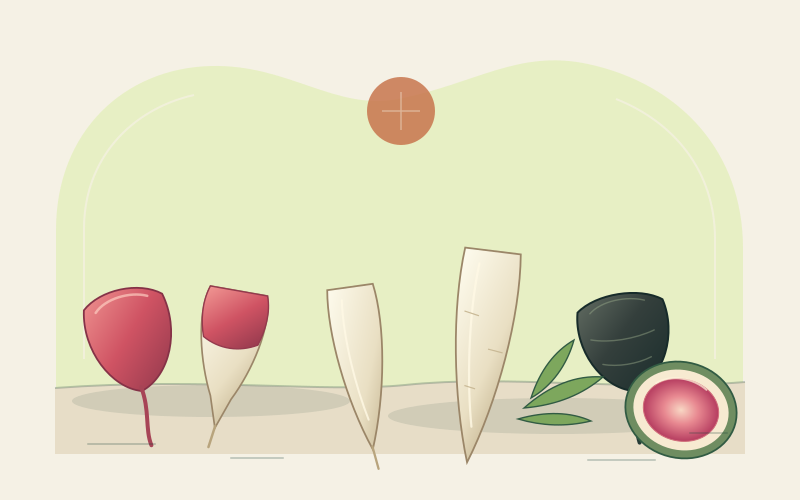
Radish plant with broad green leaves above round crimson, white and elongated rose roots in a soil cutaway, with a flowering stem and slender green seed pods.
Leaves feed the swelling salad root; left to flower, the same species can also produce edible immature pods.

Know the crop

Crop profile

A fast cool-season root crop for fresh eating, with slower winter forms and edible-podded selections. Even moisture, timely thinning and prompt harvest matter more than waiting for the biggest root.

Crop essentials

Botanical name
Raphanus sativus
Growth
25–45 days From direct sowing to first usable roots for fast salad radishes under favourable cool conditions. Cold soil can extend this window. Winter and oriental radishes commonly need at least eight weeks, and edible-podded types need time to flower and set tender pods.
Family
Brassicaceae
Origin
Probably western or central Asia, with long cultivation and diversification across Europe and Asia
Habit
Usually grown as an annual, with the first salad-root harvest in the same sowing season

Nutrition / raw roots

Nutrition, in context

Moderate Editorial nutrient-density rank 2. This is Rooted’s qualitative category for protein, fibre, folate, iron and potassium, with highlights adding context. It is not an official nutritional score or a universal ranking of vegetables.

Reference nutrients per 100 g radishes, raw
NutrientAmount
Protein0.68 g
Fibre1.6 g
Folate25 µg
Iron0.34 mg
Potassium233 mg
  • Contains vitamin C (14.8 mg) and potassium in the same raw-root reference.
  • Provides some fibre and folate, with modest protein and iron concentrations.
  • These values describe raw radish roots, not cooked roots, leafy tops, edible pods or pickled products.

Basis: Approximate values per 100 g radishes, raw (USDA FoodData Central SR Legacy 169276). View the USDA reference. Cultivar, maturity, preparation and serving size change intake; listed content does not measure absorption or individual dietary needs.

At the table

Build a varied meal around radishes

  • Beans, chickpeas or lentils. Protein and fibre. Pulses add substantially more protein and fibre to a radish-containing meal. Their amino-acid patterns can complement grains across the day without requiring a particular combination at one meal. Add sliced radishes to a bean and grain bowl.
  • Rice, barley or whole-grain bread. A varied meal. Grains make a crisp radish salad more substantial and contribute their own nutrients. Include a protein-containing food according to dietary preference and overall needs. Try radishes with barley, chickpeas and leafy greens.
  • Eggs, fish, yogurt or tofu. Protein variety. These accompaniments add protein and different nutrients alongside radishes. No single accompaniment is essential. Serve radishes with tofu and rice, or with yogurt, herbs and other vegetables.

The essentials

From a short row to a crisp harvest

Six practical stages. Adapt timing, root form and protection to your soil, rainfall, temperature and local brassica pests.

  1. Choose a mild window and a suitable type

    Use fast salad types for spring, autumn or another locally cool period; heat and long days can trigger flowering and poor roots. Choose winter or oriental types for their recommended later sowing and longer season, or an edible-podded cultivar for warm-weather pods. Prepare loose, fine, drained soil with depth for the selected root.

  2. Direct-sow a small batch

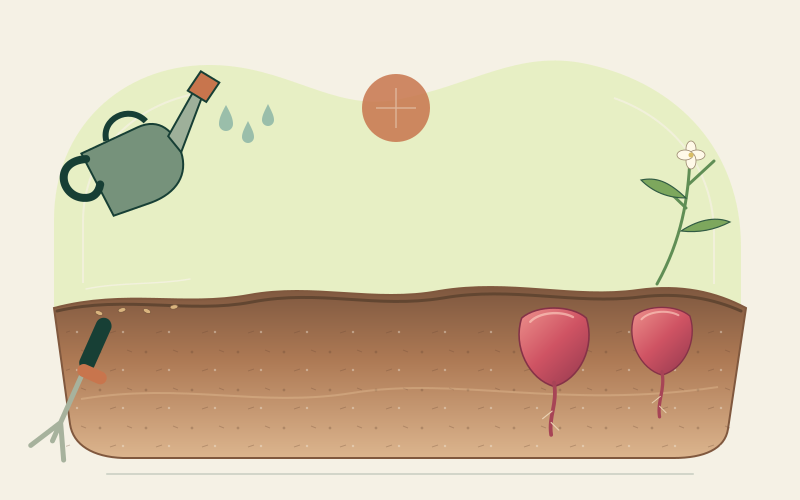
    Sow where plants will grow, following the packet first. For salad radishes, roughly 1 cm deep and 2.5–5 cm apart is a common starting point, with about 15 cm between rows. Water a dry drill before sowing, cover lightly and firm gently. Repeat a short row every one to two weeks only while suitable weather is likely.

  3. Keep moisture even and thin promptly

    Do not let the shallow seed zone dry out or remain saturated. Once seedlings are visible, remove extras before crowns touch; larger winter and oriental types need much wider spacing. Weed by hand near the row. Drought can prevent roots swelling, while severe drying followed by heavy watering can contribute to splitting.

  4. Protect leaves and prevent woody roots

    Use complete insect-proof mesh where cabbage root fly or other local brassica pests warrant it, and rotate away from recent brassica ground. Light afternoon shade can help at warm season edges, but deep shade weakens growth. Heat, drought, crowding and old age can make salad roots pithy, woody or excessively hot; changing the sowing window is often the best response.

  5. Harvest roots, greens and pods at the right stage

    Check salad roots from about 25 days and pull at the cultivar’s useful diameter, often around 2.5 cm, rather than leaving them to become old. Take a few sound young leaves without stripping the plant. For pod cultivars, allow flowering and pick long immature pods while crisp, before they become stringy; regular picking encourages more.

  6. Separate tops and store by type

    Remove leafy tops soon after lifting so they do not draw moisture from roots. Chill sound salad roots with humidity but not trapped wetness and use them fresh; refrigerate greens separately and use promptly. Mature winter types can keep longer in a cool, humid, frost-free store. Wash under clean running water, discard rotten produce and refrigerate cut or cooked food promptly.

Growing notes by place

Read your region, then read your weather

Compare broad growing conditions, then adjust for your own frost dates, altitude, rainfall and soil.

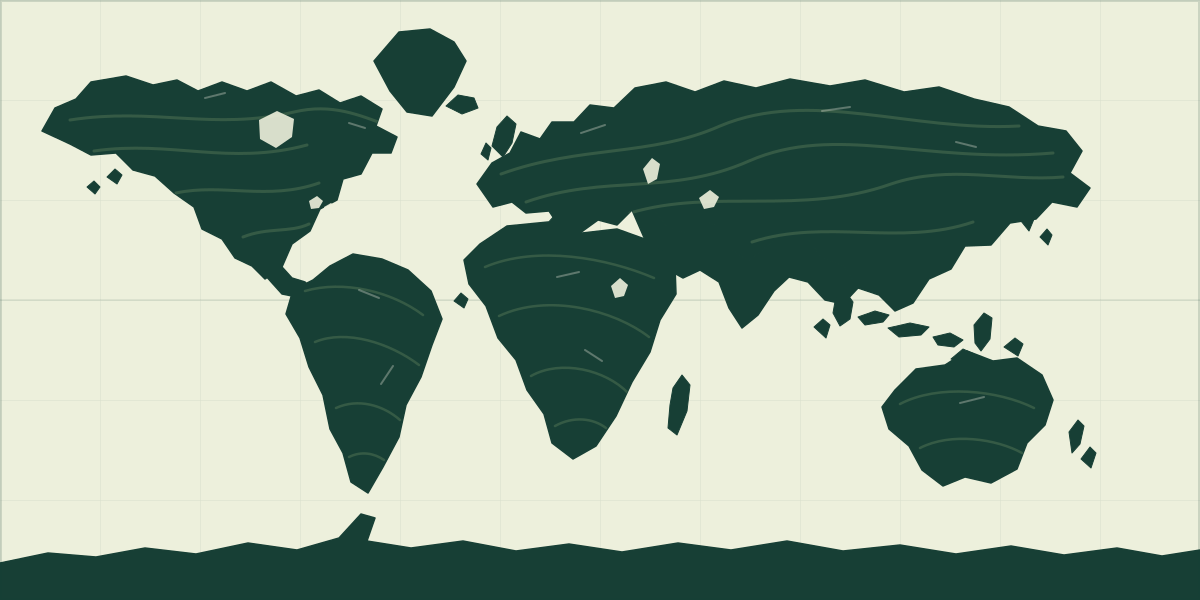
Cool, temperate and often maritime, with colder springs and shorter seasons in northern and upland districts.

Northwestern Europe

Salad radishes suit spring and late-summer sowing in Britain, Ireland and nearby areas. Hot, dry spells and cold early sowings can extend or spoil the crop.

Indicative planting
Direct-sow small batches from March–September once soil is workable; use cloches for early crops and pause or use light shade during hot, dry weather.
Indicative harvest
Pull salad roots about 25–45 days after favourable sowings, often April–October. Sow winter types in July–August for later harvest and storage.
Soil and moisture
Loose, fine and moisture-retentive but free-draining soil; avoid compaction and waterlogging, and keep the seed zone evenly moist.

Field note: Sow only what can be used within a week or two, thin promptly and harvest salad roots at the packet’s useful size rather than waiting for maximum diameter.
Dates are indicative. Local frost forecasts, heat, seasonal rainfall and recent weather—not the calendar alone—should guide sowing and harvest.

Cool-temperate Northern Hemisphere · example

A succession of short rows

A compact planning guide for salad radishes, not a fixed schedule. Shift it with latitude, altitude, cultivar and local conditions.

  1. March–April

    Prepare a fine, loose bed and direct-sow a short row once soil is workable. Use cloches for an early crop where appropriate, and keep the shallow seed zone moist through emergence.

  2. April–June

    Make small repeat sowings every week or two in mild weather. Thin before crowns crowd, weed shallowly and begin pulling roots at the size recommended for the cultivar.

  3. June–August

    Pause salad sowing during hot, dry periods or use a cooler, lightly shaded position with reliable water. Resume as heat eases; sow winter types at their recommended midsummer date.

  4. August–October

    Continue small autumn successions where mild growing time remains. Lift winter roots by type and local conditions, separate tops, and store only sound roots in suitable cool, humid conditions.

The general 25–45-day window belongs to fast salad radishes under favourable conditions. Cold soil can extend it; winter, oriental and edible-podded types require different, longer schedules.

From the field journal

Grow, choose and enjoy your radishes

Practical reading for crisp successions, useful type choices and balanced meals without superfood claims.

Your next harvest begins here

Start with one short row, then sow another.

A small batch is enough to learn how quickly roots fill in your weather. Keep the soil evenly moist, thin decisively and harvest at a crisp, useful size instead of waiting for an oversized root.

Open the growing guide