
Crop 031 / Avena sativa

Grow the panicle. Plan the work beyond threshing.

Grow oats as a spring cereal for a same-season harvest or as a locally adapted autumn-sown winter crop. Keep the stand cool, drained and moderately fed, then plan careful hand harvest, drying and threshing. Ordinary oat grain still carries its hull after threshing; edible groats and oatmeal require another processing step.

Harvest
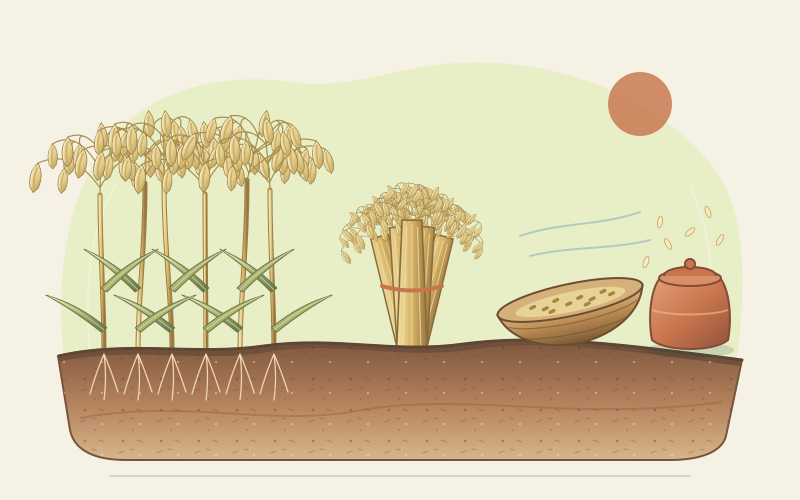
Mature, hard grain Cut before prolonged rain or shattering, then dry, thresh and winnow before dehulling food grain.
Typical first harvest
90–270 days Spring oats commonly take 90–150 days; winter oats occupy roughly 180–270 days including dormancy.
Life cycle
Annual, not perennial Choose spring or winter cultivar habit and sow again for each crop.
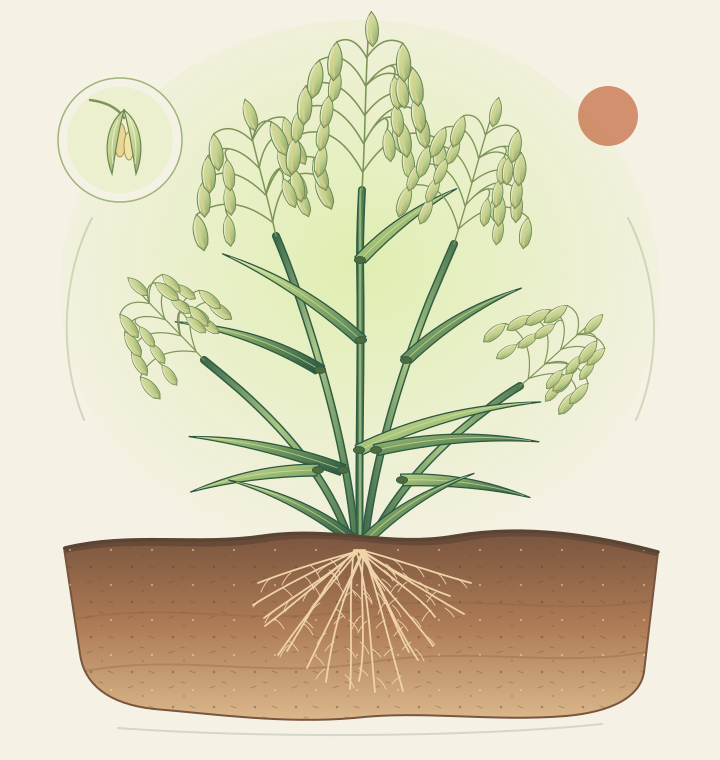
Oat plant with jointed stems, narrow leaves, loose branching panicles of dangling spikelets and fibrous roots in a soil cutaway.
The oat’s open panicle carries spikelets on fine branches. Threshing frees grain from the panicle, but the hull usually stays around each kernel.

Know the crop

Crop profile

A cool-season annual cereal grown for mature grain, with spring and winter habits in Avena sativa. Spring types are sown for a same-season harvest, while winter types establish before cold and usually need cultivar-specific vernalization before heading. Ordinary threshing releases grain from the panicle but usually leaves the fibrous hull attached; edible groats require an additional dehulling step before cutting, rolling or cooking.

Crop essentials

Botanical name
Avena sativa
Growth
90–270 days From sowing to the first mature-grain harvest. Spring oats commonly take about 90–150 days; autumn-sown winter oats can occupy roughly 180–270 days including winter dormancy. Cultivar, vernalization requirement, sowing date, temperature, elevation and harvest weather determine the actual window.
Family
Poaceae, the grass family
Origin
Eastern Mediterranean and southwestern Asia, with the precise domestication history still debated
Habit
Cool-season annual cereal with spring and winter cultivars, jointed stems and loose, branching grain panicles; usually hulled after threshing

Nutrition / cooked oatmeal

Nutrition, in context

Moderate Editorial nutrient-density rank 2. This is Rooted’s qualitative category for protein, fibre, folate, iron and potassium in the site’s cooked-food comparison, with highlights adding context. It is not an official nutritional score or a universal ranking of foods.

Reference nutrients per 100 g regular and quick oats, unenriched, cooked with water, without salt
Nutrient Amount
Protein2.54 g
Fibre1.7 g
Folate6 µg
Iron0.9 mg
Potassium70 mg
  • The cooked reference provides some protein, fibre and non-heme iron, with magnesium (27 mg), manganese (0.58 mg) and thiamin (0.076 mg) in the same 100 g.
  • This cooked food contains 83.6 g water per 100 g, so its values are not interchangeable with raw dry oats; water uptake, oat form and recipe change the concentration and portion.
  • Oats do not naturally contain wheat, barley or rye gluten, but ordinary oats can face gluten cross-contact during growing, harvest, transport and milling; people avoiding gluten need appropriately labelled gluten-free products.

Basis: Approximate values per 100 g cereals, oats, regular and quick, unenriched, cooked with water (includes boiling and microwaving), without salt (USDA FoodData Central SR Legacy 173905); this is cooked oatmeal, not raw dry oats, groats, flour or a fortified instant product. Cook food-grade, dehulled oats with water according to the packet or a tested recipe before applying this cooked reference. Commercial oatmeal is hulled and normally heat-stabilized; home-threshed oats are not ready for oatmeal until the adherent hull is adequately removed. Store mature food or feed grain clean, demonstrably dry and protected from insects, condensation and mould, and discard mouldy or doubtful lots. Refrigerate cooked leftovers promptly. Values do not measure absorption or individual needs.

At the table

Build a varied meal around oats

  • Milk, fortified soy drink, yogurt or tofu — Protein variety. These foods can add protein and different nutrients to an oatmeal meal. Fortification and protein content vary, especially among plant drinks, so use the actual label rather than treating all alternatives as equivalent. Cook oatmeal with milk or a suitable fortified soy drink, or serve it beside yogurt or tofu according to dietary needs.
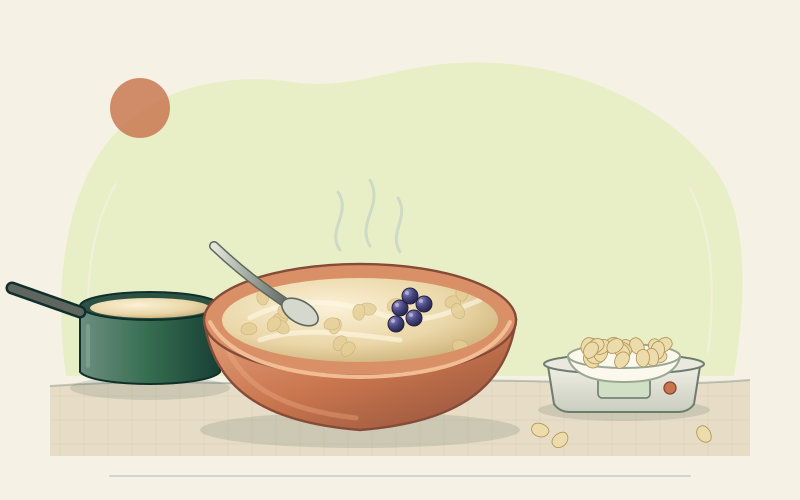
  • Berries, citrus, apples or pears — Fruit and meal variety. Fruit adds flavour, texture and additional nutrients to oatmeal. Vitamin-C-rich choices can support absorption of non-heme iron from plant foods, with the effect depending on the whole diet and iron status. Top cooked oatmeal with berries or chopped apple and cinnamon, using unsweetened fruit when that suits the meal.
  • Nuts, seeds or pulses — Texture and complementary variety. Nuts and seeds add energy and different fats and minerals, while pulses can make a savoury oat meal more substantial. Portion needs vary; no topping turns one bowl into a complete diet. Add chopped walnuts or ground seeds to breakfast oatmeal, or make savoury oats with lentils and cooked vegetables.

The essentials

From the right habit to a hulled, dry crop

Six practical stages for a small cereal plot. Adapt cultivar, seed rate and timing to local winter conditions, seasonal rainfall and harvest weather.

  1. Choose spring or winter oat seed

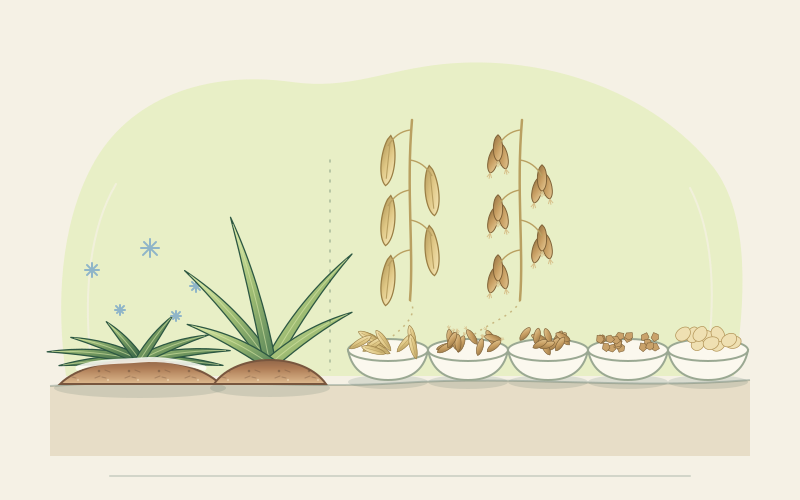
    Buy sound planting seed labelled Avena sativa, with cultivar, growth habit and any seed treatment identified. Spring oats grow and mature within one season; winter oats establish in autumn and normally require cold exposure before heading. Winter survival and vernalization are cultivar- and site-specific, so do not interchange habits or infer adaptation from “heirloom” or “hardy” wording.

  2. Sow early into a drained seedbed

    Use full sun and a fine, firm seedbed where water does not pond. Sow spring oats early in the local growing window and winter oats early enough to establish before cold. As a starting point, sow about 2–4 cm deep in rows roughly 12–20 cm apart or broadcast evenly and incorporate lightly; packet depth, calculated seed rate and regional advice take priority over a universal scoop.

  3. Keep feeding moderate and weeds early

    Use a soil test and local nutrient advice rather than routine rich feeding. Excess nitrogen with a dense stand and ample water encourages lush stems that lodge, making harvest and drying harder. Remove weeds while plants are young, maintain establishment and dry-spell moisture without saturation, and rotate away from recent cereals where local disease guidance recommends it.

  4. Watch the panicle and local disease

    Oats form an open panicle whose spikelets may not all ripen at once. Inspect lower and upper branches, stems and leaves rather than judging by straw colour alone. Crown rust and other diseases vary by district, so use locally relevant resistance and diagnosis. Watch birds as grain fills, using wildlife-safe protection only where actual pressure warrants it.

  5. Harvest, dry, thresh and winnow

    Cut surface-dry plants when kernels are hard and mature, before serious shattering or prolonged rain. Catch loose panicles on a clean sheet and dry thin layers or loose sheaves under cover with strong airflow; never heap damp plants. Thresh dry panicles gently, winnow in a light cross-breeze or before a guarded low fan, sieve and remove stones and damaged grain. Avoid dust and powered-equipment hazards.

  6. Separate hull removal from threshing

    Most common oats retain the lemma and palea—the hull—after ordinary threshing and winnowing. Clean hulled grain is not yet a bowl of groats. Effective home dehulling is difficult without suitable equipment; buy food-grade groats or rolled oats for a reliable oatmeal supply, or use a properly cleaned, food-rated dehuller and sort the result. Store only clean, cool grain at locally recommended measured moisture in food-safe containers, protected from pests, condensation and mould.

Growing notes by place

Read your region, then read your weather

Compare broad growing conditions, then adjust for your own frost dates, altitude, rainfall and soil.

Cool, temperate and often maritime, with mild winters in many lowlands and locally wet harvest weather.

Northwestern Europe

Both spring and winter oats can fit suitable sites. Spring sowing avoids winter occupancy, while winter types need local hardiness and timely establishment; wet ripening weather makes drying space important.

Indicative planting
Sow locally adapted winter oats around September–October where proven, early enough to establish before cold. Sow spring oats around February–April when soil is workable and not sticky or saturated.
Indicative harvest
Harvest winter oats around July–August and spring oats around August–September when kernels are hard and mature. Cut before prolonged rain or shattering, then dry under ventilated cover before threshing and storage.
Soil and moisture
Fertile, well-drained loam with good structure and reliable establishment moisture; avoid waterlogging and excessive nitrogen that encourages rank growth and lodging.

Field note: Use the growth habit recommended locally, keep a clean sheet ready to catch shed panicles and remember that winnowing chaff does not remove the hull from ordinary oat grain.
Dates are indicative. Local frost forecasts, seasonal rainfall and recent weather—not the calendar alone—should guide sowing and harvest.

Northwestern Europe · spring oat example

A cool-season sow-to-store rhythm

A compact planning guide, not a fixed schedule. Shift it with cultivar, latitude, altitude, rainfall and local conditions.

  1. February–April

    Choose a locally adapted spring cultivar, calculate the seed rate and prepare a sunny, well-drained seedbed. Sow when soil is workable, distributing seed evenly and covering it to the recommended depth.

  2. April–June

    Check establishment and drainage, weed early and keep feeding moderate to limit lodging. Inspect leaves and developing panicles for locally relevant disease rather than treating symptoms without diagnosis.

  3. July–August

    Watch kernels through grain filling and prepare clean sheets, ventilated drying space and safe hand tools. Protect against birds only where needed, and plan how food grain will later be dehulled.

  4. August–September

    Cut when kernels are hard and mature, before prolonged rain or shattering. Dry with airflow, thresh and winnow carefully, test dryness for the intended storage period and pack only clean, cool grain.

This spring example occupies roughly 90–150 days within the broad 90–270-day range. Locally adapted winter oats are sown around September–October, overwinter and commonly mature around July–August; cultivar and weather still determine the first and only annual harvest.

From the field journal

Grow, choose and cook your oats

Practical reading for a small grain harvest, informed cultivar and processing choices, and balanced meals with an explicit cooked reference and gluten cross-contact guidance.

Your next harvest begins here

Start with a small plot and a processing plan.

A modest oat trial can teach establishment, tillering, panicle ripening and harvest in your conditions. Choose locally adapted seed and make drying, cleaning, hull removal and safe storage part of the plan before sowing.

Open the growing guide