
Crop 043 / Lactuca sativa

Sow a little now, then sow a little again.

Grow lettuce for tender loose leaves or crisp young heads in as little as 40–70 days. Keep growth steady through cool weather, make small repeat sowings and harvest before heat sends the crop into flower.

Choose the harvest
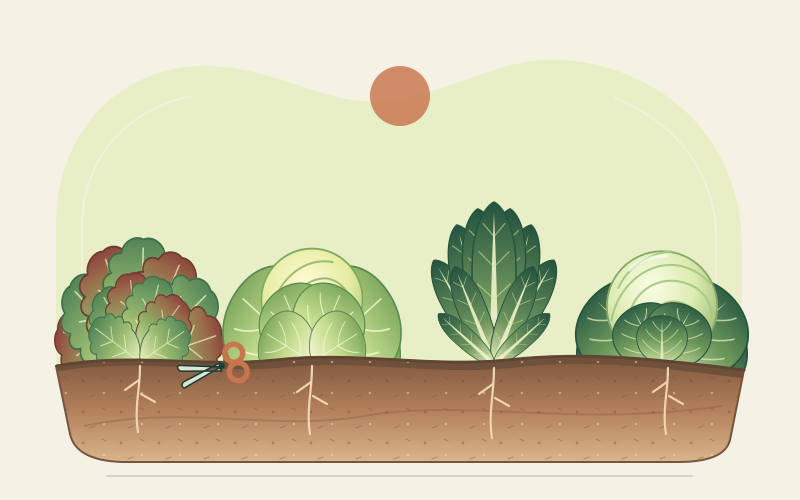
Loose leaves or heads Pick outer leaves repeatedly, or cut a whole butterhead, cos or crisphead when ready.
Indicative first harvest
40–70 days From sowing under suitable conditions; large heads and cool weather can take longer.
Best rhythm
Small, repeated sowings A short row every 10–14 days spreads harvest and reduces a sudden glut.
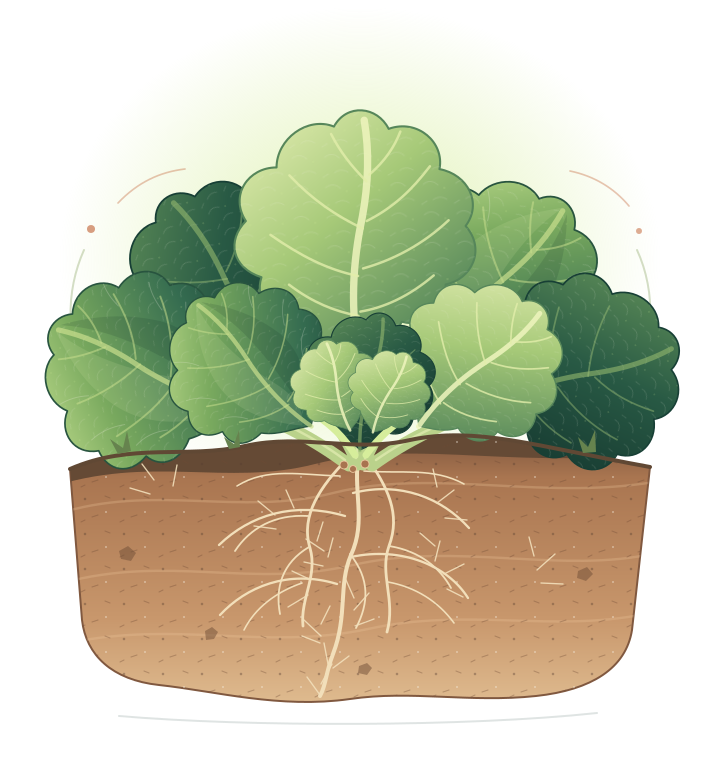
Green-leaf lettuce rosette with broad ruffled leaves, a pale central heart and fine branching roots in a soil cutaway.
Lettuce carries its growing point low in the rosette. Harvest outer leaves carefully, or cut the whole head before a flowering stem elongates.

Know the crop

Crop profile

A fast, cool-season annual in the daisy family, selected into loose-leaf, butterhead, cos and crisphead forms. Its best eating quality comes from steady growth and timely picking.

Crop essentials

Botanical name
Lactuca sativa
Growth
40–70 days From sowing to first usable leaves or young heads. Loose leaves often take 40–50 days and compact butterhead or cos heads 55–70 days; large crispheads may need longer. Temperature and cultivar shift timing.
Family
Asteraceae, the daisy or sunflower family
Origin
Eastern Mediterranean and Near East
Habit
Annual leafy crop, harvested before the flowering stem and bitter mature growth develop

Nutrition / raw green leaf

Nutrition, in context

Moderate Editorial nutrient-density rank 2 of 4. This is Rooted’s qualitative category for protein, fibre, folate, iron and potassium in the site’s crop comparison. It is not an official score or a universal vegetable ranking.

Reference nutrients per 100 g green-leaf lettuce, raw
NutrientAmount
Protein1.36 g
Fibre1.3 g
Folate38 µg
Iron0.86 mg
Potassium194 mg
  • Contains vitamin K (126.3 µg), vitamin A (370 µg RAE) and vitamin C (9.2 mg) in the same raw 100 g reference.
  • A 36 g cup shredded supplies about 0.49 g protein, 0.47 g fibre, 14 µg folate, 0.31 mg iron and 70 mg potassium.
  • These are green-leaf values; iceberg, romaine and butterhead have different nutrient profiles.

Basis: Approximate values per 100 g green-leaf lettuce, raw (USDA FoodData Central SR Legacy 169249). The 100 g table is roughly 2.8 cups of 36 g each, not a single small side salad.

Raw values are not cooked or dried equivalents. Cultivar, storage, actual portion and the rest of the meal affect intake; listed content does not measure absorption or individual needs.

At the table

Make a modest salad portion part of a fuller meal

  • Beans, lentils or tofu with grains. Lettuce adds crisp texture and some micronutrients; legumes and grains contribute useful protein, fibre and energy. No exact combination is required. Try a grain bowl with lettuce, beans and roasted vegetables.
  • Tomatoes, peppers or citrus. Vitamin-C-rich foods in the same meal can support absorption of non-heme iron from lettuce, beans and grains. The effect depends on the whole diet and iron status. Add sweet peppers and tomatoes to a lentil salad.
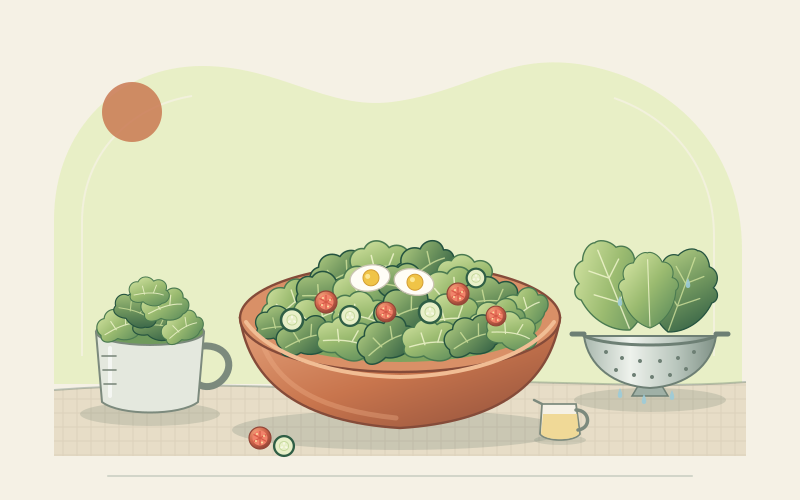
  • Eggs, fish, cheese or yogurt dressing. These foods make a salad more substantial and varied. Choose according to dietary preferences and needs; try cos lettuce with egg and whole-grain toast or a yogurt-herb dressing.

Wash leaves under safe running water without soap or produce wash, dry with a clean towel or spinner, and keep raw salad separate from raw meat, poultry and seafood.

The essentials

From a short row to a crisp, timely harvest

Six practical stages. Adapt sowing and protection to local heat, frost, rainfall, day length and the leaf type you choose.

  1. Sow shallowly for a mild window

    Direct-sow about 0.5–1 cm deep in workable soil, following the packet, or start in modules and transplant before roots become crowded. High soil temperatures inhibit germination, so in hot spells sow in a cool, shaded place rather than deeper into dry soil.

  2. Thin to match the leaf form

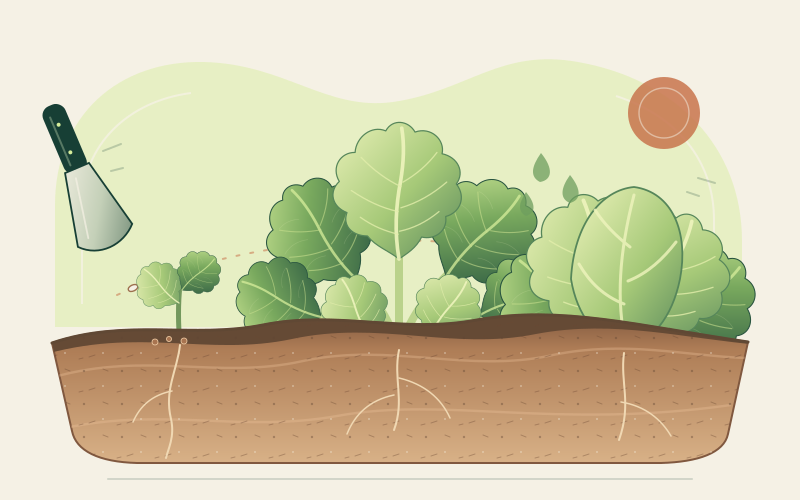
    Use sound thinnings as baby leaves. Leave loose-leaf plants around 15 cm apart and larger hearting types about 20–30 cm, adjusting to the packet. Crowded hearting lettuce may not form a sound head, while close rows suit a deliberately small baby-leaf harvest.

  3. Keep the root zone evenly moist

    Choose fertile, moisture-retentive but free-draining soil. Water at soil level when needed, especially in containers and dry weather, without keeping roots saturated. Mulch established plants to buffer drying and reduce soil splash, and use light afternoon shade where summers are hot.

  4. Plan succession, not a glut

    Sow a short row or a few modules every 10–14 days while conditions suit. Match the number of plants to the leaves or heads you can actually use. Keep replacement seedlings coming before an older crop bolts, but pause when severe heat or hard frost makes establishment unlikely.

  5. Prevent damage and watch for bolting

    Protect seedlings from slugs, snails and birds; inspect undersides for aphids and secure fine mesh before pests arrive where useful. Improve drainage and airflow in wet weather. Heat, dryness and lengthening days can trigger an elongating flowering stem and bitter leaves: harvest promptly and sow the next crop.

  6. Harvest, wash and chill with care

    Pick outer loose leaves or cut a formed head before it becomes overmature. Cool promptly and refrigerate at 4°C (40°F) or below. Before eating, discard rotten leaves and wash the rest under safe running water without soap, detergent or produce wash; dry with a clean towel or spinner. Washing reduces contamination but does not make leaves sterile.

Growing notes by place

Read your region, then read your weather

Compare broad growing conditions, then adjust for your own frost dates, altitude, rainfall, summer heat and soil.

Cool, temperate and often maritime, with local differences in frost, exposure and summer warmth.

Northwestern Europe

Lettuce suits much of Britain, Ireland, the Low Countries and nearby districts. Spring and late summer give reliable leaf growth; winter crops need a hardy selection and protection.

Indicative planting
Sow outdoors in short rows from late March–July, or start earlier in modules for planting under cover. Repeat small sowings every 10–14 days and use fresh seed in hot spells.
Indicative harvest
Pick loose leaves about 40–50 days after active spring growth and young heads around 55–70 days. Late sowings can crop into autumn; hard cold and waterlogging limit winter plants.
Soil and moisture
Fertile, moisture-retentive but free-draining soil with compost; sun in cool weather and light shade during hot afternoons.

Field note: Water in the morning during dry spells, thin hearting types properly and protect seedlings from slugs, snails and birds before damage is severe.
Dates are indicative. Local forecasts, soil temperature, recent weather and cultivar—not the calendar alone—should guide sowing, protection and harvest.

Cool-temperate Northern Hemisphere · example

A sequence of small, crisp harvests

A compact planning guide, not a fixed schedule. Shift it with latitude, altitude, cultivar and local conditions.

  1. February–April

    Prepare a fertile, drained bed. Start early crops in modules under cover where spring is cold, then direct-sow shallowly once local soil and weather are suitable.

  2. March–July

    Sow a short row every 10–14 days. Transplant sturdy seedlings, thin for leaf or head production and protect young plants from cold, birds, slugs and snails.

  3. May–September

    Harvest leaves and formed heads promptly. Water during dry spells and use light shade in heat; hot soil can prevent germination, so move summer seed starting somewhere cooler.

  4. August onward

    Make later sowings as heat eases for autumn leaves and heads. Use locally suitable cover or winter cultivars only where the season and winter severity support them.

The 40–70-day window covers first usable leaves and young heads, not every crisphead or winter crop. Cool weather slows growth; heat and dry stress can bring bitterness and bolting forward.

From the field journal

Grow, choose and serve your lettuce

Practical reading for steady succession, well-suited leaf types and modest nutrient contributions in safe, varied meals.

Your next harvest begins here

Start with one short row, not a season’s supply.

A handful of plants is enough to learn the pace of lettuce. Keep the root zone moist, make the next small sowing before you need it and enjoy leaves before heat turns the crop toward seed.

Open the growing guide