
Crop 014 / Lens culinaris

A cool start and a dry finish for the pantry.

Grow lentils in a small, sunny bed for mature dried seed. Direct-sow into free-draining soil, keep fertility modest, and time the crop so pods can mature before persistent rain makes drying difficult.

Harvest
Mature dried seed Pull plants when pods are mature, then dry the seed thoroughly before storage.
Typical crop window
80–110 days From direct sowing to mature pods; cultivar, temperature, elevation and rainfall shift maturity.
Season
Cool growth, dry harvest Avoid waterlogged soil and a finish in prolonged wet weather.
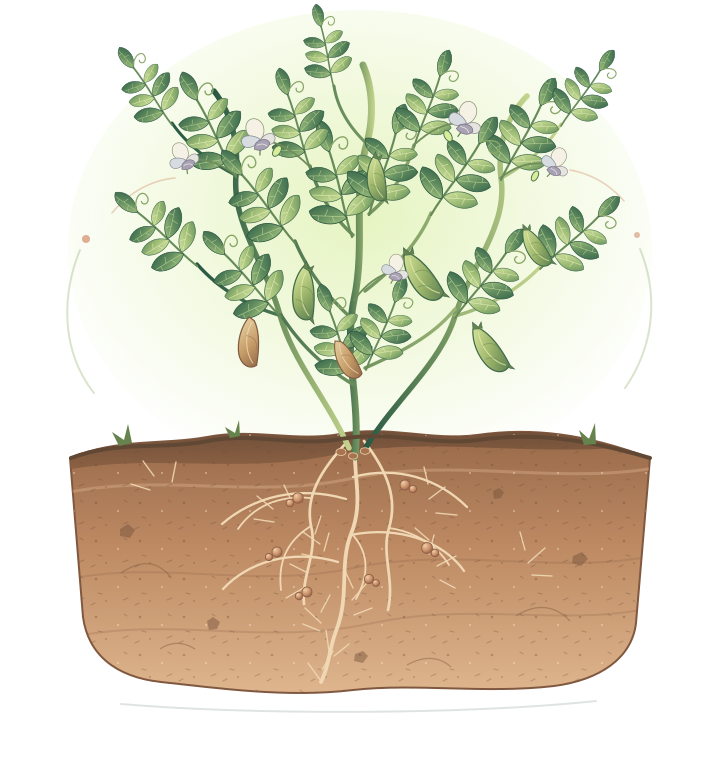
Lentil plant with slender branching stems, compound leaves, pale flowers, small pods and roots with nodules in a soil cutaway.
Lentils are low, branching annuals with small pods. The lowest pods can sit close to the soil, so free drainage and a timely dry harvest matter.

Know the crop

Crop profile

A cool-season annual pulse grown for mature dried seed. Lentils prefer cool growth followed by dry weather for pod maturation and harvest; humid autumn conditions can make a home crop difficult to finish and store safely.

Crop essentials

Botanical name
Lens culinaris
Growth
80–110 days From direct sowing to mature pods suitable for harvest and drying. Cultivar, temperature, elevation and rainfall shift maturity. Plants may be pulled when pods are mature but still need thorough drying before seed is stored.
Family
Fabaceae, the legume family
Origin
Southwestern Asia and the eastern Mediterranean region
Habit
Cool-season annual pulse, with low, branching plants grown for mature dried seed

Nutrition / boiled without salt

Nutrition, in context

High Editorial nutrient-density rank 3. This is Rooted’s qualitative category for protein, fibre, folate, iron and potassium in the site’s cooked-food comparison, with highlights adding context. It is not an official nutritional score or a universal ranking of foods.

Reference nutrients per 100 g mature lentils, cooked, boiled, without salt
Nutrient Amount
Protein 9.02 g
Fibre 7.9 g
Folate 181 µg
Iron 3.33 mg
Potassium 369 mg
  • Provides substantial protein, fibre and folate relative to the cooked vegetables in this comparison.
  • Contains non-heme iron and potassium in the cooked edible portion.
  • The figures describe mature cooked lentils, not dry raw seed, canned lentils or lentil flour.

Basis: Approximate values per 100 g mature lentils, cooked, boiled, without salt (USDA FoodData Central SR Legacy 172421). Soaking is not required for lentils. Sort and rinse dried lentils, then boil or simmer in water until fully tender; they usually cook faster than common beans, so generic common-bean times are not appropriate. Water uptake, cultivar, cooking and serving size change values per portion, and listed nutrients are not absorbed amounts.

At the table

Build a varied meal around lentils

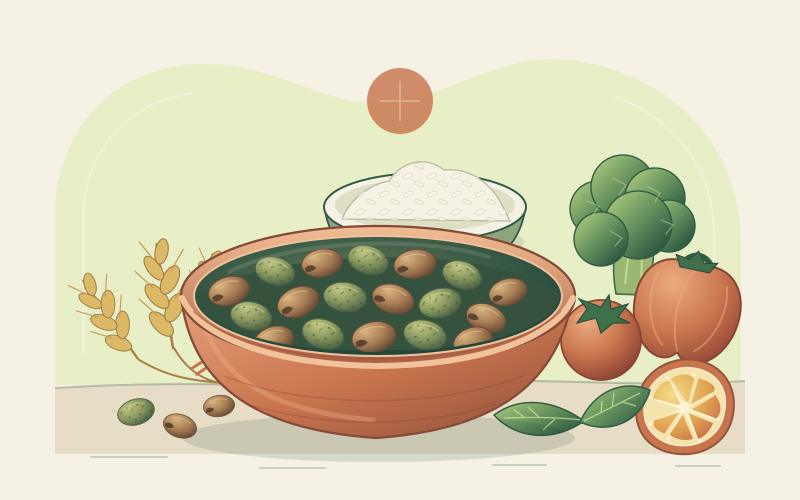
  • Rice, barley or whole-grain bread — Complementary amino-acid patterns. Lentils and grains have different essential-amino-acid patterns that can complement each other in a varied diet. Variety across the day is enough; they need not share one meal. Serve lentil dal with rice, or lentil soup with whole-grain bread.
  • Tomatoes, peppers or citrus — Vitamin C and non-heme iron. Vitamin-C-rich ingredients can support absorption of non-heme iron from lentils and other plant foods. The response depends on the whole diet and iron status. Cook lentils with tomatoes and sweet peppers, or finish lentil salad with lemon.
  • Leafy greens, carrots or cabbage — Vegetable variety. Vegetables broaden the flavours, textures and nutrients in a lentil dish. This is a practical pairing rather than a required nutrient rule. Add carrots and greens to lentil soup, or serve lentils with cooked cabbage.

The essentials

From a cool sowing to a dry jar

Six practical stages for a small planting. Adapt cultivar and timing to your frost, seasonal rainfall and harvest weather.

  1. Start small with suitable planting seed

    Choose sound seed sold for planting, with a named cultivar and local maturity guidance where possible. A food packet does not establish local adaptation. Treat a few square metres as a trial and useful supplement rather than a guaranteed staple supply, and plan for maturity in a locally dry window.

  2. Direct-sow in cool, workable soil

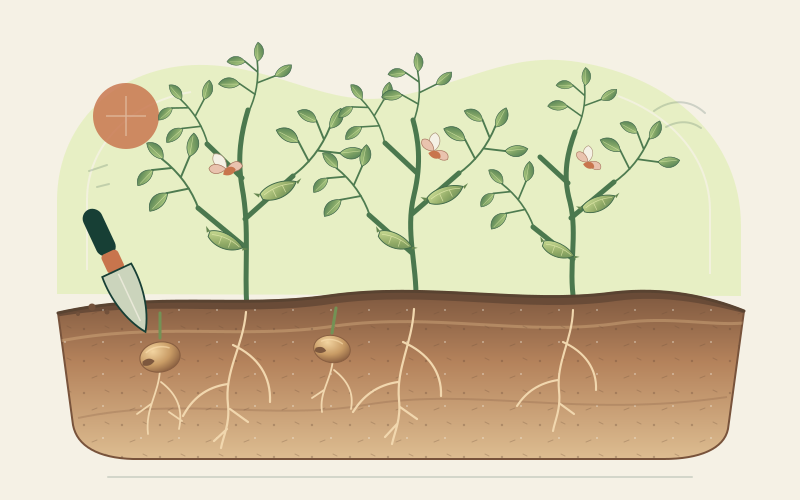
    Sow where the crop will grow at the start of the locally recommended cool-season window. Follow the packet for depth and spacing; roughly 2–4 cm deep is a common starting point. Avoid cold, wet beds that favour rot and slow establishment, and leave access for careful weeding and inspection.

  3. Prioritise drainage and modest fertility

    Use an open, sunny bed where water does not sit after rain. Light to medium, free-draining soil suits the crop; raised beds can help where drainage is only moderately slow, but cannot correct chronic saturation. Avoid fresh manure and heavy nitrogen, which can encourage leafy growth and lodging rather than timely seed production.

  4. Establish, weed and rotate

    Keep the seed zone lightly moist until emergence, then water according to rainfall and moisture below the surface without keeping the bed constantly wet. Direct irrigation to the soil, weed gently around shallow roots and fragile stems, and rotate away from lentils and closely related pulses where space permits.

  5. Harvest mature pods before shattering

    Check the lowest pods as foliage yellows and seeds become firm. Cut or pull plants gently on a dry day when pods are mature and dry, rather than waiting for every stem to look identical. Work over a clean sheet to catch loose seed, and move mature plants under ventilated cover promptly if rain arrives.

  6. Dry, clean and store the seed

    Spread plants or pods thinly with air moving around them until the pods are brittle, then thresh and winnow gently. Sort out stones, damaged seed and mouldy or doubtful material. Store only thoroughly dry lentils in clean, food-safe airtight containers in a cool, dark, dry place; label and inspect them for condensation, insects, odour or mould.

Growing notes by place

Read your region, then read your weather

Compare broad growing conditions, then adjust for your own frost dates, altitude, rainfall and soil.

Cool, temperate and often maritime, with summer rainfall and autumn dampness varying locally.

Northwestern Europe

Lentils are a marginal small-scale crop here because pods need dry harvest weather. A warm, sheltered site and early cultivar improve the chance of success.

Indicative planting
Direct-sow March–April once soil is workable and severe frost is easing; avoid cold, wet beds and choose an early cultivar.
Indicative harvest
Pull mature plants around July–August when pods turn brown and seeds are firm; finish drying under ventilated cover if rain threatens.
Soil and moisture
Light to medium, fertile and free-draining soil; avoid waterlogging and excessive nitrogen, which favours foliage.

Field note: Give plants full sun, support sprawling growth if needed and never store seed that has not dried thoroughly.
Dates are indicative. Local frost forecasts, seasonal rainfall and recent weather—not the calendar alone—should guide sowing and harvest.

Cool-temperate Northern Hemisphere · example

A cool-season pulse rhythm

A compact planning guide, not a fixed schedule. Shift it with latitude, altitude, cultivar and local conditions.

  1. March–April

    Choose an early, locally suitable cultivar and prepare a sunny, free-draining bed. Direct-sow once soil is workable and severe frost is easing, avoiding cold, wet ground.

  2. April–May

    Keep the seed zone lightly moist through emergence where rainfall is insufficient. Weed gently while plants are young and inspect stems and leaves without working among wet plants.

  3. June–July

    Let growth continue without heavy feeding or routine saturation. Check low pods as seeds fill and foliage yellows, and prepare a clean sheet and ventilated drying space.

  4. July–August

    Pull or cut plants when pods turn brown and seeds are firm, before dry pods shatter. Finish drying under cover if rain threatens, then thresh, clean and store only thoroughly dry seed.

The 80–110 day window is indicative. In a damp climate, an early cultivar and sheltered site can improve the chance of a dry finish, but local weather still determines harvest and safe storage.

From the field journal

Grow, choose and cook your lentils

Practical reading for a small dry-seed harvest, informed packet choices and balanced meals without superfood claims.

Your next harvest begins here

Start with a small bed and a dry finish.

A modest trial is enough to learn how lentils establish, flower and mature in your conditions. Choose suitable planting seed, keep the bed drained and weed carefully, then record the weather from first mature pod to stored seed.

Open the growing guide