Crop 051 / Anethum graveolens

Sow a little. Pick often. Save the umbrella.

Grow dill as a short annual succession: tender feathery leaves first, fragrant yellow flower umbels next and aromatic brown seed at the finish. Give roots drainage, shelter tall stems and use repeat sowings—not one ageing row—for a steady kitchen harvest.

First useful leaves
40–60 days Small early snips are possible sooner; cultivar and weather set the useful harvest window.
Life cycle
Short annual One plant flowers, sets seed and finishes; repeat small sowings for continuing leaves.
Three edible stages
Leaf, flower and seed Pick foliage before or at early flowering, use yellow umbels fresh and collect seed when brown and dry.
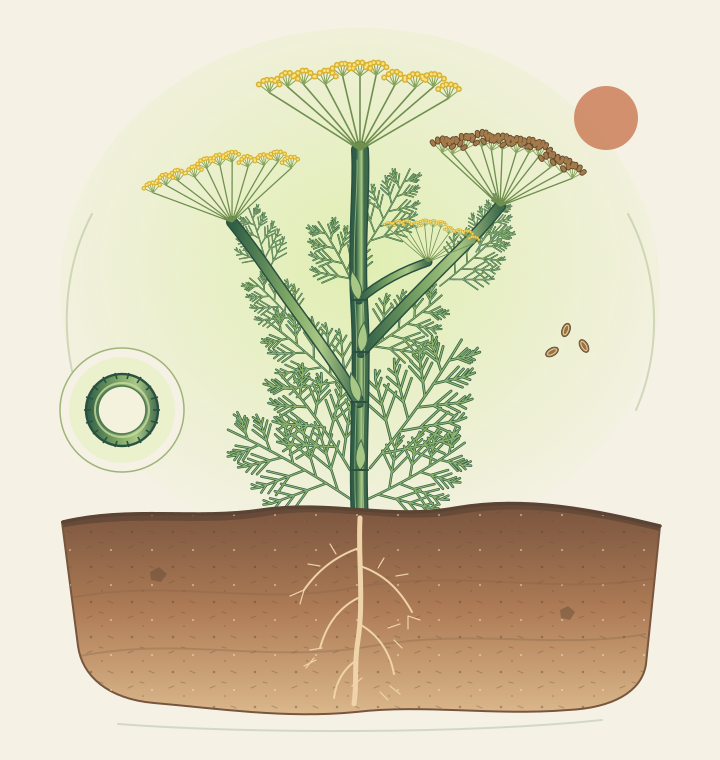
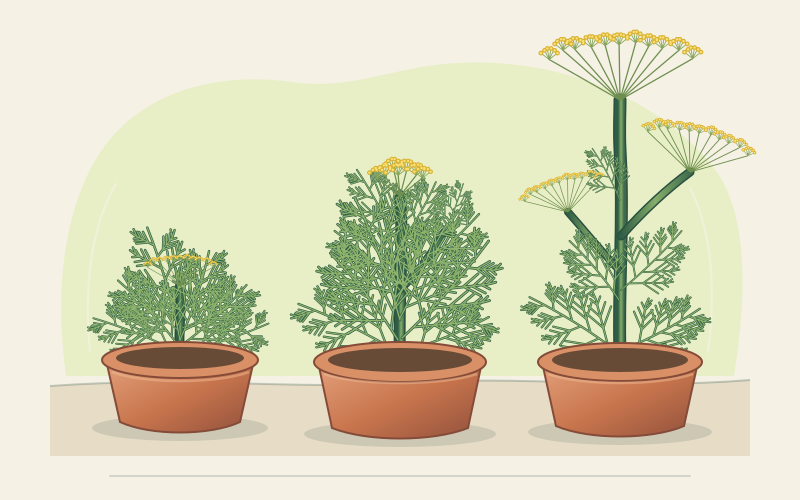
Dill plant with a hollow branching stem, fine thread-like leaves, yellow umbrella-shaped flower clusters, ripening brown seed and a slender taproot with side roots.
Dill’s thread-like foliage, flat-topped yellow umbels and dry ridged seed are stages of one annual plant. Heat and dry stress can shorten the leafy stage.

Know the crop

Crop profile

A short-lived annual culinary herb harvested in sequence as feathery leaves, yellow flower umbels and ripe brown seed. Direct sow small batches, shelter tall stems and expect heat or dry stress to hasten flowering.

Crop essentials

Botanical name
Anethum graveolens
Growth
40–60 days From direct sowing to the first useful leaf harvest under favourable conditions; small early snips are possible sooner. Flower harvest follows as plants mature, while fully brown, dry seed commonly needs roughly 85–115 days. Cultivar, temperature, day length, moisture and sowing date shift every stage.
Family
Apiaceae, the carrot family
Origin
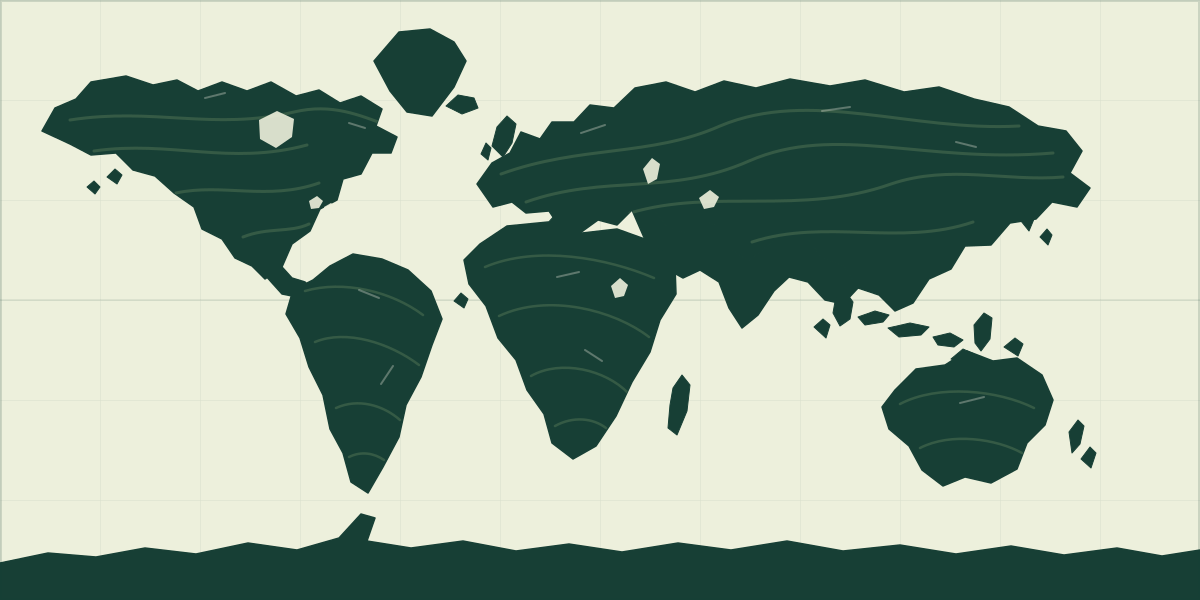
Southwestern Asia and the Mediterranean region
Habit
Short annual herb with a slender taproot, hollow upright stems, finely divided blue-green leaves and branching yellow umbels. It is not a perennial, although dropped seed may produce later volunteer plants.

Nutrition / fresh raw dill weed

Nutrition, in context

Very high Editorial nutrient-density rank 4. This is Rooted’s qualitative category for protein, fibre, folate, iron and potassium in the site’s ingredient comparison, with highlights adding context. It is not an official nutritional score, a health rating or a typical-serving score.

Reference nutrients per 100 g fresh raw dill weed; not cooked, dried leaves or dill seed
NutrientAmount
Protein3.46 g
Fibre2.1 g
Folate150 µg
Iron6.59 mg
Potassium738 mg
  • The 100 g raw reference contains concentrated folate, potassium and non-heme iron alongside vitamin C (85 mg) and vitamin A (386 µg RAE).
  • A typical garnish weighs far less than 100 g, so these figures should not be read as the contribution of a few sprigs.
  • Fresh raw dill leaves, dried dill weed and dill seed are different foods; do not transfer these values between them.

Basis: Approximate values per 100 g fresh, raw dill weed, the edible leafy herb; not cooked dill, dried dill weed or dill seed (USDA FoodData Central SR Legacy 172233, “Dill weed, fresh”). Rooted’s rank is a qualitative editorial comparison, not an official nutrient score or health rating. Values vary with the plant and analysis, and listed content is not an absorption measure. One USDA cup of sprigs weighs about 8.9 g; use actual portion weight when comparing meals.

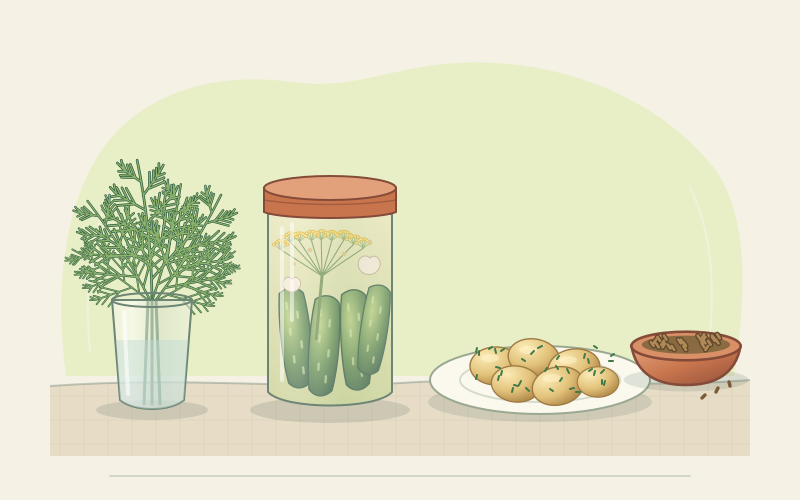
Kitchen care: Rinse sound fresh herbs in clean potable water, dry gently and refrigerate promptly; use delicate leaves soon. Freeze clean leaves for a softer-textured cooking herb, or dry them completely before airtight storage. Let brown seed finish drying before packing. For pickles, follow a current tested recipe exactly: dill adds flavour but does not make an improvised brine safe.

At the table

Build a varied meal around dill

  • Cucumber, cabbage or carrots — Fresh texture and culinary contrast. Dill’s aromatic leaves and flowers season crisp vegetables without replacing the vegetables’ own contribution to the meal. Add chopped leaves near serving for a fresh aroma. Fold dill into a cucumber and cabbage salad just before serving.
  • Potatoes, grains, beans or lentils — A varied savoury meal. These foods provide the substance of a meal while dill contributes flavour. Legumes, grains and vegetables have different nutrient profiles; no single herb pairing is nutritionally essential. Finish potato salad, lentil soup or a grain bowl with chopped fresh dill.
  • Fish, eggs, yogurt or tofu — Protein variety. Dill complements both animal and plant protein foods. Choose according to preference and dietary needs rather than treating one traditional combination as a requirement. Use dill in a yogurt sauce for fish, or fold it into a tofu and cucumber dressing.

The essentials

From a small sowing to three distinct harvests

Six practical stages for a short annual herb. Adapt timing, water and protection to local heat, rainfall, wind and the part you want to harvest.

  1. Choose the harvest and sow in succession

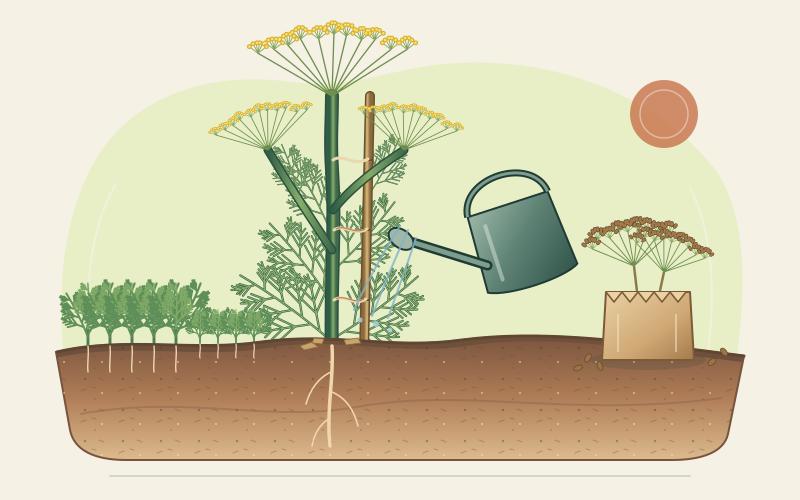
    Buy seed labelled Anethum graveolens. Choose compact or slow-bolting types for containers and repeated leaf picking; taller types suit large flower umbels and seed. Direct sow short rows or small patches every 2–4 weeks through locally suitable mild weather instead of relying on one sowing. Leave a later batch to flower and seed if those harvests matter.

  2. Direct sow shallowly and thin early

    Choose full sun and a sheltered, well-drained bed or a deep container. Sow about 0.5–1 cm deep into moist, fine soil, cover lightly and keep the seedbed evenly damp until emergence. Dill forms a slender taproot and dislikes root disturbance; modules are a compromise only for very young, carefully handled transplants. Thin established seedlings to roughly 15–20 cm for leafy plants and around 20–30 cm for large seed types.

  3. Moderate heat, drought and weak growth

    Water when the root zone begins to dry, especially in containers and during establishment, but do not keep soil saturated. Hot, dry conditions encourage bolting—the switch to flowering—and reduce later leaf production. Use repeat sowing, suitable cultivars and light afternoon shade only in intense heat. Avoid heavy nitrogen, overwatering and crowded shade, which can produce lanky stems.

  4. Shelter and support the hollow stems

    A leafy compact plant may stand unaided, while a tall seed type carrying broad umbels can catch the wind. Place a discreet stake before it is needed and tie loosely in a figure of eight without constricting the stem, or use a low grow-through support for a group. Do not wait until stems have kinked. Keep good airflow and inspect aphids or disease rather than treating every insect on the umbels as a pest.

  5. Pick leaves, then flowers, at the right stage

    Begin useful leaf harvest around 40–60 days from a favourable sowing, taking clean small cuts and retaining at least one-third of the plant. Regular tip picking can delay flowering briefly but cannot keep an annual leafy indefinitely. Harvest yellow umbels freshly open for edible flowers, arrangements or a tested pickling recipe; avoid old, browning blooms. Wash edible parts with clean potable water and chill fresh herbs promptly.

  6. Catch, dry and store the seed safely

    Let selected umbels mature until seeds are brown and begin to release easily. Cut into a clean paper bag or over a sheet before shattering, then dry under cover with strong airflow. Rub and sieve out debris, allow the cleaned seed to dry fully and pack it cool in a labelled airtight food-safe container. Discard damp or mouldy material. For pickles, use a current research-tested recipe without changing vegetable, acid, salt or processing directions.

Growing notes by place

Read your region, then read your weather

Compare broad growing conditions, then adjust for your own frost dates, altitude, rainfall and soil.

Cool, temperate and often maritime, with mild western coasts, colder uplands and local exposure to Atlantic winds.

Northwestern Europe

Dill grows well through the main outdoor season in Britain, Ireland, the Low Countries and nearby districts. Warmth, shelter and repeat sowing matter more than one regional date.

Indicative planting
Direct sow small batches about 1 cm deep from mid-April or May, once soil has warmed, through July. Repeat every 2–4 weeks for leaves; use modules only if transplanting very young plants without root disturbance.
Indicative harvest
Begin light leaf picking around June, usually 40–60 days after sowing, and continue with later batches into early autumn. Gather yellow umbels as they open and brown seed around August–September before it shatters.
Soil and moisture
Fertile but not overfed, free-draining soil in full sun and shelter; avoid cold, saturated ground and keep moisture reasonably even in dry spells.

Field note: Thin to roughly 20 cm apart, leave at least two-thirds of a young plant when picking, and give tall seed-bearing stems a discreet stake in exposed gardens.
Dates are indicative. Local frost forecasts, seasonal rainfall and recent weather—not the calendar alone—should guide sowing and harvest.

Northwestern Europe · succession example

A short row, repeated through the season

A compact planning guide, not a fixed schedule. Shift it with cultivar, latitude, exposure and local conditions.

  1. Mid-April–May

    Prepare a sunny, sheltered, free-draining bed or deep container. Direct sow the first small batch once soil warms, cover lightly and keep moisture even until emergence; thin before plants crowd.

  2. May–July

    Sow another small batch every 2–4 weeks. Begin useful leaves around 40–60 days after favourable sowings, watering through dry stress and retaining enough foliage for each plant to continue.

  3. June–August

    Continue succession while weather suits leaves. Support taller stems, harvest freshly yellow umbels for the kitchen and allow selected plants to flower; expect hot, dry spells to speed bolting.

  4. August–September

    Make the last locally realistic leaf sowing earlier enough to establish. Catch brown seed before it shatters, dry it with airflow and store only fully dry material; compost the annual stems after harvest.

The 40–60-day range refers to the first useful leaf harvest, not the end of the plant. A leafy batch is replaced by later sowings; a seed batch commonly needs roughly 85–115 days to reach fully brown, dry seed.

From the field journal

Grow, choose and use your dill

Practical reading for a repeat-sown annual, harvest-led cultivar choices, and fresh, frozen or dried leaves with strictly tested pickling guidance.

Your next harvest begins here

Keep one row young and let another finish.

A few short sowings are enough to learn dill’s quick turn from leaf to umbel to seed. Match the cultivar to the kitchen, shelter the tall stems and plan clean, dry storage—or a tested pickle recipe—before the harvest is ready.

Open the growing guide