
Crop 021 / Fagopyrum esculentum

One short season, two different finishes.

Grow common buckwheat for mature grain or fast ground cover. Direct-sow after frost into warm, moist soil, keep fertility modest, and decide before seed set whether to harvest brown grain or terminate the cover crop.

Harvest
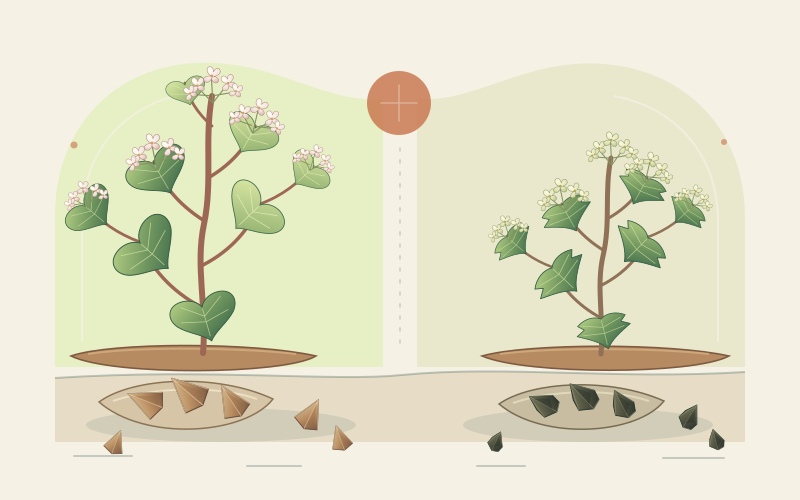
Mature brown seed Cut for grain when roughly three quarters of seeds are brown and firm, before heavy shattering; terminate a cover crop before viable seed forms.
Typical crop window
70–100 days From sowing to mature seed harvest; a cover crop need not remain for this full window.
Season
Warm and frost-free Establish after frost, avoid severe heat at flowering, and leave enough time for grain to mature and dry.
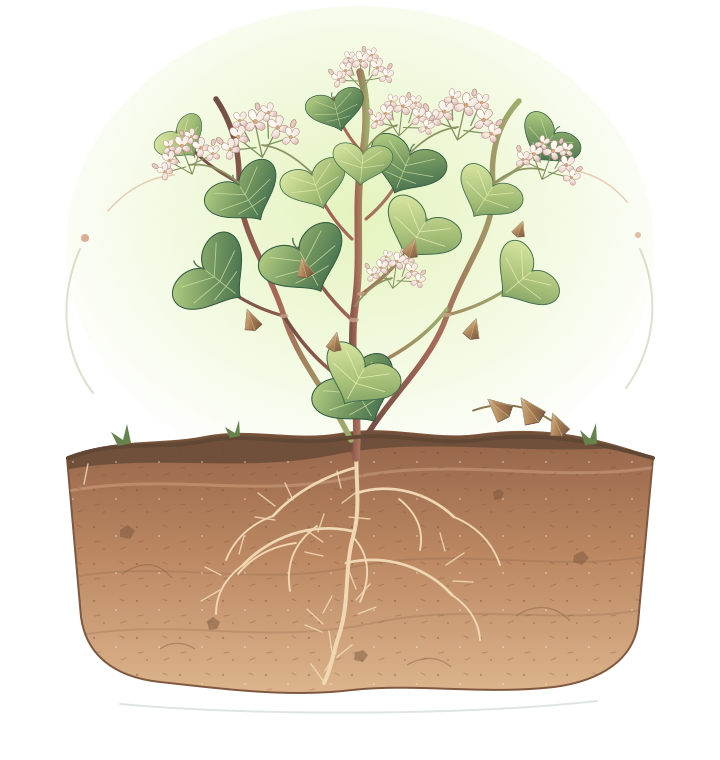
Buckwheat plant with reddish branching stems, heart-shaped leaves, clusters of white and pale pink flowers, brown triangular seeds, and a slender taproot with fine branching roots in a soil cutaway.
Common buckwheat is a broadleaf annual, not a cereal grass. Flowers, green seed and mature brown seed can occur together, making harvest timing a balance rather than a single uniform finish.

Know the crop

Crop profile

A fast, frost-sensitive broadleaf annual grown for hulled seed that is dehulled into groats. Buckwheat is a pseudocereal, not a wheat or other cereal grass, and is naturally gluten-free. Food grain, cover-crop stands and feed have different endpoints; grain for storage must mature and dry, while a cover crop may be terminated before seed set.

Crop essentials

Botanical name
Fagopyrum esculentum
Growth
70–100 days From sowing to mature seed harvest. Warm soil supports rapid establishment, while heat at flowering, drought, excess nitrogen, cultivar and elevation shift maturity. Seed does not all ripen at once, so harvest timing balances brown-seed maturity against shattering; a cover crop need not remain for this full window.
Family
Polygonaceae, the knotweed family
Origin
Southwestern Asia
Habit
Fast, frost-sensitive broadleaf annual and pseudocereal. This entry concerns common buckwheat, not Tartary buckwheat, Fagopyrum tataricum, a separate species; neither is wheat, principally Triticum aestivum.

Nutrition / roasted groats, cooked

Nutrition, in context

High Editorial nutrient-density rank 3. This is Rooted’s qualitative category for protein, fibre, folate, iron and potassium in the site’s cooked-food comparison, with highlights adding context. It is not an official nutritional score or a universal ranking of foods.

Reference nutrients per 100 g roasted buckwheat groats, cooked
Nutrient Amount
Protein 3.38 g
Fibre 2.7 g
Folate 14 µg
Iron 0.8 mg
Potassium 88 mg
  • Provides some protein, fibre, folate and non-heme iron, with magnesium (51 mg) and manganese (0.403 mg) in the same cooked reference.
  • Cooked groats contain absorbed water, so these values are not interchangeable with raw dry groats, whole-groat flour or a dry-weight comparison.
  • Buckwheat itself is naturally gluten-free and unrelated to wheat, but harvesting, milling, shared equipment and mixed-flour products can introduce gluten cross-contact.

Basis: Approximate values per 100 g roasted buckwheat groats, cooked (USDA FoodData Central SR Legacy 170686); this is the cooked edible portion, not raw groats, flour or noodles. Use food-grade dehulled groats and cook them before applying this cooked reference. People avoiding gluten should choose appropriately labelled products and check ingredient lists: soba and other foods may contain wheat, and naturally gluten-free grain can still face cross-contact. Store mature food or feed grain clean, dry and protected from pests and mould. Buckwheat feed should be only part of a species-appropriate ration; high inclusion can cause photosensitivity in light-skinned hogs and cattle.

At the table

Build a varied meal around buckwheat

  • Beans, lentils or chickpeas — Protein and fibre. Pulses add protein, fibre and folate to cooked buckwheat and make the meal more varied. Their amino-acid patterns can complement grain-like seeds across the day without a required single-meal formula. Serve cooked buckwheat groats with lentil stew, or mix them into a chickpea and vegetable bowl.
  • Cabbage, carrots, peppers or leafy greens — Vegetable variety. Vegetables add contrasting textures and nutrients to a groat-based meal. Vitamin-C-rich choices can support non-heme iron absorption, with the response depending on the whole diet and iron status. Make cooked buckwheat with cabbage and carrots, or serve it with peppers and leafy greens.
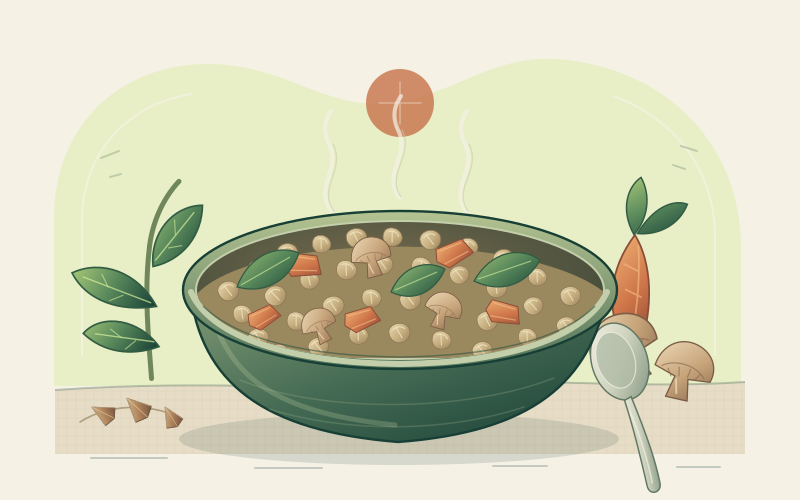
  • Eggs, fish, yogurt, tofu or mushrooms — A varied meal. These options add protein or different nutrients and flavours alongside cooked groats. Cultivated mushrooms contribute texture but only modest protein, so include another protein-containing food when wanted. Serve buckwheat with tofu and cultivated mushrooms, or with fish and cooked cabbage.

The essentials

From a warm sowing to a deliberate finish

Six practical stages for a small grain bed or cover crop. Choose the endpoint first, then adapt cultivar and timing to your frost, flowering heat and harvest weather.

  1. Choose the species, seed and goal

    For this guide, buy sound planting seed identified as common buckwheat, Fagopyrum esculentum; Tartary buckwheat is a different species with its own growing and food traditions. Use a locally suitable grain cultivar where food seed is the goal, or economical cover-crop seed for ground cover. Roasted or dehulled culinary groats will not grow. Decide now whether the finish is mature grain or termination before viable seed.

  2. Fit direct sowing into a short frost-free window

    Sow after local frost risk when the soil is warm and moist, leaving roughly 70–100 frost-free days for grain. In hot districts, adjust timing so flowering avoids the most intense heat while autumn frost still holds off. Direct-sow shallowly, commonly about 2–3 cm deep, following the supplier’s rate and spacing. Firm the seedbed for good contact and water gently if rain has not moistened the seed zone.

  3. Keep fertility modest and moisture reliable

    Use a sunny, well-drained bed with moderate fertility. Buckwheat tolerates relatively low fertility but not compaction, saturation or severe drought. Avoid fresh manure and heavy nitrogen, which can produce lush, lodging-prone growth rather than a manageable seed crop. Weed before the canopy closes, cultivate gently around shallow roots, and irrigate when the root zone dries, especially through establishment and flowering.

  4. Make room for pollination and inspect the stand

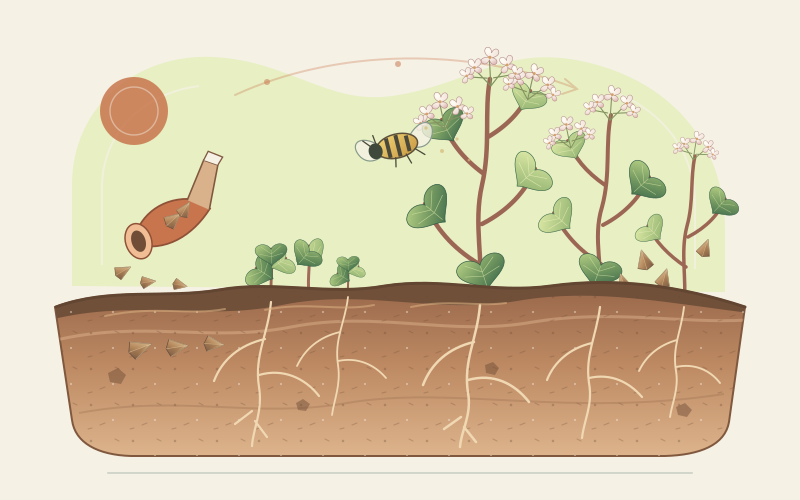
    Common buckwheat is self-incompatible: bees and other flower-visiting insects move pollen between compatible flowers. Protect visitors by avoiding unnecessary pesticide use and following label and local requirements for any pest decision. Flowers can provide nectar and pollen without guaranteeing a full seed crop. Continue to check moisture, lodging, birds and disease symptoms rather than assuming a fast stand is problem-free.

  5. Read uneven maturity—or terminate the cover

    Fresh blossoms, green seeds and brown seeds can share one plant. For grain, sample several places and cut or pull gently on a dry day when roughly three quarters of seeds are brown and firm, before the earliest seed shatters; work over a clean sheet to catch loose grain. For a cover crop, terminate before viable seed becomes a volunteer problem, often soon after flowering begins under local guidance, and plan the following crop or cover.

  6. Dry, thresh, clean and store the grain

    Spread grain plants in shallow, ventilated layers under cover rather than leaving damp material in a deep heap. Once brittle, thresh by rubbing or treading gently inside a clean sheet, then winnow light chaff and remove stones, damaged seed and mouldy material. Threshing releases whole seed but does not necessarily remove its tough hull; edible groats are dehulled kernels. Dry cleaned seed thoroughly before sealing it in food-safe containers, label it, and inspect for condensation, insects, odour or mould.

Growing notes by place

Read your region, then read your weather

Compare broad growing conditions, then adjust for your own frost dates, altitude, rainfall and soil.

Cool, temperate and often maritime, with local frost dates, summer heat and autumn drying conditions varying by site.

Northwestern Europe

Buckwheat fits a short warm-season slot, including after an early crop. It needs frost-free establishment and enough time for seed to mature before autumn cold or prolonged wetness.

Indicative planting
Direct-sow late May–June after local frost when soil is warm and moist; later sowings need a realistic 70–100-day frost-free window. Use food-grain seed where grain is the goal.
Indicative harvest
Harvest around August–September when most seeds are brown and before heavy shattering. Cut earlier for a cover crop; for grain, dry plants and seed under ventilated cover if rain persists.
Soil and moisture
Well-drained, moderately fertile soil with good moisture; avoid compaction, drought-prone light soil and excessive nitrogen that promotes lodging.

Field note: Do not mistake buckwheat for a drought-proof crop, keep the stand dense enough to suppress weeds and separate cover-crop termination from food-grain harvest.
Dates are indicative. Local frost forecasts, seasonal rainfall and recent weather—not the calendar alone—should guide sowing and harvest.

Cool-temperate Northern Hemisphere · example

A short warm-season rhythm

A compact planning guide, not a fixed schedule. Shift it with latitude, altitude, cultivar, summer heat and local conditions.

  1. Late May–June

    Choose common-buckwheat planting seed for grain or cover. After local frost, direct-sow into warm, moist, well-drained soil, leaving a realistic 70–100-day frost-free window for a grain crop.

  2. June–July

    Establish an even stand without heavy feeding. Weed before canopy closure, conserve reliable root-zone moisture, and protect bees and other flower visitors as the first blossoms open.

  3. July–August

    For a cover crop, terminate before viable seed forms and plan the following cover. For grain, inspect several places as flowers, green seeds and brown seeds overlap, and prepare a clean catching surface and ventilated drying space.

  4. August–September

    Cut for grain when roughly three quarters of seeds are brown and firm, before heavy shattering or frost. Dry under cover if rain persists, then thresh gently, winnow, clean and store only thoroughly dry seed.

The 70–100 day window is for mature seed harvest, not an obligatory cover-crop duration. Heat at flowering, drought, excess nitrogen, cultivar and elevation shift maturity; local frost and drying weather still determine the finish.

From the field journal

Grow, choose and cook your buckwheat

Practical reading for a short-season planting, informed species and cultivar choices, and cooked groats without superfood claims.

Your next harvest begins here

Choose the finish before the flowers set seed.

A small bed is enough to learn how common buckwheat establishes, flowers and matures in your conditions. Record the frost-free window, flowering weather and first brown seeds, then carry a grain crop through careful drying—or terminate the cover before viable seed.

Open the growing guide