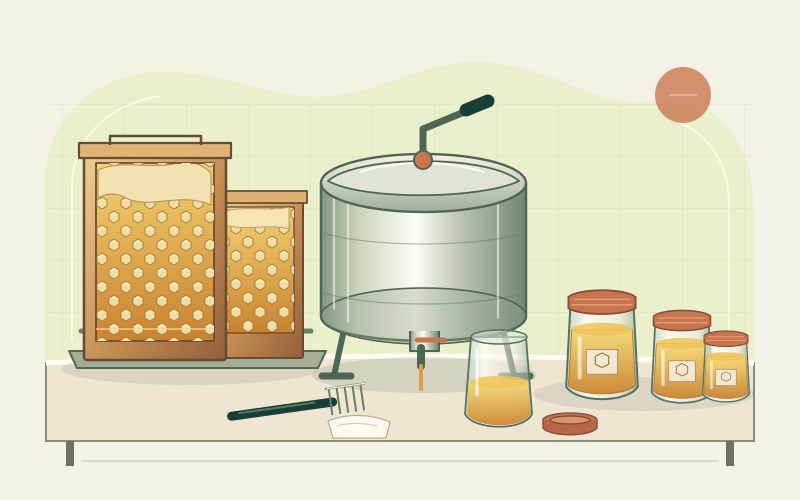
Establish a surplus before removing a frame
Honey is the colony’s food, not a crop produced independently of it. Before taking any, assess brood, colony size, current nectar flow, and the stores needed for the coming dearth or winter. Requirements vary with climate, hive configuration, colony strength, and forage, so learn local reserve targets from experienced beekeepers or extension guidance rather than copying a single weight online. Frames around and within the brood nest are not automatically available just because they contain honey.
First-year and small colonies may have no safe surplus. Take only clearly excess combs from the part of the hive your management system reserves for harvest, and leave adequate accessible stores after extraction. Recheck food whenever weather, flowering, or colony condition changes. If feeding becomes necessary, use locally recommended methods and keep feed intended for colony support separate from honey intended for sale. Never feed a colony by robbing another hive of unknown health.
Keep the harvest clean from hive to settling tank
Prepare a clean, dry, food-safe work area before removing supers. Wash and dry hands, protect the crop from insects, pets, dust, and household chemicals, and use clean food-grade tools and containers. Crushed combs and cappings can attract robbing bees, so move and store them securely. Do not harvest honey contaminated by unauthorised hive treatments, fuel, mould, rodents, or other foreign material; ask your local authority or mentor about treatment withdrawal periods and doubtful batches.
-
Confirm that the honey is ready
Wax cappings are a useful sign that bees have dried honey, but a glance at one frame does not establish the moisture of the whole batch. Inspect representative combs and use a properly calibrated honey refractometer where available. Avoid mixing wet, unripe nectar into an otherwise sound harvest.
-
Remove bees and uncap with food-safe tools
Use a locally accepted, gentle method to clear bees from the selected supers. Keep brood combs out of the harvest. Uncap over a clean container that can hold both honey and wax, taking care not to introduce fragments of wood, metal, or other debris.
-
Extract, strain, and let the batch settle
A clean extractor spins honey from reusable combs; crush-and-strain methods suit some comb systems but destroy the comb. Follow the equipment instructions and keep every contact surface food-safe. Pass honey through a suitable strainer to remove wax particles, then allow air bubbles and fine wax to rise in a covered settling container before jarring. Excessive heating is unnecessary and can damage flavour and aroma.
Moisture determines storage risk
Honey with too much water can ferment as naturally occurring yeasts become active. Bubbles, froth, a yeasty or alcoholic odour, and leakage from expanding containers can indicate fermentation; prevention is better than trying to rescue a doubtful product. Keep harvested frames and extracted honey dry and covered, and do not introduce water while cleaning equipment. Warm, humid weather and uncapped cells deserve particular attention.
Use a refractometer according to its instructions, calibrate it, and interpret readings with the legal and quality standards that apply where you live. If a batch is too moist, seek experienced advice promptly about appropriate handling or drying; do not assume that bottling, refrigeration, or a warm room will make it safe and stable. Crystallisation is different: many honeys naturally become granular or solid over time, and crystals alone do not mean fermentation or adulteration.
Separate honey and wax without wasting either
Uncappings contain both materials. Let them drain in a clean, covered, food-safe strainer so the honey can join the main batch only if it remains wholesome and within moisture requirements. Wax rises during settling and can be skimmed off. For crush-and-strain harvesting, keep the drained comb separate from the strained honey. Avoid pressing wet, doubtful, or fermenting material into good jars merely to increase yield.
Collect clean cappings and comb for later rendering using dedicated, suitable equipment and local safety guidance. Beeswax is flammable, and hot wax can burn; never leave heating wax unattended or use an improvised open-flame setup. Do not pour wax or propolis down drains. Dark old brood comb, contaminated wax, and residues from incompatible hive treatments may be unsuitable for reuse or sale. “Beeswax” on a candle, polish, or cosmetic label also carries product rules beyond this food-harvest guide.
Label the food you actually produced
Rules differ between a gift, a farm-gate sale, an online order, and a shop product. Check local food-business registration, hygiene, traceability, weights, allergen, and labelling requirements before distributing jars. Labels commonly need an accurate food name and net quantity, and may require producer details, batch identification, durability information, or other particulars. Added flavours or ingredients can change both the product name and the required ingredient list. A floral or geographic description should be supportable rather than a guess based on the nearest flower.
Use clean, dry, food-grade jars and sound lids, fill them without contaminating the rim, and record the extraction date and batch. Store honey sealed in a cool, dry place away from strong odours. Terms such as “raw”, “organic”, “local”, and “pure” may have specific legal meanings. Do not use them as vague marketing, and do not add claims that honey treats disease, boosts immunity, or substitutes for medical care. It is a food and a sweetener, not a medicine.
One warning applies to every jar
Never give honey to a child younger than 12 months. Honey can contain spores of Clostridium botulinum associated with infant botulism. This precaution applies to raw and processed honey and to honey added to food, drinks, or a pacifier. Clean extraction does not remove that risk. Make sure family members and customers receiving gifts know the rule; follow local labelling requirements for any warning statement.
For older children and adults, ordinary hygiene and accurate information remain essential. Home harvesting does not justify claims about special health benefits, and “natural” is not a safety certificate. If honey looks, smells, or behaves abnormally, isolate the batch and obtain qualified food-safety advice rather than tasting it to decide.