Know the crop and the harvest you want
The turnip, Brassica rapa subsp. rapa, is a biennial normally grown as an annual. Its swollen root and leaves are both edible. It belongs to the cabbage family, so it shares pests and diseases with other brassicas. The swede or rutabaga is a different crop, Brassica napus, usually larger and slower to mature; regional names can blur the distinction.
A packet may promise a first root in 35–70 days. Quick early cultivars can yield baby roots in about five to six weeks, while maincrops often need about ten. Leaves can be picked earlier. Treat the range as indicative: cultivar, temperature, sowing date, spacing and water change maturity. Inspect a sample root rather than counting days alone.
Choose sun and fertile, loose soil that holds moisture without staying saturated. Remove perennial weeds and large stones, and loosen compaction without turning the bed into dust. Use a soil test for pH and nutrient decisions. Excess nitrogen can encourage leaves instead of roots. Turnips can grow in a sufficiently large, deep container, but containers dry quickly and need close attention.
Direct sowing and care, step by step
-
Sow into a cool season
In cool-temperate gardens, sow early cultivars in spring and maincrops in late summer. Where summers are hot, avoid the peak heat; in mild Mediterranean climates, autumn through early spring may be more useful. Very cold, wet soil slows establishment, and hot, dry conditions can cause poor germination, premature flowering and woody roots. Make small successive sowings for a steady fresh supply.
-
Keep the drill shallow
Direct sow where plants will mature. A general starting point is a drill about 1 cm deep, with additional rows 23–30 cm apart; the packet takes precedence. Water a dry drill before sowing, cover lightly, firm gently and moisten without washing seed into clumps. Turnip seed is small and usually produces one seedling per seed, unlike a beet’s multigerm cluster.
-
Thin early, not eventually
Crowded turnips cannot swell to their intended size. Once seedlings are large enough to handle, remove surplus plants without disturbing the keepers. About 10 cm apart can suit baby roots or leafy crops; allow roughly 15 cm for early cultivars and up to 23 cm for maincrops, following the supplier. Eat sound young thinnings, but do not use foliage contaminated by soil splash without thorough washing.
-
Install pest mesh immediately
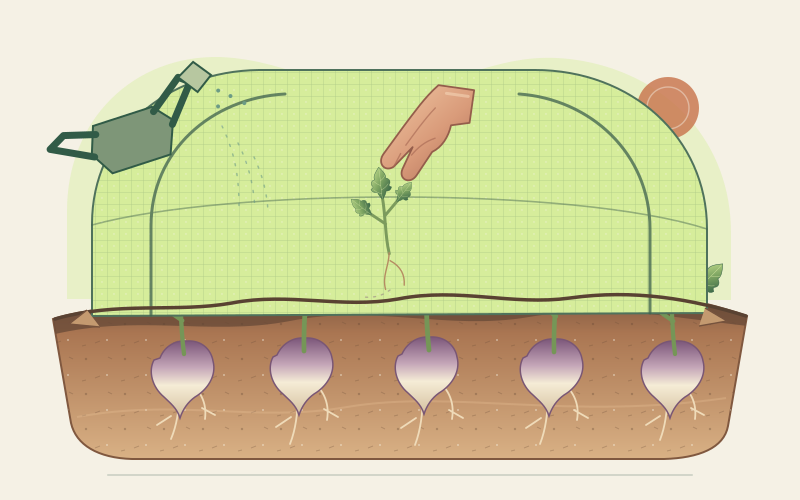
Where cabbage root fly, flea beetles or other flying brassica pests are expected, cover right after sowing—before damage appears. Choose fine insect mesh suited to the target pest, support it above the foliage, and leave slack or hoop height for the mature canopy. Bury or weight every edge so insects cannot crawl underneath. A loose corner or fabric resting on leaves defeats the barrier.
Open the cover only when needed for thinning, weeding or harvest, then close it promptly. Inspect underneath for aphids, slugs and disease: mesh does not remove pests already in the soil, and a humid cover can create its own problems. Ventilate or remove it when trapped heat is more harmful than useful. Netting with large bird-sized holes is not a substitute for insect mesh.
-
Maintain even moisture
Check below the surface and water thoroughly when needed, especially during establishment and root swelling. Dry soil produces small, strong or woody roots; drought followed by heavy watering can split them. Avoid waterlogging. Weed by hand near the row and keep cultivation shallow so tools do not cut crowns or roots. Mulch established plants where appropriate, keeping it clear of crowded stems.
-
Watch for cold, heat and bolting
Established turnips tolerate light frost, but roots are not completely hardy. Severe freezing damages exposed roots and foliage. Hot, dry weather and increasingly long days can encourage this biennial to send up a flower stem, or bolt, before producing a good root. Choose the correct early or maincrop cultivar, avoid crowding and water stress, and use a bolted plant promptly if its root remains sound.
Harvest leaves, baby roots, and keeping roots differently
| Harvest | What to look for | Handling |
|---|---|---|
| Young greens | Sound, tender leaves, including useful thinnings | Take a few outer leaves; retain enough foliage for root growth |
| Baby roots | Firm roots around golf-ball size, depending on cultivar | Lift promptly and use while mild and tender |
| Fresh cooking roots | Firm roots around tennis-ball size for many early types | Pull or loosen gently; avoid cuts and bruises |
| Storage roots | Mature, unblemished maincrop roots | Lift before severe frost; remove tops and cool promptly |
For repeated leaf picking, retain the growing centre and enough leaf area to feed the root. A crop grown only for greens can be cut more heavily and repeatedly while leaves remain young. For roots, grasp near the crown or loosen beside the plant with a fork. Very large or overmature roots can become fibrous and strong, especially after heat or drought.
For short-term keeping, twist or cut off the tops without slicing into the root crown; leaving leaves attached draws moisture from the root. Brush off loose soil and refrigerate sound roots in a vented bag or container. Chill greens separately, wash before use, and use them soon. Discard mouldy, slimy, badly decayed or otherwise doubtful produce.
For storage beyond the short term, use mature, undamaged maincrop roots. Pack them in slightly damp, clean sand or coir in a cool, humid, frost-free place, following local storage guidance. Wet roots sealed in an airtight box can decay, while dry warm air causes shrivelling. Inspect regularly and remove deteriorating roots. In mild ground, late roots may remain under protection for lifting as needed, but rodents, waterlogging and hard frost can make indoor storage safer.
Read common leaf and root warning signs
Shot-holed leaves can indicate flea beetles, particularly on young plants. Wilting with tunnels in roots may indicate cabbage root fly larvae; prevention with a well-sealed barrier is more reliable than trying to rescue a damaged root. Clusters of aphids can distort growth and contaminate leaves. Identify the pest before acting, favour barriers and sanitation, and follow local extension guidance. Never improvise pesticide doses; a legally available product’s label governs crop, target and method.
Swollen, distorted roots and stunted plants can indicate clubroot, a persistent soil-borne brassica disease. Do not confuse the swollen edible turnip with abnormal galls lower on the root system. Confirm uncertain symptoms locally, remove affected plants as advised, avoid moving contaminated soil, and rotate with non-brassicas. Liming or resistant cultivars may be recommended only after considering local soil and pathogen conditions.
Small, woody, strong or split roots often reflect heat, drought, irregular watering, overcrowding or late harvest. A tall flower stem signals bolting. Slugs and snails chew foliage even under insect mesh, and birds can damage uncovered leaves. Review the growing conditions and use a specific diagnosis rather than adding fertiliser or treatment by guesswork.