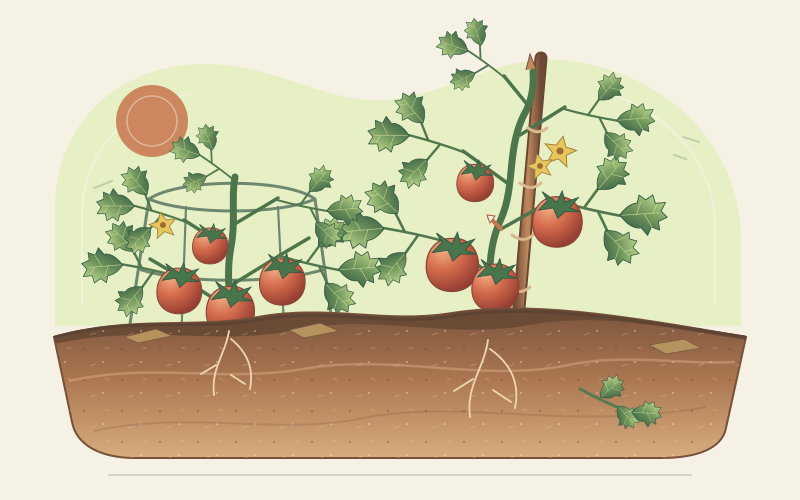
Begin with warmth, light, and a healthy plant
Tomatoes (Solanum lycopersicum) are frost-tender, warm-season fruiting plants. They need a long enough interval without frost for stems, flowers, and fruit to develop. A greenhouse can extend that season, while outdoor crops need the warmest, sunniest, most sheltered site available. Full sun generally supports stronger growth and fruiting than a shaded position.
Rooted’s 60–100 day window is an indicative interval to first harvest under suitable conditions, not a guarantee from the day seed is sown. Suppliers often count from transplanting, and cultivar, temperature, light, fruit size, and growing method all change the date. Our variety guide separates growth habit from fruit shape so you can choose for both the bed and the kitchen.
Raise, plant, and establish the crop
-
Start seed early or buy sound transplants
Sow indoors at the local time recommended for greenhouse or outdoor production, using clean containers and suitable seed compost. Provide warmth for germination, then bright light immediately after emergence. Pot seedlings on before roots become congested. If buying plants, inspect leaves, stems, and roots rather than choosing the tallest specimen.
-
Harden off before moving outside
Gradually accustom plants to outdoor light, wind, and cooler nights over several days. Transplant only after local frost risk has passed and conditions are reliably mild; a calendar date cannot protect a tender plant. Keep fleece or another temporary cover ready for an unusual late cold spell, and remove it as conditions permit.
-
Plant into drained, fertile ground or a large pot
Use soil that holds moisture without staying waterlogged. A soil test should guide liming and fertiliser. Set plants at the supplier’s recommended spacing, often around 45–60 cm in the ground, and water them in. Tomato stems can form extra roots when planted somewhat deeply, but avoid burying growing points or using compacted, cold soil.
-
Install support at planting
Put a sturdy cane, cage, string system, or other suitable support in place before roots spread. Match its strength and height to the mature cultivar. Tomatoes do not reliably climb by themselves: tie stems loosely with soft material as they grow, leaving room for thickening. Heavy bush plants may also need support.
-
Mulch and inspect without crowding
Once soil is warm, an organic mulch can slow evaporation, suppress weeds, and reduce soil splash. Keep it clear of the stem. Retain enough space to reach every plant and allow foliage to dry. Check leaves and fruit during watering so small problems are noticed before they spread.
Prune by growth habit, not by reflex
First read the packet or plant label. Indeterminate tomatoes keep extending their main stems and are commonly trained as cordons. For that system, remove the side-shoots arising between leaf stems and the main stem while they are small, and keep tying in the leader. Where local guidance calls for it, stop the leader after it reaches its support or carries the desired number of trusses.
Determinate or bush tomatoes have more limited stem growth and usually carry a more concentrated crop. Do not routinely remove their side-shoots: those shoots are part of the fruiting plant. Some determinate cultivars are described as semi-determinate or suit different training, so follow the specific supplier’s instructions. “Cherry”, “plum”, and “beefsteak” describe fruit, not a pruning programme.
Even water matters; calcium myths do not help
Check moisture below the surface and water at soil level, aiming for evenly moist rather than saturated ground. Containers can dry rapidly in hot weather, while rain and cool conditions change the interval. Avoid a cycle of severe drying followed by flooding. Fruit splitting and blossom end rot are both associated with fluctuating growing conditions, though neither has a single cause in every garden.
Blossom end rot produces a sunken dark patch at the blossom end of fruit. It involves a calcium shortage in that developing tissue, but this does not prove the soil lacks calcium. Irregular water uptake, root damage, and growing conditions can interfere with supply even when calcium is present. Crushed shells, eggshells, or a random calcium spray are not universal cures. Remove affected fruit, steady moisture, protect roots, and use a soil test and local extension advice before adding amendments.
Prevent damp foliage and identify pests before acting
Tomatoes share late blight with potatoes. Spores can arrive from outside the garden, so rotation alone cannot prevent it. Use healthy transplants, space and support plants for airflow, water the soil rather than the leaves, and avoid working among wet plants. Remove lower leaves only where locally recommended and without stripping the plant. At season’s end, clear diseased debris according to local guidance; do not compost material your system cannot process safely.
Learn the difference between early blight, late blight, leaf spots, and environmental damage before choosing a treatment. Rapid spreading lesions or firm brown fruit patches warrant prompt local diagnosis, especially during blight-favourable weather. Resistant cultivars may reduce particular risks but are not immune to every disease.
Inspect leaf undersides for aphids and foliage for large hornworm caterpillars or other regional chewers. Hand-pick hornworms where practical; leave caterpillars carrying white parasitic-wasp cocoons so the beneficial insects can emerge. Small aphid colonies may be washed off, and beneficial insects often help. Avoid broad sprays that harm those allies, and always follow the label and local rules for any permitted control.
Pick at colour, then store and preserve carefully
Check plants every few days once ripening starts. Pick fruit when it reaches the cultivar’s mature colour and gives slightly, keeping the stalk attached where practical. Handle carefully and eat damaged or split fruit promptly if it remains sound; discard mouldy or doubtful produce. Before frost, mature green fruit can be ripened indoors at moderate room temperature out of direct sun. Ripening is not guaranteed for tiny, immature fruit.
Store ripe tomatoes in a single layer where possible and use them while texture and flavour are good. Prolonged cold can damage quality, so refrigeration is not automatically the best place for every ripe tomato; chill cut or cooked tomatoes promptly instead. For longer keeping, freeze a suitable prepared product or follow a tested preservation recipe. Canning requires the specified acidification and processing method—being a tomato does not make an improvised jar recipe safe.
Sources and further guidance
- Royal Horticultural Society: How to grow tomatoes
- University of Minnesota Extension: Growing tomatoes in home gardens
- University of Minnesota Extension: Tomato disorders
- University of Minnesota Extension: Late blight of tomato and potato
- Utah State University Extension: How to grow tomatoes in your garden
- National Center for Home Food Preservation: Canning tomatoes