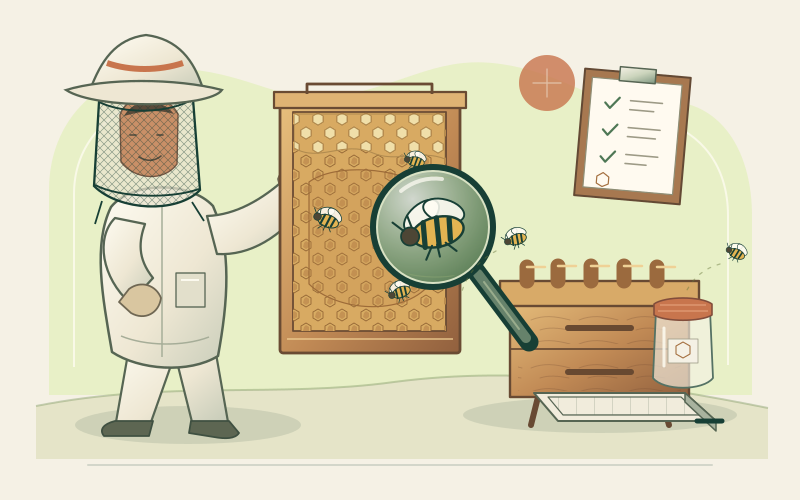
Monitor varroa, then manage it locally
Varroa destructor mites feed on honey bees and reproduce in brood. They can weaken colonies directly and are associated with damaging viruses. Bees flying busily at the entrance do not prove that mite numbers are low. Learn to recognise the parasite, but base decisions on a validated monitoring method rather than on finding an occasional mite during an inspection.
Common approaches include an alcohol wash or powdered-sugar roll using a known sample of adult bees, and sometimes monitoring natural mite fall on a suitable insert. Each method has limits and must be performed consistently. Learn the procedure from a local trainer, follow animal-welfare guidance, and record the colony, date, method, sample size where relevant, and result. Counts from different methods or seasons are not automatically interchangeable.
Action thresholds vary with region, season, colony development, method, and local recommendations. Use current extension or bee-inspector guidance rather than a universal number from another country. Monitor often enough to detect change, including before and after an intervention when local guidance recommends it. One untreated-looking colony can still affect neighbours through drifting and robbing.
Integrated pest management combines monitoring, resistant or locally suitable stock where available, hive and brood-management techniques, and legally authorised controls selected for the circumstances. Timing, colony condition, temperature, honey supers, resistance, and label restrictions all matter. This article deliberately gives no treatment doses: obtain them from the current approved product label and local expert guidance, keep records, and never improvise with agricultural chemicals or home mixtures.
Know normal brood and escalate suspicious signs
Healthy brood generally follows an understandable pattern, with pearly larvae and intact cappings appropriate to their stage. American and European foulbrood are serious bacterial diseases; other infections and non-infectious problems can also cause discoloured larvae, perforated cappings, an uneven brood pattern, or an unpleasant smell. These signs overlap, and smell or appearance alone cannot reliably name the disease.
Learn from an accredited disease-recognition course and current illustrated references. If you find suspicious brood, stop moving frames, bees, and equipment between colonies. Close the hive securely, reduce opportunities for robbing as local guidance directs, clean hands and tools, and contact the relevant bee inspector or animal-health authority. Some diseases must be reported by law, and required actions differ by jurisdiction.
Do not shake suspect bees into another hive, sell the colony, or treat blindly with antibiotics. Antibiotics may be restricted to veterinary oversight and can suppress signs without removing every source of contamination. Follow official instructions on diagnosis, destruction, disinfection, or movement controls, even when that means sacrificing equipment or a colony to protect others.
Make biosecurity an ordinary habit
Buy bees and used equipment only from traceable, reputable sources and comply with import and movement rules. Keep colony and apiary records, inspect new stock carefully, and isolate or manage it according to local advice before combining it with established colonies. Avoid casually swapping brood or food frames. Clean hive tools, gloves, and other equipment between apiaries with methods appropriate to the material and disease risk; ordinary washing is not a universal disinfectant.
Prevent robbing during nectar shortages by working calmly, covering exposed honey and feed, and avoiding spills. Feeding stations shared by many colonies can encourage fighting and disease transfer. Dispose of dead bees, wax, and suspect comb as official guidance requires. Register apiaries where a service exists so inspectors can contact you during an outbreak, and tell nearby beekeepers when authorities recommend coordinated action.
Reduce pesticide exposure and feed the whole season
Do not spray insecticides on plants visited by bees, and never apply products contrary to their labels. Learn the flowering and foraging times of crops and weeds, avoid drift and contaminated water, and communicate with nearby growers before applications where local systems allow. “Natural” or homemade pesticides can still harm bees. If a colony suffers suspected pesticide poisoning, record the circumstances and contact the appropriate authority rather than trying to diagnose the chemical from dead bees alone.
Good nutrition needs more than a brief spring bloom. Aim for a succession of diverse nectar- and pollen-rich plants, clean water, and freedom from flowering plants treated with harmful products. Different pollens contribute different nutrients, while nectar supplies carbohydrate. During genuine shortages, use locally recommended supplementary feeding to prevent starvation; feed does not replace habitat, and products intended for bees must not contaminate a human honey crop.
Before winter or a predictable dearth, assess stores using the method taught for your hive type and region. Needs depend on colony population, climate, hive insulation and ventilation, and the length of the non-foraging period. Check food without unnecessarily chilling brood, provide enough space and suitable protection, and follow local guidance on emergency feeding. A heavy-looking hive and a full box are not precise measurements of accessible stores.
Leave room for wild pollinators
Honey bees are managed livestock; adding hives is not the same as conserving every bee. Bumble bees, solitary bees, butterflies, flies, and other pollinators need varied flowers, nesting sites, and refuge from pesticides. A strong honey bee colony contains thousands of foragers, and where nectar or pollen is limited, dense apiaries can increase competition with wild species. The risk depends on landscape and season, not on a universal number of hives per hectare.
Assess the surrounding forage with local ecologists, beekeeping associations, or conservation advisers, especially near vulnerable habitats. Do not overstock an apiary simply because equipment is available. Improve and protect habitat first, retain bare ground and dead stems where appropriate for nesting, and avoid disturbing wild nests. Responsible beekeeping means caring for the colonies you can manage while leaving enough resources for the pollinators you do not own.